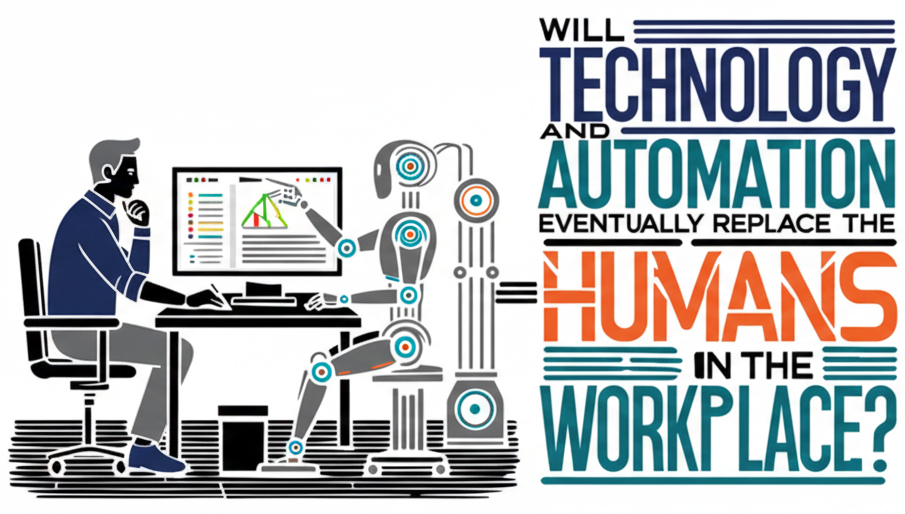
In recent years, the drive to replace humans with machinery is accelerating as companies struggle to avoid workplace infections of COVID-19 and keep operating costs low. “This pandemic has created a very strong incentive to automate the work of human beings,” says Daniel Susskind, a fellow in economics at Balliol College, University of Oxford, and the author of A World Without Work: Technology, Automation and How We Should Respond. “Machines don’t fall ill, they don’t need to isolate to protect peers, they don’t need to take time off work.” In theory, automation and artificial intelligence (AI) should free humans from dangerous or boring tasks so they can take on more intellectually stimulating assignments, making companies more productive and raising worker wages. For cases whereby humans’ lives are at risk, robots should take over, if possible, as preserving human lives takes precedence.
Admittedly, in some industries such as manufacturing, construction, healthcare and in environments which may pose risks to the lives of human, robots can perform the certain tasks more effectively than humans. The deployment of robots as a response to the coronavirus was rapid. Robots could replace as many as 2 million more workers in manufacturing alone by 2025, according to a recent paper by economists at MIT and Boston University. They were suddenly cleaning floors at airports and taking people’s temperatures. Hospitals and universities deployed Sally, a salad-making robot created by tech company Chowbotics, to replace dining-hall employees; malls and stadiums bought Knightscope security-guard robots to patrol empty real estate; companies that manufacture in-demand supplies like hospital beds and cotton swabs turned to industrial robot supplier Yaskawa America to help increase production. All these tasks are performed by robots to prevent human-to-human virus transmission.
However, there are just some jobs that robots cannot replace.
Robots are highly efficient but they do not always necessarily meet the expectations or be able to cater to the needs of humans. Some companies closed call centers employing human customer-service agents and turned to chatbots created by technology company LivePerson or to AI platform Watson Assistant. LivePerson, which designs conversational software, could enable a company to take a 1,000-person call center and run it with 100 people plus chatbots, says CEO Rob LoCascio. A bot can respond to 10,000 queries in an hour, LoCascio says; an efficient call-center rep can answer six. However, as robots are programmed to answer questions based on a pre-programmed set of clues, they are unable to provide genuine emotional understanding and empathy which is what customers need. AI always goes for the most pragmatic solution without any consideration of how that might affect future customer relationships. “Human interaction is irreplaceable when providing superior customer service,” said Jacob Munns, CEO, Boomsourcing. Therefore, replacing humans with chatbots may seem like a good idea from a strictly financial standpoint, but from a customer satisfaction standpoint, it’s largely unsuccessful and hence it would not be wise to use robots to fully replace humans in the customer service sector if the company wishes to perform well.
Human creativity, insight and contextual awareness are key to making artificial intelligence work. There’s no arguing that robots are outstanding for taking on dull, repetitive tasks. In fact, they’re probably better than humans for them, since machine-level consistency is usually prized in mass production, plus the fact that robots don’t have feelings and therefore cannot get bored. Creativity, on the other hand, is the gift of humanity, and is not something that can be programmed into logic boards. What’s more, robots’ lack of imaginative capabilities means they’re no good with anything that requires creative thought. Technical executives in the senior management ensure that any autonomous processes are closely monitored and supervised by human employees. AI solutions with hidden internal workings aren’t worth the risk, due to a lack of transparency and explainability, i.e. the ability to describe and interpret the specific processes that is happening in the system. Like any piece of software, the quality of AI insight depends on the quality of the data you feed into it, and it takes a human to know and judge what is good for it.
In any type of interpersonal communication, understanding cultural norms and slang is paramount to understanding. If you’ve ever had a friend from a country halfway around the world, you already know that some things are lost in translation. People either understand context (because they were raised within it or because they learned it), or they don’t – and robots just don’t. Additionally, because of robots’ inability to consider context, they’re less suited to analysis-type work. As such, humans are the source of innovation and creativity and they have the ability to make necessary changes to the artificial intelligence and technology to cater to the ever-changing needs of the world.
AI is paving the way for new and better roles for humanity. Accurate AI that is capable of taking on time-consuming or difficult tasks ultimately boosts the workforce by increasing the value of interactions that are genuinely human – soft skills which 92 per cent of talent professionals believe matter as much or more than hard skills, according to LinkedIn. These could include fostering relationships with customers who have interacted with intelligent advertising, or ethically reviewing social media posts following AI moderation. For many organisations, it will simply mean having more time to make important decisions, thanks to machine-led insights doing the groundwork.
In conclusion, humans will not be replaced by technology or AI as AI’s abilities will complement us, rather than replicate us. Throughout history, technology has enabled human advancement and created permanent changes to the way we live and work. It has created jobs our grandparents never thought would exist, and will continue to do so throughout the generations.
Why are human interactions so important?
Article adapted from:
- https://time.com/5876604/machines-jobs-coronavirus/
- https://tech.co/news/robots-replace-humans-work-2017-08
- https://eandt.theiet.org/content/articles/2020/08/ai-won-t-replace-humans-just-like-computers-didn-t/
- https://tech.co/news/4-industries-poised-benefit-robotics-2016-11
Creative minds turn Covid-19 frustration into innovation
https://www.youtube.com/watch?v=ssilUxyB-WM (2.34 mins)
How covid-19 is boosting innovation | The Economist
https://www.youtube.com/watch?v=zPyOnZpeFnQ&t=925s (19.03 mins)