What does a cashless future mean? | The Economist
https://www.youtube.com/watch?v=-0ph-pvCSPc (5.21mins)
https://www.youtube.com/watch?v=cj2Fh8aX148 (3.43mins)
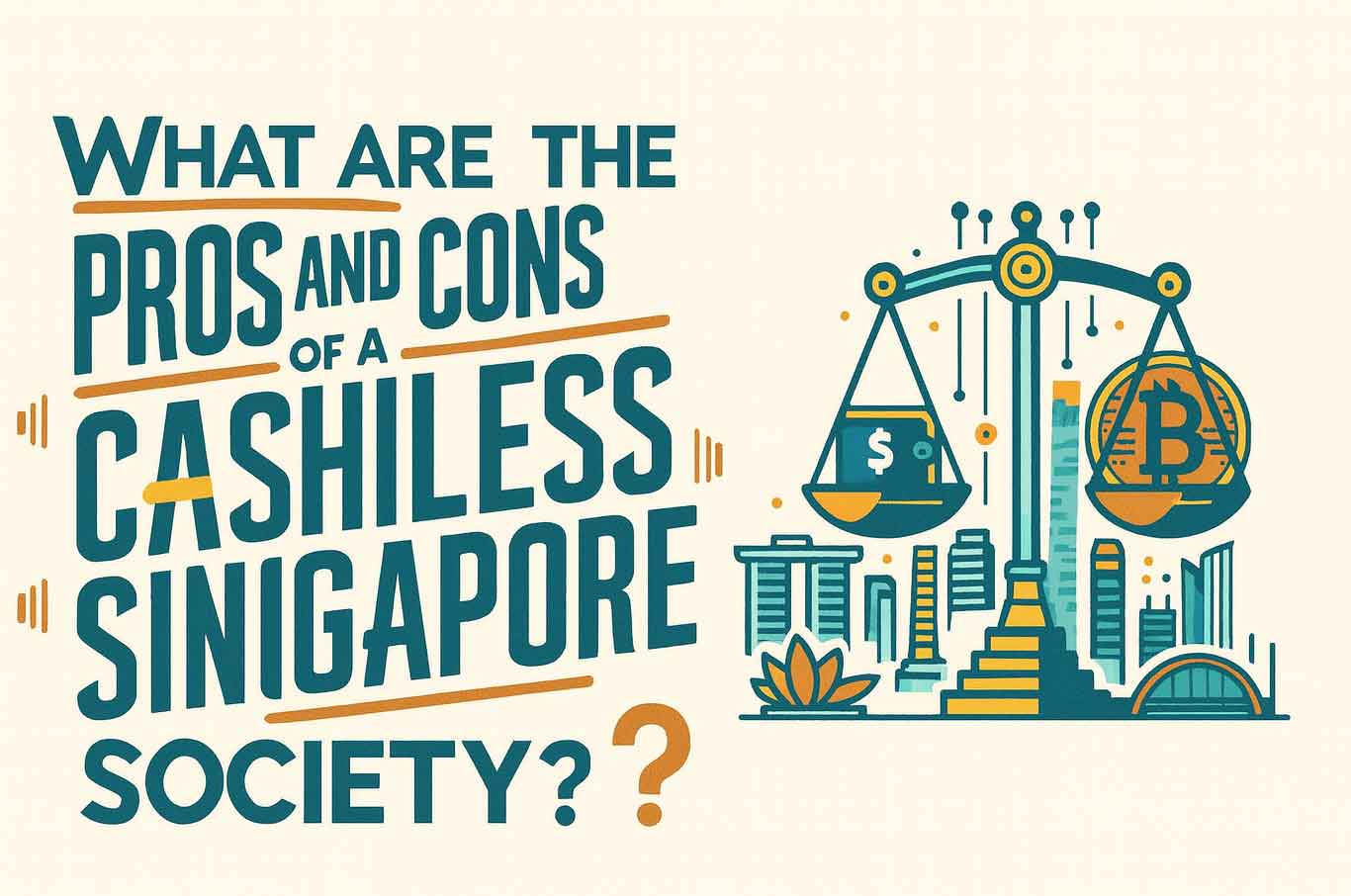
What are the pros and cons of a cashless Singapore society?
Somewhere in the future, cash will be a thing of the past. Governments all around the world are moving towards being cashless and this is happening in Singapore well.
In 2018, Monetary Authority of Singapore (MAS) board member and Minister for Education Mr Ong Ye Kung talked about reducing the use of cash and cutting out cheque use by 2025. In addition, he added that, “we don’t need to be literally a cashless society – some people will always find cash useful – but we certainly can transact with a lot less cash and we won’t need to visit the ATM so often.”
More recently, the ongoing push to digitalise Singapore that has been made more urgent because of the disruptions caused by the COVID-19 outbreak. In response, the Government has established a digitalisation office which aims to reach out to hard to reach groups in our society (e.g. seniors and hawkers and get them to adopt digital tools).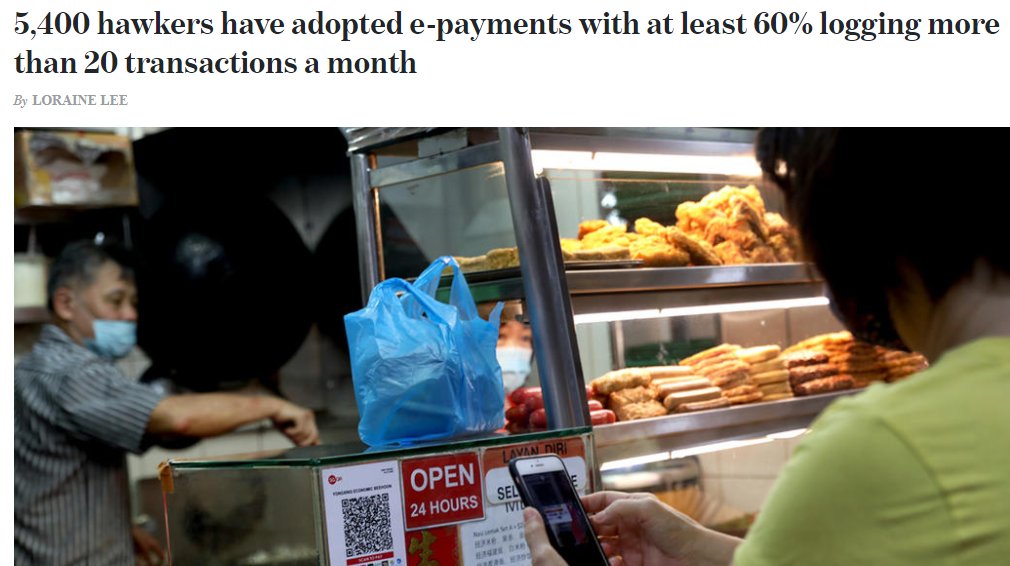
Image credit: https://www.todayonline.com/singapore/5400-hawkers-have-adopted-digital-e-payments-least-60-logging-more-20-transactions-month
Is cashless really better? Let us find out the pros and cons of a cashless society for Singapore.
Pros of a cashless Singapore society
Reduction in cash-related crimes
Singapore remains one of the safest countries in the world, but low crime does not mean no crime. According to Data.gov, Singapore had 11,215 reported theft and related crimes in 2019. Moving to a cashless society would likely reduce this statistic as physical cash is easier to steal compared to money in cashless wallets…
Going cashless is convenient and time-saving
One of the major benefits of a cashless society comes from the convenience brought about by electronic payment (e-Payment) solutions. E-payments have made it possible for people to go about their day without any physical cash.
People still can function without their wallets. For example, a person can just simply whip out his phone to pay for his food and shopping, without having to fumble around for change or worry if accurate change is given. Topping up EZ-Link card is made efficient with services like SimplyGo as people do not have to queue up.
Going cashless will also save businesses time and money, as managing physical cash incurs cost. The costs of storing, depositing and keeping a supply of physical money could be a thing of the past if we live in a cashless society. Deputy Prime Minister Tharman Shanmugaratnam stated that; “It has been estimated that the cost of processing cash is about S$2 billion a year, or 0.5% of GDP in 2015. This is the amount that businesses collectively, especially small businesses, can potentially save,” he said.
Cashless is more hygienic
Going cashless will be better for public health. Physical money can be a host for viruses, protozoa, bacteria and even pathogens. In other words, going cashless means that this risk of spreading germs via physical money can be eliminated.
More accurate collection of economic data for governments
This benefit is more relevant for the government. With a cashless society, there will be no need for the government to conduct expensive surveys and studies to collect data about real-world transactions to make their decisions. In theory, the Singapore government will have access to a greater amount of quality data they can use to formulate their policies. Hopefully, this will translate to better and more impactful economic policymaking that will benefit the public.
Unfortunately, it is not all sunshine and rainbows for individuals in a cashless society as there are quite a few cons as well. Let us look at the disadvantages of a cashless Singapore society.
Cons of a cashless Singapore society
Loss of privacy
As a cashless society, there will be reduced privacy when it comes to data regarding financial transactions. By going cashless, it will be next to impossible to send and receive money anonymously like with physical cash. The right to privacy is not about withholding information but protecting the private information that you have. A cashless society means that there will be much more personal financial data available about an individual. This information might be held with a trusted organisation but your data still can be vulnerable.
Increased risk of cybercrimes
Online scams are a worrying problem in Singapore. As we move to a cashless society, the criminals are moving online too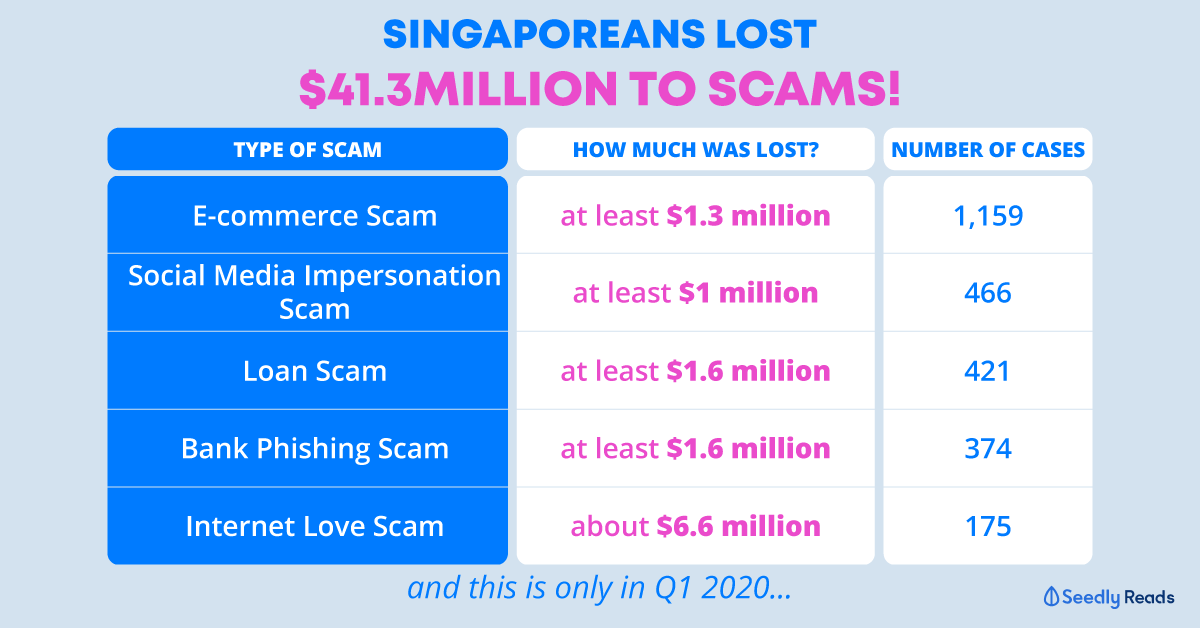
Image credit: https://blog.seedly.sg/cashless-society-singapore/
In the early half of 2020, Singaporeans has already lost $41.3 million to scammers. The majority of these scams were facilitated through the e-Payments system. Digital payment has made life easier for criminals as the money is just a few clicks away. With physical cash, it is a lot more difficult and riskier for scammers as they have to meet up with their victims and run the risk of getting caught and identified by the police.
Hackers are now the robbers and thieves of this ‘electronic world’ we live in. If we move to a cashless society, hackers who drain your accounts can leave you helpless, hopeless and penniless. For example, in 2019, a florist in Singapore reportedly lost $24,000 after their Shopify account got hacked. There was also a case where hackers obtained access to a Singapore finance company when one of their executives opened up a phishing email. Thankfully they were stopped by the company’s artificial intelligence (AI) cybersecurity software.
With more money being transacted online, we may become more vulnerable if we are not careful.
Technological limitations
A cashless society is very reliant on technology. Therefore, without the appropriate device, you are essentially ‘broke.’ Something as simple as a dead phone battery can prevent you from buying goods and services when you need them. For business owners, a faulty point of sales (POS) system can stop them from accepting payment from customers.
Some groups of people being marginalised
In a cashless society, groups that find it hard to participate and adapt to e-payments are at a disadvantage.
In Singapore, a report put together by Google, Bain & Company and Temasek holdings found that four in ten Singaporean working adults are ‘underbanked.’ Underbanked individuals do not have access to mainstream banking services like credit cards or loans. Groups like the underbanked and the elderly who only use physical cash will suffer as they might find it difficult to carry out purchases and transactions with others.
To put this into perspective, the 2019 Population in Brief report indicated that 16% of Singapore’s citizen population are over 65 years old, and most of these elderly still rely on cash as their main mode of payment. Additional fees from banks and financial institutions that charge overhead fees for digital banking services can cause unnecessary cost to them. An example of an unnecessary cost would be the ‘fall below fee’ for not having enough money in the bank account.
Greater risk of overspending
Last but not least, there could be a greater risk of people overspending in a cashless society. This is more of a subjective point, but studies have shown that people tend to spend less with physical cash as it is a tangible and painful reminder of what we are giving up when spending. In comparison, e-payments might lead to overspending as the experience of using e-Payments is less tangible and you do not feel as much pain when spending.
This can be problematic for Singaporeans as 20% of Singapore’s households who are also in the lowest income bracket earn less than they spend. Each month on average, their spending exceeds their income by $335. This deficit typically ends up as debt as these households might have to take up loans to meet their daily needs. Going cashless might worsen this situation.
In sum, a quote from Jack Ma taken from his 2017 speech at De La Salle University sums up the current situation. “It’s not the technology that changes the world. It’s the people using technology that changes the world”. As much as going cashless can bring has its benefits, there are still many disadvantages of going cashless. People have to adapt to changes and continue to circumvent potential problems that come along with a cashless society.
What can people do reduce the risks of cashless payments?
Source: https://blog.seedly.sg/cashless-society-singapore/