Coronavirus | Dealing with anxiety & mental health during a pandemic
https://www.youtube.com/watch?v=xzNMABRELPg (4.34mins)
How to stay mentally healthy during social isolation
“Humans are social animals and being isolated from others can have a big impact on their health. All our systems, including social, psychological and biological, have developed around social groups and interaction with one another,” says Dr. Zlatin Ivanov, MD, a New York-based psychiatrist.
However, when you’re dealing with stress, depression or anxiety, you may be tempted to become less social, but that can create a cycle that leaves you feeling more isolated, anxious, and depressed.
When we connect with friends and family through fun and engaging activities, we’re actually helping to maintain our sense of well-being.
Dr. Ivanov recommends the following tips to maintain mental well-being:
Social connectedness: Technology like video chat or phone can help us to maintain our relationships with families and friends. Apps, like QuarantineChat, have even been developed to help people stay connected across the globe through voice chat with others who are impacted by the virus. However, social connectedness is the measure of how people come together and interact — and we’re not talking about how many posts you share with your friends on Facebook!
Exercise: Exercise is a well-documented stress reducer. It boosts endorphins (our feel-good chemicals) and decreases stress hormones, including cortisol and adrenaline. Even during social isolation, you can still safely go for a run, workout at your desk, and maintain strength and muscle.
Connect with nature: Getting outdoors, especially into sunshine and green space, can improve mood by slowing activity in the prefrontal cortex, an area of the brain that has been associated with anxiety. If you can’t get outside, listening to natural sounds (like that of rain or birds) or even looking at pictures can help. Overall, these activities can stimulate the production of neurotransmitters like dopamine, serotonin, oxytocin, and endorphins, all of which promote mental health and stability.
Meditate:
Research has found that meditation can reduce anxiety and depression. A 2019 study of mobile meditation apps found that 10 minutes per day of meditation made college students feel less depressed and more resilient. The more they used the apps, the stronger the results were — though further research is needed to gauge whether these benefits can last over long periods of time. Focusing on what you’re grateful for — like spending time with family or getting to try a new hobby — can also help lift your mood and combat the effects of isolation. For example, one small study of 32 healthy people found that gratitude meditation could improve mental health and emotional regulation. The researchers used brain imaging scans and found that connections in the brain were activated during the meditation, and participant’s heart rates were lowered. Further research is needed, they said, to study the potential long-term effects. But overall, meditating on what you’re grateful for can be a helpful tool to try. “We need to stay aware of what makes us happy and brings joy to our daily lives”, says Dr. Ivanov.
You can use this mental checklist to remind yourself to take care of your mental health!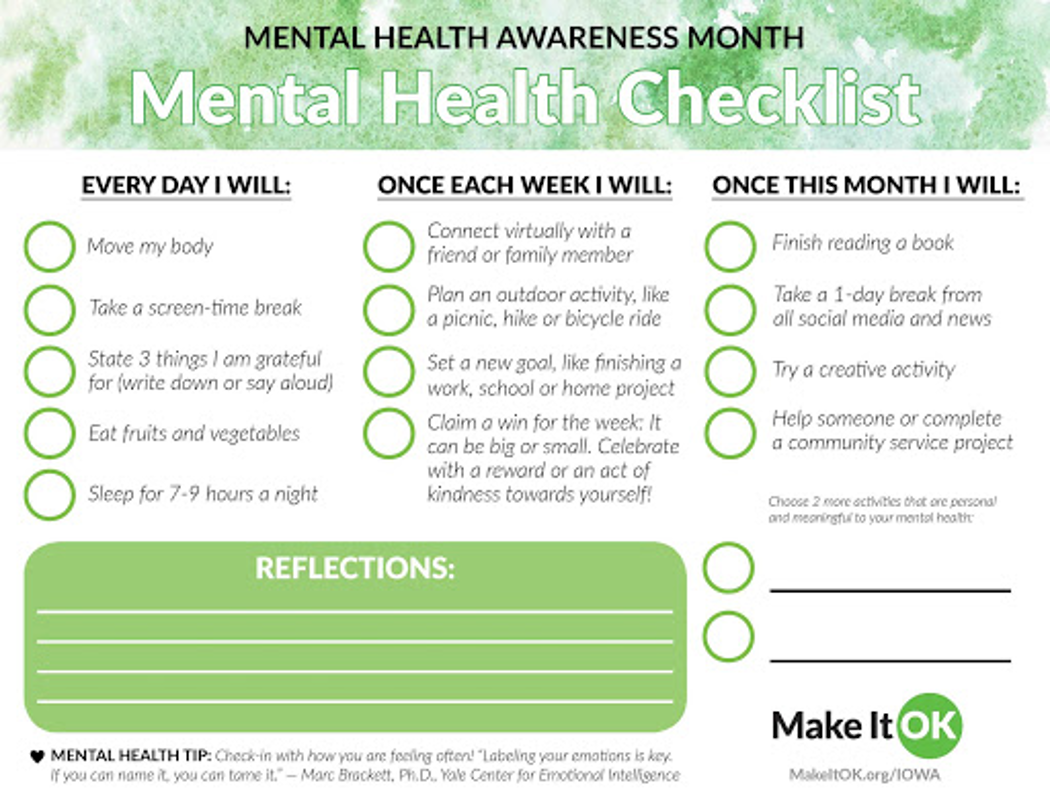
Image credits: http://www.iowahealthieststate.com/blog/make-it-ok/mental-health-checklist/
How are you feeling right now? Do a mental health check here!
Sources:
https://www.insider.com/how-social-isolation-affects-mental-health
https://stayprepared.sg/mymentalhealth/articles/depression-test/
https://www.insider.com/how-to-deal-with-anxiety-loneliness-during-the-coronavirus-outbreak-2020-3
https://www.gethealthystayhealthy.com/articles/social-connectedness-what-does-it-mean