David Attenborough: A Life on Our Planet | Official Trailer | Netflix
https://www.youtube.com/watch?v=64R2MYUt394&feature=emb_logo (1.59mins)
How has nature provided us with insights into human relationships?
Planet Earth is inhabited by millions of species—at least! Because different species often inhabit the same spaces and share—or compete for—the same resources, they interact in a variety of ways, known collectively as symbiosis.
Symbiotic relationships create many complex ecological interactions. These relationships hint at the ways in which the members of ecosystems can interact like the organs of an organism. These relationships are essential to many biological processes in humans and our world.
Did you know that some similes or metaphors about human relationships are inspired from symbiotic relationships?
First, let us find out more about symbiotic relationships in nature. As you read the following information, think about how similar or different these relationships are as compared to human relationships.
The main symbiotic relationships observed in nature are:
- Mutualism
- Commensalism
- Parasitism
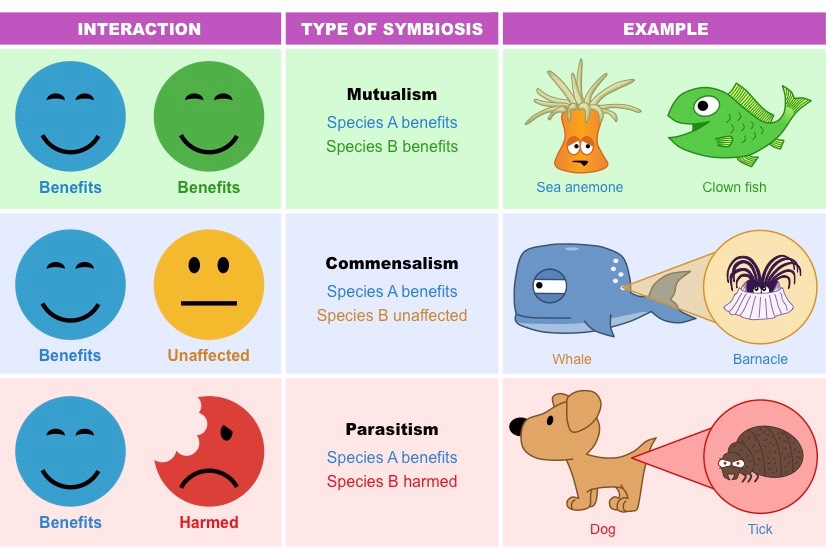 Image credits: https://ib.bioninja.com.au/options/option-c-ecology-and-conser/c1-species-and-communities/species-interactions.html
Examples of mutualism/mutualistic relationships occurring in nature:
- One example of a mutualistic relationship is that of the oxpecker (a kind of bird) and the rhinoceros or zebra. Oxpeckers land on rhinos or zebras and eat ticks and other parasites that live on their skin. The oxpeckers get food and the beasts get pest control. Also, when there is danger, the oxpeckers fly upward and scream a warning, which helps the symbiont (a name for the other partner in a relationship).
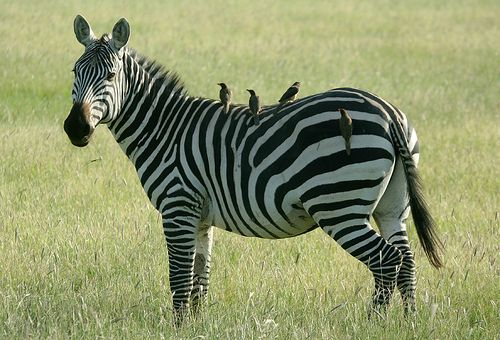
Image credits: https://www.pinterest.com/pin/152559506106127717/
2. The bee and the flower. Bees fly from flower to flower gathering nectar, which they make into food, benefiting the bees. When they land in a flower, the bees get some pollen on their hairy bodies, and when they land in the next flower, some of the pollen from the first one rubs off, pollinating the plant. This benefits the plants. In this mutualistic relationship, the bees get to eat, and the flowering plants get to reproduce. Both parties benefit.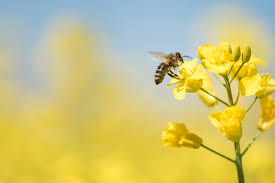
Image credits: https://sciencing.com/do-flowers-bees-other-5796565.html
3. The spider crab and the algae. Spider crabs live in shallow areas of the ocean floor, and greenish-brown algae lives on the crabs’ backs, making the crabs blend in with their environment and become unnoticeable to predators. The algae gets a good place to live, and the crab gets camouflage.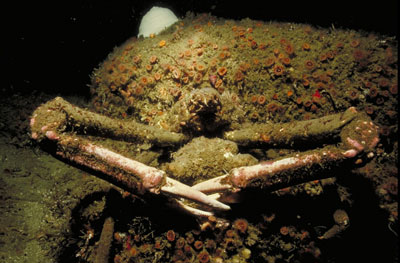
Image credits: https://www.coolgalapagos.com/animals/crab_corel1_sm.jpg
4. The good bacteria and the human. A certain kind of bacteria lives in the intestines of humans and many other animals and they assist the human in digesting the food. When the human cannot digest all of the food that he eats, the bacteria helps digest the food that the human cannot digest partially, then allow the human to finish the job. Bacteria also help in protecting cells in intestines from invading disease-causing pathogens. Therefore, by having good bacteria in your body, your immune system will be strengthened as bad bacteria don’t get a chance to grow and cause disease.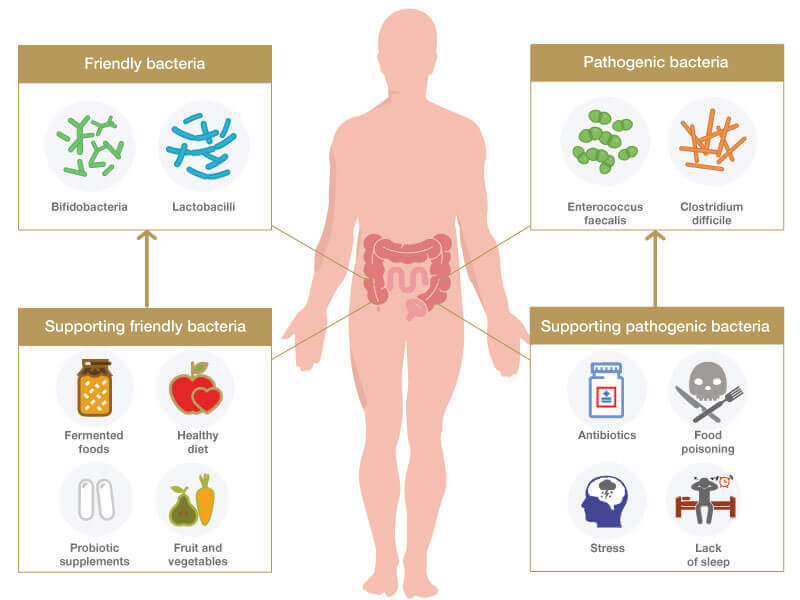
Image credits: https://provenprobiotics.co.uk/wp-content/uploads/2019/09/Friendly-bacteria-web-diagram1.jpg
The examples above show how organisms in nature work together for the benefit of both parties.
Are you interested to read about more interesting examples of mutualism in the animal kingdom?
Visit this website: https://unbelievable-facts.com/2019/08/mutualism.html
What similarities have you noticed about symbiotic relationships in nature and human relationships?
Here is one example:
Tim has been behaving like a leech for the past few months.
This simile compares Tim’s behaviour to how a leech behaves. A leech is a parasite that attaches itself to a host and sucks the blood of a host. However, it is not literally saying that Tim is a vampire and is sucking the blood of a person. The behaviour of Tim and the leech is similar. It is common for people to use the simile to compare a leech to someone who gives attention to someone over a long period in order to get their money, support or any benefits. This is very similar to parasitism; one person benefits at the expense of the other person!
What other interesting similes or metaphors can you think of relating to symbiotic relationships in nature?
Sources:
https://www.nationalgeographic.org/article/symbiosis-art-living-together/
https://necsi.edu/mutualistic-relationships