Singapore adopts a zero-tolerance stance towards drugs abuse because drug addiction destroys individuals, families and communities. Therefore, preventive drug education, tough laws, strict enforcements are implemented to keep Singapore drug-free.
It is important for everyone to have accurate information on drug abuse and its consequences, in order to help people make wiser decisions in life. Let us de-bunk some myths about drugs!
Reality Check #1: There’s no such thing as “soft” drugs.
“What’s the harm in trying ‘Ice’ or cannabis? They’re safe.”
Many young addicts regard “Ice” and cannabis as “lifestyle” drugs that are “less harmful” or addictive than substances like heroin and cocaine. This arises from an erroneous understanding of the nature of drug addiction.
Researchers, medical professionals and counsellors understand that drug addiction can take over an abuser’s life quickly to a devastating effect. So, the notion that certain drugs are less harmful or addictive is misguided – as many young abusers will attest, “Ice” and cannabis can cause compulsive dependence as well as great physical and psychological harm.
Reality Check #2: You’re not in control.
“No problem, I can quit any time.”
According to the Central Narcotics Bureau (CNB), many young addicts in Singapore get their first exposure to drugs from their friends. They are curious and foolishly try “Ice” and cannabis because they believe that they can stop taking drugs any time.
But willpower has nothing to do with the reality of addiction. Drug abuse causes changes to the brain and body that, over time, destroy an abuser’s self-control and ability to resist drugs. Impaired judgment and a profound loss of self-control are hallmarks of drug addiction, leading many young abusers on a downward spiral of despair and crime.
Reality Check #3: Are You Sure the Grass is Greener Over There?
“Singapore is behind the times; look at what people in other countries are doing.”
Singapore’s anti-drug policy encompasses preventive drug education, strong laws and effective enforcement as well as rehabilitation and community reintegration. This multi-pronged approach is unique to our history and societal context, and over five decades, has helped curb drug abuse and crime in Singapore.
The safety and security that we enjoy today isn’t a given, and veteran CNB officers still recall the difficult enforcement efforts that have been waged against opium, cannabis, heroin and now synthetic drugs such as “Ice”.
Thankfully, for us, drug addiction isn’t the deeply rooted and intractable problem that it is in many other cities and countries. But Singapore isn’t immune to the global drug situation. When it comes to our youth, for example, attitudes towards drugs have changed over the years. A 2015/2016 survey by the National Council Against Drug Abuse found that while most youths supported Singapore’s zero-tolerance approach, many were increasingly permissive when it came to drugs (increasing from 11% in 2013 to 16% in 2016).
Tellingly, the survey also found that 58% of youths learnt about drug-related content via social media, which tends to normalise drug use rather than allow for a balanced consideration of its risks. When it comes to cannabis, for instance, it’s little remarked upon that there’s inconclusive data on whether it is effective in treating most medical conditions, with any supposed benefits based on anecdotal cases. A study by the US National Institutes of Health also looked at how cannabis affected people’s behaviour and found that, in fact, it substantially raised the risk of opioid abuse.
Read other real-life stories of how other ex-drug addicts fell into the deathly trap of drug abuse and how some thankfully managed to overcome their addictions after a long-fought battle: https://www.cnb.gov.sg/educational-resources/for-youths/articles
If you love comics, read Captain Drug Buster vs Dr. Wacko: The First Encounter.
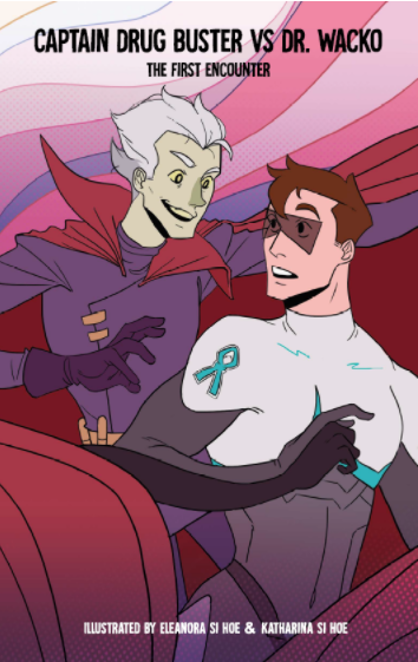
Visit here to read it online: https://www.cnb.gov.sg/educational-resources/pde-publications/comic-book
What can you do to avoid being in situations when you may be offered drugs?
Sources: