Why do young people feel so lonely?
https://www.youtube.com/watch?v=2USh8OmgiJE (6.15 mins)
Are you feeling lonely?
Loneliness is an emotional response that many people are familiar with. In the UK, loneliness is defined as: ‘a subjective and unwelcome feeling which results from a mismatch in the quality and quantity of social relationships we have and those that we desire’.
Loneliness can be experienced within a crowd. For example, people can be with a group of few others but can still feel lonely. On the other hand, being on your own does not necessarily mean feeling lonely. Some prefer solitude and being alone makes them feel peaceful and happy.


https://www.pexels.com/photo/people-walking-on-road-between-high-rise-buildings-1461378/ (left)
https://www.pexels.com/photo/silhouette-of-person-on-top-of-rock-formation-2409694/ (right)
Psychologists worry that the coronavirus pandemic is triggering a loneliness epidemic. New Harvard research suggests feelings of social isolation are on the rise and that those hit hardest are older teens and young adults.
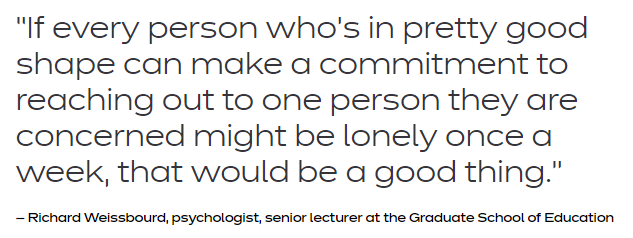
Richard Weissbourd, a psychologist and senior lecturer at the Harvard Graduate School of Education (HGSE) expressed his surprise at the degree of loneliness among young people. He stated that although other studies on the elderly reveal that their rates of loneliness are high, they don’t seem to be as high as they are for young people.
Here are the reasons why you might be feeling lonely
- Lack quality and genuine relationships
Many young people who reported serious loneliness also said they felt as if no one “genuinely cared” about them. Students entering new schools may be struggling to fit in while those not in school can feel disconnected from important social groups or communities. They may lack family support and connection with family members. It is no surprise that some people who experience loneliness try means and ways to fit into the wrong crowd or become a victim of peer pressure.
- Individualistic society
Many people often choose to focus on the well-being of their small circle of family and friends and fail to reach out to others who experience loneliness or social isolation. A survey suggests that lonely people often feel they’re reaching out or listening to other people more than other people are reaching out or listening to them. When you feel like you’re trying hard while other people are not trying hard, or you feel like you’re going to get rejected again, you withdraw, which increases your loneliness and your anxiety about social situations.
Feelings of loneliness can lead to a loss of confidence and influence behaviour, perhaps causing people to withdraw from contact with others. This behaviour can in turn set off a downward spiral of more negative thoughts and despair, leading to more intense feelings of loneliness, leading to more prolonged periods of isolation.
Loneliness is a normal human emotion that anyone can experience, regardless of age or background. It is not a personal failing. Everyone will have a different experience of loneliness and different reasons for why they are feeling this way. There is no one way to effectively deal with loneliness but there are lots of different things that can and do help. To further reduce the stigma associated with loneliness, there can be local campaigns that stress the importance of maintaining social ties, and reassure those suffering that it’s OK to seek help.
There are psychological techniques to help someone who is down to be in the upward spiral out of loneliness. Read from 1 – 6.
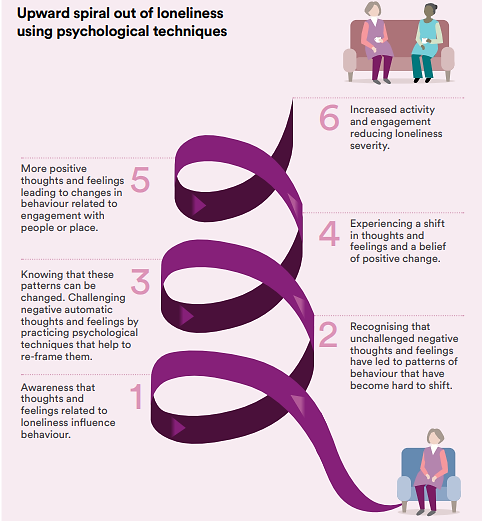
Screenshot credit: https://www.campaigntoendloneliness.org/wp-content/uploads/Psychology_of_Loneliness_FINAL_REPORT.pdf (p.17)
Here are other practical suggestions to help with loneliness:
1. Connect with others
a) Catch up with old friends
We all need to invest time in maintaining friendships. Reach out to your friends by picking up the phone or sending them a message through social media. You may feel that your friends are busy and will not have time for you, but you may be surprised when you take the first step to connect
b) Invest time in new connections
Joining local groups or classes based on your interests is one of the best ways of making new connections. Volunteering is another excellent way to get involved in your local community. Not only is it a great way to meet new people, but you can also develop your own skills and interests.
- Little things can make a difference
Say ‘hello’ to a neighbour, your local shop keeper or a person at the bus stop. Brief exchanges with others can positively impact how you feel about yourself and can make you feel more receptive to other, possibly more meaningful relationships.
- Connect online
Technology is a great way to stay in touch with friends and family, and make new friends. There are often free courses offered in libraries and in community centres to help improve your digital skills.
2. Other things you can do if you prefer to manage alone
a) Plan your week to do something you enjoy
Plan your week to include a hobby or activity that makes you feel good, such as doing something creative, reading, gardening, or listening to music.
b) Spend time outdoors
Going outside regularly, be it in your garden or a walk to the park, is a great way to boost your mood. It can help you to feel more connected to your neighbourhood and the natural world.
c) Focus on the good things in life
When you are feeling lonely, you can sometimes get yourself into a negative frame of mind. Thinking about the good things in your life, or remembering happy times such as a holiday, can help you to think more positively.
d) Look after yourself
Prioritise looking after yourself. Make sure you are eating healthily, being as active as you can be, and sleeping well. Physical health affects your mental health too.
3. Consider support and services
a) Find out what support is available in your school.
Teachers are equipped with basic counselling skills and are meant to keep a watchful eye over their students, provide a listening ear and reach out to students if they sense something is wrong. Students also have access to another group of teachers with specialised training, known as teacher counsellors, as well as a school counsellor, who is able to provide dedicated support. In some schools, there are also peer support leaders who will provide a listening ear.
b) Don’t keep things to yourself
Talking to someone about how you feel and learning positive coping techniques can be a helpful way to cope with the negative emotions associated with loneliness. Don’t shrug off feeling lonely as a ‘small issue’ and don’t be afraid of reaching out and being judged. If you feel that you are unable to manage with some strong emotions, below are some helplines available:
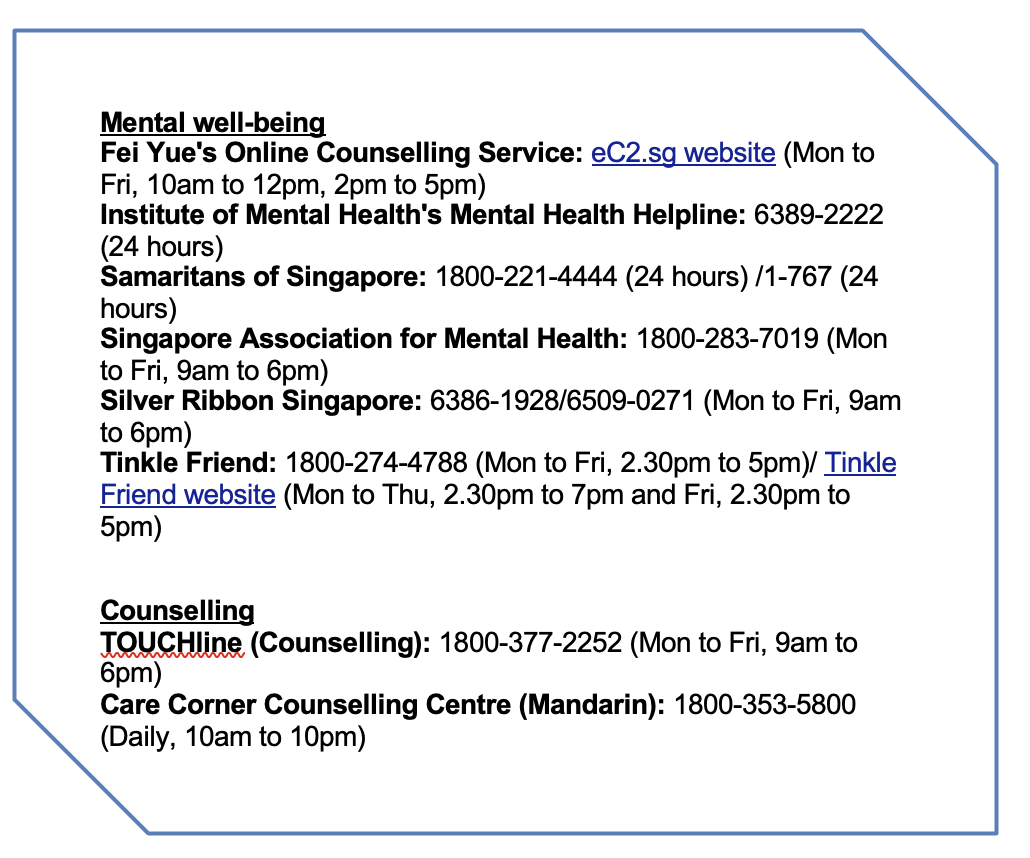
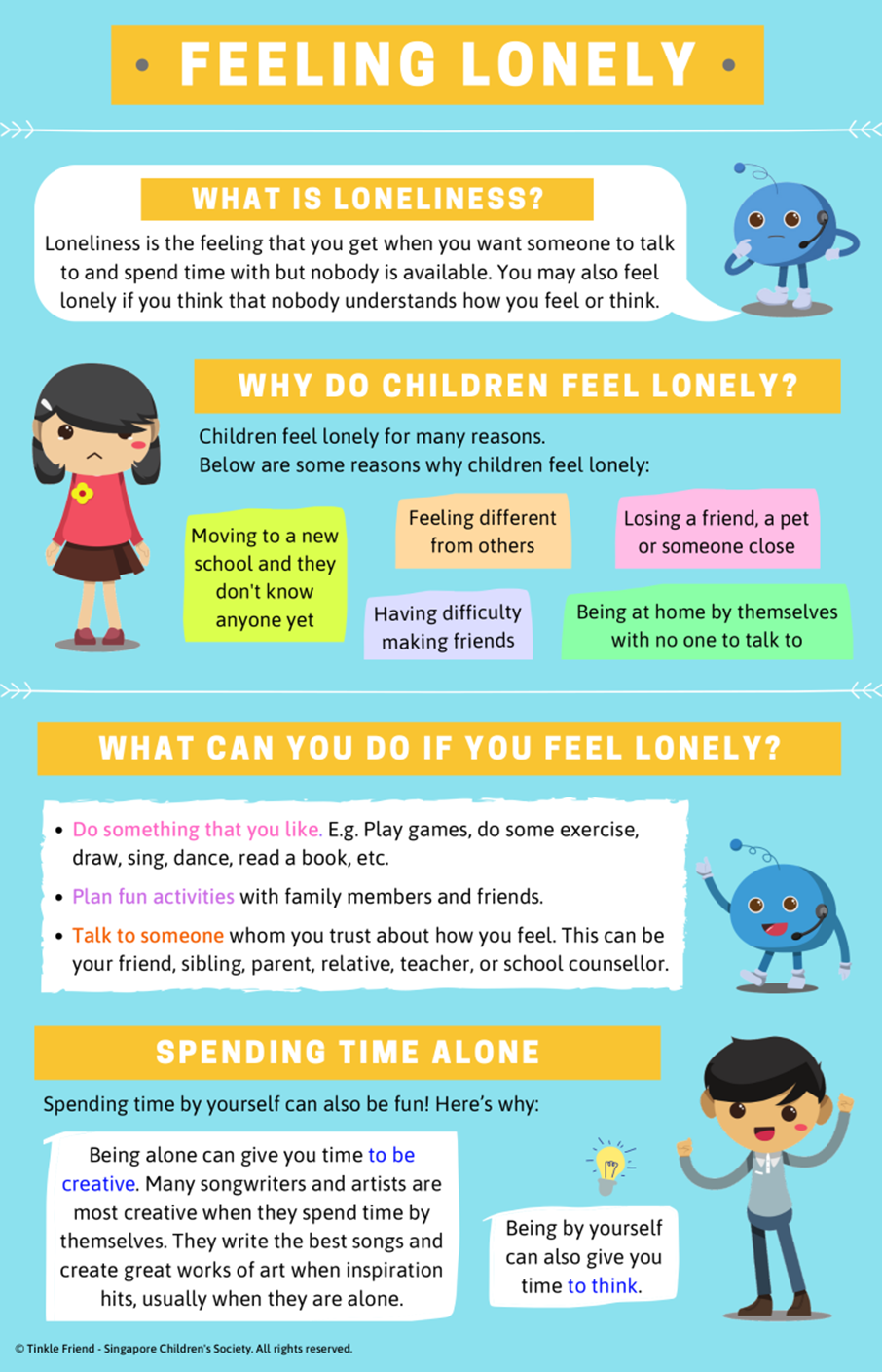
Image credits: https://tinklefriend.sg/info-detail/feeling-lonely
- When you are feeling lonely, what are some meaningful activities that you can do?
- What can you do to reach out to people whom you think are feeling lonely and left out?
Sources:
- https://www.campaigntoendloneliness.org/the-psychology-of-loneliness-why-it-matters-and-what-we-can-do/
- https://www.campaigntoendloneliness.org/feeling-lonely/
- https://news.harvard.edu/gazette/story/2021/02/young-adults-teens-loneliness-mental-health-coronavirus-covid-pandemic/
- https://www.channelnewsasia.com/cna-insider/mental-health-what-schools-doing-help-students-2655911
- https://www.straitstimes.com/singapore/parenting-education/more-than-counselling-how-schools-help-students-with-mental-health