Archives For Uncategorized

Pets for life

January 3, 2026 — Leave a comment

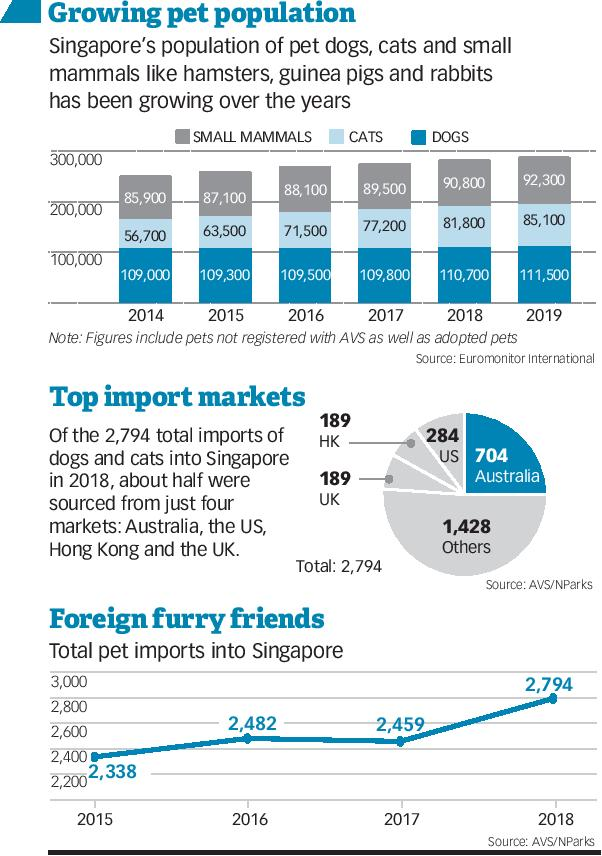
Singapore’s demand for furry companions has increased tremendously in recent years, resulting an uptrend in both local sales and imports of domestic animals.  Other than buying pets from licensed pet stores, there are many who purchase pets online. Consequently, pet smuggling becomes more common with the higher demand for pets.
Do you know where your pets are from?

Most shops in Singapore source their animals locally from farms or home breeders, to do their own breeding or sell to consumers. Singapore buyers are also increasingly looking to breeders abroad, import data from AVS show. Pet breeders are aplenty and not all pet breeders are lovers of animals. There are offenders who hardly care for the welfare of animals and smuggle them in deplorable conditions.


Image credits:

https://mothership.sg/2022/05/17-dogs-smuggle/ (left)

https://mothership.sg/2019/09/puppies-cats-ica-woodlands/ (right)

The Animal and Veterinary Service (AVS) believes in the necessity to review laws and regulation regarding pet trade. They are concerned about the welfare of pet trade because standards and practices in the business are not regulated.

Stopping pet smuggling

Buyers (or future pet adopters) can help break illegal and harmful pet smuggling by investigating the source they wish to buy a puppy from. You can ask to meet the puppy’s parents, ask to visit the seller’s home to see the conditions the puppy comes from. Any denial to these simple requests should raise red flags and you may or may not choose to report their information to a local animal rights organization for further investigation. While policies often do little to stop dog smuggling, one thing that could damper it is a shrunken market. When people consciously avoid buying animals that are smuggled, animal smugglers and would see their business slowly diminish.

To-do list on how to avoid encouraging puppy trafficking when getting a dog:

  • Always ask to see the puppy’s parents together with the pup
  • Never meet the seller anywhere else other than where the puppy lives
  • Do not purchase a dog from a place that sells more than one breed
  • See the pet you want to adopt more than once to get a sensing of the welfare of the pet
  • Don’t buy puppies that look unhealthy, underweight or too young (and do report them)
  • Ensure there is the required paperwork and documentation for the dog provided.
  • If there are any red flags, walk away and report the place or person to local authorities
  • Bring your new puppy to a veterinarian for a check-up right away
  • Do not allow to be pressured into purchasing an animal

Some unethical breeders are in the business just for the money and it is not difficult to see why. For highly sought-after dogs such as French Bulldogs and Shiba Inus, the upper end of prices at shops has almost tripled to S$6,000-S$10,000 from S$2,000-S$4,000 five years ago, says Singapore Kennel Club (SKC) president Chua Ming Kok. SKC-registered local breeders price their pups at S$4,500-S$5,500 on average, up from S$3,500-S$4,500 five years ago.


Are you ready for a pet?

Here are some important questions to consider before you decide to adopt or purchase a pet:

  1. Can you commit to take care of a pet? If yes, how long are you willing to commit?

Depending on what pet you want to buy or adopt, you need to consider factors like, which animal you have an affinity for, your lifestyle and the amount of time you have to care for a pet. “In general, small animals such as fish and hamsters will require less time, and are easier than dogs and cats. For dogs and cats, you will require more time and effort – dogs, in particular, require patience and companionship,” Dr Siew Tuck Wah, president of animal welfare group, Dog Shelter Volunteer & Donation Singapore (SOSD). Adopting a pet is a life-long commitment. Cats and dogs can live up to 20 years, while rabbits can live up to 10.

In 2017, Society for the Prevention of Cruelty to Animals (SPCA) Singapore shared that they take in around 200 animals each month and receive calls every day from pet owners wanting to give up their pets. Many of these animals are victims of impulse buying – their owners did not fully consider the lifetime commitment that goes into responsible pet ownership. Lifestyle adaptations are also necessary when you are taking care of a pet. For example, travel plans may need to be put on hold pet have annual check-ups and there can also be unexpected emergencies and geriatric needs (relating to old age).

  1. Do you have prior experience in taking care of an animal?

It is essential that pet owners know how to train and take care of their pets responsibly.

Those with no prior pet ownership experience can also consider volunteering with the animal welfare group first to get an idea of what it entails, suggests Dr Jaipal Singh Gill, executive director of the SPCA. “(Interested adopters) can volunteer with SPCA first, so that our staff can demonstrate to them the ropes of responsible pet ownership and care. In addition, they also get a realistic feel and hands-on experience on the extent of care that is required in keeping a pet,” Dr Singh said.

First-time pet owners who adopt must also understand that rehabilitating a pet with “baggage” is even more so. The training process will not be a bed of roses. Patience is key, and rehabilitation takes time. Statistics executive Looi Siew Yuen, 26, who adopted a stray puppy, advises potential owners to learn more about the history of the pet first. “This will help the new owners decide on what kind of ‘approach’ to take when handling the pet. For instance, dogs which went through traumatic conditions or experienced violence would need to be handled with more care,” added the animal welfare volunteer.

  1. Are your family members receptive towards having a pet in the house?

The arrival of a pet changes the dynamics of a household considerably and for years. Someone has to take responsibility for their daily needs – feeding, exercise, health care and grooming amongst other requirements. Getting a pet is also a team effort, said Mr. Tan from Voices for Animals (VFA). Potential adopters must ensure that members of his or her household are also aware of the responsibilities of getting a pet. “A potential adopter sometimes requires the help of a family member, or domestic helper, to help walk the pet, or feed it. Therefore, it is important to ensure that everyone in the household knows what the responsibilities are,” he said. In addition, to ensure the welfare of the pet, people who enter the house have to treat the pet with kindness as well.

  1. Do you have sufficient money to ensure the well-being of the pet?

Other responsibilities involved in caring for a pet include grooming, exercise and feeding requirements, as well as health care and visits to the vet – which may not come cheap. Vet fees can vary, but usually start from about $1,000 for blood work and check-ups, vaccination and tick protection for a year, said Mr. Tan. This could increase as the dog gets older. Grooming fees also depend on the breed of dog. A full grooming session for my toy poodle usually sets me back about $50 every six weeks, but owners of other breeds of dogs, such as mongrels, do not need to spend as much as these animals have shorter fur.

  1. Should you adopt or buy?

SPCA Singapore suggests that adopting your pet from an animal shelter or rescue group is a better choice. When you adopt an animal from a shelter, you are not only giving that animal a second chance, but also helping us save more lives by freeing up the shelter space for another adoptable animal. All pets are deserving of our love.

Adopting a pet from an animal welfare group provides the owner with a support network. At the Cat Welfare Society, for example, interested adopters go through a screening process with the society’s fosterers – people who care for the cats temporarily until it finds a permanent home. The screening process usually includes a questionnaire and a home visit. It is not uncommon for adopters and fosterers to develop a friendship that becomes a support network for cat owners and caregivers.  

Admittedly, animals that have been up for adoption are usually not as pretty, fluffy and cute compared to animals sold in pet shops. They are also often older than the juvenile animals usually up for sale. But potential adopters should be willing to look beyond appearance. Whether an adopted pet, or one bought from the store, the commitment levels are usually the same. All pets need their owner’s time, patience and love. But since commitment level does not differ much, people should consider adopting instead of buying. It makes a difference to the pet.

But if you do prefer to buy a dog of specific breed, make sure to get one only from a reputable breeder that operates legally and responsibly. AVS also encourages consumers to ask to view the breeding animals and may in the future require sellers to show buyers the parents. Consumers play an important role to ensure that the sector can function in a manner that is respectful and fair to the pets and the buyers.

Are you currently a pet owner or do you hope to be one in the future? https://www.nparks.gov.sg/avs/resources/pets-animals-dos-and-donts

Here is a list of places where you can find out more information on adopting a pet:

https://www.nparks.gov.sg/avs/pets/owning-a-pet/getting-a-pet/where-to-get-a-pet 

Do you think that our pets care about us?

Visit this website to find out more.

https://www.bbc.co.uk/learningenglish/english/features/6-minute-english_2022/ep-220210

  Sources:

  1. https://www.straitstimes.com/singapore/the-st-guide-to-adopting-a-pet?fbclid=IwAR1XNlXhZSEE3HIUfN4pL4dmK8Nz3FLR2qYAuIAImoUgZHMifvNLjY4adok
  2. https://www.businesstimes.com.sg/brunch/paws-perous-business-the-booming-pets-trade-thats-also-feeding-an-illicit-market
  3. https://www.facebook.com/spcasingapore/posts/adopt-dont-buy-we-take-in-around-200-animals-each-month-and-receive-calls-every-/10154425597718155/
  4. https://humanesocietytampa.org/dog-smuggling-business/


Talent is the natural ability or capacity to perform a function.

When you possess talent in an area, you are gifted with the “knack” or “instinct” needed to perform a skill or display a specific quality. But this only means you have the “raw mechanism.” So, you have the equipment or tools needed to perform the skills. However, until you learn how to efficiently and effectively use, manage, and control these resources, you cannot perform or use your talents at the highest levels.

This is where “hard work” steps in. “Hard work” applied to your natural talents and instincts will take you to levels others may never attain. But talent alone will not do it…you must perfect your “talents” through “hard work” -­ practice, training, and exerting effort. If you do not take steps to gain experience, education, and training as it relates to your talent, your natural ability will not shine. Soon, others will surpass your accomplishments. While talent is special, unique and your hidden gem, hard work beats talent. It is the sustaining factor that will push you to the top of the heap and keep you there!

Talent needs ‘fuel’ (hard work) to shine brightly and remain vibrant.

A talent truly is a gift. It gives you a head start, but if you stop to smell the roses you will get beat to the finish line…you must keep churning. Simply look at successful people in the worlds of sports, art, or entertainment; they don’t sit on their laurels.

Instead, they are constantly honing their talent/craft and working to stay relevant in their field. For all their accomplishments and accolades, I think Michael Jordan (NBA Hall-of fame basketball player) and Tom Brady (NFL top player) are good examples of the importance of continuing to work hard. Even if you are gifted with special talents and natural abilities, you still need to use them.

You can have all the talent in the world. Yet, if you are not working hard to keep it active and show it to others, you will miss opportunities to achieve the level of success that you can reach. When you work hard, your talent becomes your wildcard – that hidden factor you use to your advantage. If you are not working hard, that talent remains latent and simply burns out slowly, becoming like a candle without a flame. While it might look great on the surface, it isn’t providing any necessary or critical function – it becomes useless. Much like a candle without a flame cannot light your way or keep you out of darkness, talent without hard work cannot consistently sustain a high level of success.

There are beautiful candles with wonderful scents that simply sit on a shelf or a table but rarely get noticed. They don’t provide any concrete function or serve a truly useful purpose because they have no flame – they are lacking energy.

Hard work is the separating factor – the energy that fuels our skills, ambitions, desires, and talents to shine bright

Hard work is the catalyst to winning in almost any situation. Working hard is the primary and sustaining factor that gives you the edge to make your performance exemplary. It is what propels you ahead of the competition. Hard work is the practice and preparation you use to hone and enhance your natural skills and abilities. So, hard work gets to the finish line ahead of others.

Here’s another example of why hard work beats talent.

Think of the popular moral story of the tortoise and the hare. The hare had all the talent – natural ability – to outrun the tortoise. But the hare lost sight of his goal, became arrogant and neglected hard work. He also ignored how the competition was preparing and carrying out the task at hand and hence took a nap. On the other hand, the tortoise just kept his nose to the ground and kept pressing on. He worked hard and grasped the opportunity while the hare opened the door by losing sight of the finish line. In the end, the tortoise prevailed. The tortoise kept exerting effort at a pace he could handle while the hare took a break when one wasn’t really needed.

By keeping his mind and eyes on the goals and remaining engaged in the endeavor, the tortoise prevailed despite the natural ability and talent of the hare. This is another reason hard work beats talent.

Talented people that work hard

The best actors work day in and day out to hone their craft and perfect the character they are asked to play.

Musicians constantly play, write, and sing to keep their gifts functioning at the highest levels. Did you know that Ed Sheeren had severe speech problems and was bullied in school due to his stuttering and his oversized glasses? His love for playing the guitar was what got him into music and singing. It was one day when his father bought him Eminem’s record which inspired him to write his own music. Suddenly, he also got rid of his stutter. He knew music was his calling and he wanted to work hard to achieve something. He shared that when he couldn’t find a couch for the night, he had to sleep in parks or in the subway. He had some nights when he didn’t have any money for food and was often on the verge of giving up. But he didn’t.

Read Ed Sheeran’s story here: https://www.goalcast.com/ed-sheeran-life-story-2/

Athletes constantly practice to keep their game at the highest level. Mathematicians and engineers are continually assessing or evaluating functions and formulas to create new methods or improve the methods we use. Doctors and lawyers are constantly familiarizing themselves with new concepts and rulings to stay ahead in their field.

You would be hard-pressed to identify an area where simply resting on your laurels and never working hard to keep your talent functioning or improving keeps you ahead of the competition. Hard work is a requirement for succeeding and staying successful regardless of your talent level.

Hard work beats talent every time!

While talent is the hidden factor and something of a wildcard that can be used as an edge to succeed, it is nothing without hard work. Hard work is the strengthening factor that keeps you going and performing at high levels for prolonged periods. Talent gives us a spark, but hard work allows us to create a flame that will burn for a long time. Talent can get attention and exposure. Your natural abilities can get you initial recognition and allow for possibilities and opportunities to come your way.

However, hard work is the factor that gives you the tools to grasp those possibilities or opportunities and then shape or transform them into realities. Whether your talent is exceptional or your natural ability is average, hard work keeps you viable. This allows you to develop your potential so that your performance is above expectations.

Visit these two websites and have a read at the quotes:

  1. https://everydaypower.com/consistency-quotes/
  2. https://www.morefamousquotes.com/topics/quotes-about-talent-vs-hard-work/

Which quotes inspire you to achieve your goals?  

Source: https://everydaypower.com/hard-work-beats-talent/?fbclid=IwAR0UDNKCaEt7nh4wY-w-qOc5k2KZDjZtqCJUSnhb35K9_6oLAeNtajRVjTY

Outliers: The Story of Success – Malcolm Gladwell Animated Book Review
https://youtu.be/nXCWF60jWvo (8.46 mins)


Mamba Mentality – Kobe Bryant (Motivational Video)
https://www.youtube.com/watch?v=4gi9y3sTrXE (7.05 mins)


Historians are often asked: what is the use or relevance of studying History as a subject? Why does the past matter?

Some students regard history as boring, uninteresting and irrelevant. They find studying History as a subject challenging because they are unable to memorise large chunks of information. However, the main goal of studying History is not to improve our memorising and regurgitation skills, nor is it a test of who can write the most pages of essays. Although admittedly, sometimes it can seem like it.

The History syllabus in Singapore states that the aims of History education in Singapore are to develop in students:

  1. an appreciation of past human experiences
  2. critical awareness of the nature of historical knowledge
  3. the ability to make connections between the past and present

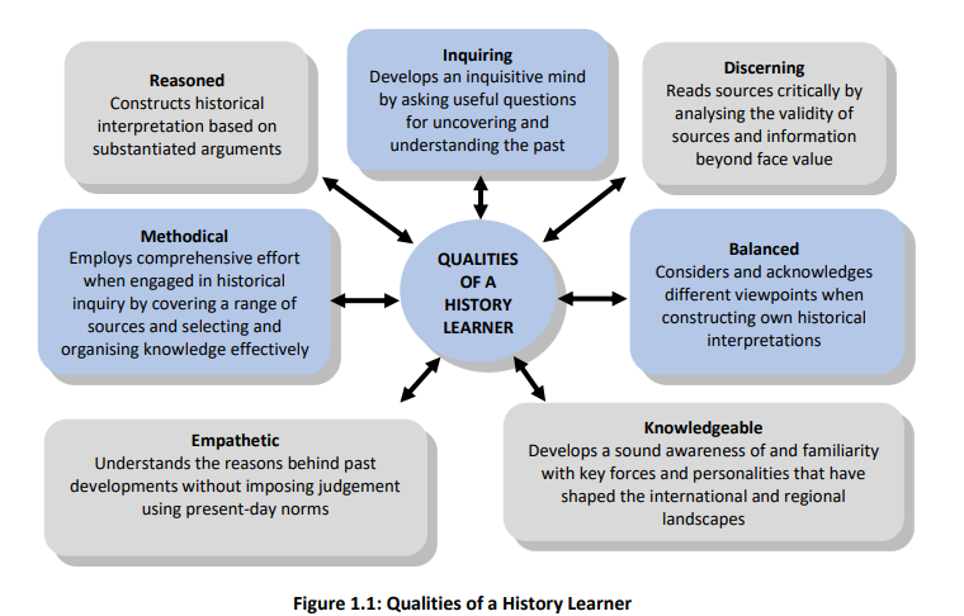
Through the teaching and learning of historical content, concepts and skills in school, qualities of a history learner can be manifested.

Image credits: https://www.moe.gov.sg/-/media/files/secondary/syllabuses/humanities/2021-history-lower-secondary-syllabus.pdf

Here are some reasons why people study history (in general) and History (as a subject):

  1. Everything has a history

Everything we do, everything we use, everything else we study is the product of a complex set of causes, ideas, and practices. Even the material we learn in other subjects has important historical elements – whether because our understanding of a topic changed over time or because the discipline takes a historical perspective. There is nothing that cannot become grist for the historian’s mill (PS: please check the meaning of the idiom ‘grist for the mill’).

  1. “Doing” History is like completing a puzzle or solving a mystery

Imagine asking a question about the past, assembling a set of clues through documents, artifacts, or other sources, and then piecing those clues together to tell a story that answers your question and tells you something unexpected about a different time and place. That’s doing history. People can have different perspectives about historical figures, decisions made or an event in the past because people of different ages, ethnic groups, social status, occupations etc, their lives are impacted by forces of history differently. Often, the people with power and authority or the ‘winners’ are the ones who manage to tell their stories. Other stories are deemed as ‘less important’ or unimportant and hence untold. When you study history, see yourself as a detective trying to find out the truth and then as you write your essays, imagine yourself as a journalist helping readers to understand the topic at hand.

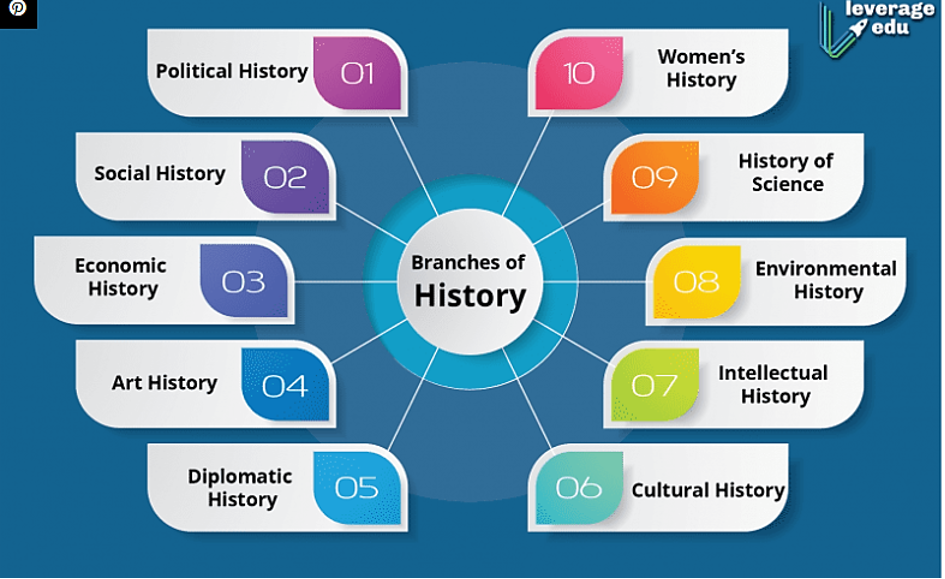
There are many branches of history and we study history to better understand the modern world we are living in.

Image credits: https://leverageedu.com/blog/branches-of-history/

  1. The past teaches us about the present

History gives us the tools to analyze and explain problems in the past, it positions us to see patterns that might otherwise be invisible in the present – thus providing a crucial perspective for understanding (and solving!) current and future problems. For example, a course on the history of public health might emphasize how environmental pollution disproportionately affects less affluent communities – a major factor in the Flint water crisis. Understanding immigration patterns may provide crucial background for addressing ongoing racial or cultural tensions. In many ways, history interprets the events and causes that have shaped our current world.

  1. History can be intensely personal

Why do people want to participate in DNA Ancestry tests? Each individual is born with a personal variant of an inherited genetic template, known as the genome, which has evolved during the entire life-span of the human species. Studying history and finding out about our heritage help people make sense of their own identities. In fact, we are all living histories. Communities speak languages that are inherited from the past. They live in societies with complex cultures, traditions and religions that have not been created on the spur of the moment

In learning about the past, we often discover how our own lives fit into the human experience. In October 2015, a UW alumnus named Michael Stern contacted Professor Amos Bitzan for help translating letters from his grandmother, Sara Spira, to his parents.  Bitzan was able to integrate some of the letters into his class on the Holocaust to bring to life for his students the day-to-day realities of being Jewish in Nazi-occupied Poland. As Bitzan explained, “I realized that Sara Spira’s postcards could be a way for my students to integrate two facets of the study of the Holocaust: an analysis of victims and perpetrators.” And if you have ever seen an episode of “Who Do You Think You Are?”, you’ve seen the ways in which historical research can tell us amazing stories about our ancestors – stories we might not ever know otherwise.

Therefore, understanding the linkages between past and present is absolutely basic for a good understanding of the condition of being human. That, in a nutshell, is why History matters. It is not just ‘useful’, it is essential.

  1. History builds empathy

Developing historical empathy is perhaps the most difficult, but one of the most important, skills you will learn as a student of History. When we study History, we are also studying the lives and struggles of others. You will encounter a vast array of people who thought, spoke and acted in ways that are foreign to you. You will wonder, “Why did this person make this decision during that time? Can’t they just do this instead?”

However, bear in mind that the world and culture people in the past were in would have influenced how they thought and responded. By simply judging another’s thoughts, words and actions based upon your own cultural norms shows a lack of empathy for their way of life. We can judge and condemn people who are not like us too quickly. If we do this, we will make the mistake of being unable to really understand people and cultures that are different from our own.

To begin to empathise with the people of past, you must first work out what motivated them.  We need to ignore our own personal opinions and try to understand that they were motivated by different things. Overcoming our own judgement and appreciating their motives is called ‘Historical Empathy’. Empathy is the ability to see and understand events from the point of view of those experienced the events firsthand. It allows us to appreciate the feelings, thoughts or attitudes of another person.

  1. To study history is to study change and hopefully serve to promote change for a better world

Historians are experts in examining and interpreting human identities and transformations of societies and civilizations over time. They use a range of methods and analytical tools to answer questions about the past and to reconstruct the diversity of past human experience: how profoundly people have differed in their ideas, institutions, and cultural practices; how widely their experiences have varied by time and place, and the ways they have struggled while inhabiting a shared world.

Historians use a wide range of sources to weave individual lives and collective actions into narratives that bring critical perspectives on both our past and our present. Studying history helps us understand and grapple with complex questions and dilemmas by examining how the past has shaped (and continues to shape) global, national, and local relationships between societies and people. There are lessons to be learnt from the past and if there are negative patterns, it is the current generation to promote change for a better world.

Skills taught in the humanities classroom in Singapore (for example, Social Studies, Geography, History, the Arts (Theatre Studies, Film studies, Music and Art), or Literature in English, Malay or Tamil) also help students to understand the human condition with critical and analytical minds.

What is your favourite Humanities subject? Why?

Sources:

  1. https://www.moe.gov.sg/-/media/files/secondary/syllabuses/humanities/2021-history-lower-secondary-syllabus.pdf
  2. https://archives.history.ac.uk/makinghistory/resources/articles/why_history_matters.html
  3. https://history.wisc.edu/undergraduate-program/history-careers/why-history/#:~:text=The%20Past%20Teaches%20Us%20About,current%20and%20future%20problems.
  4. https://www.historyskills.com/historical-knowledge/motives-and-historical-empathy/

Changes are inevitable in our lives. We cannot stop change but we can adapt and learn how to cope with it better. The fear of entering an entirely new environment with new responsibilities without close friends and family whom we have previously counted on for support can be rather stressful. Even as you grow into adulthood, there will be major life transitions like coping with the death of loved ones, entering new relationships or moving houses that you will have to go through.

This is why learning is not only limited to gaining ‘book knowledge’. It is also about learning important life skills that can help prepare you for life.

  1. Developing Social-Emotional Competencies

Social Emotional Learning (SEL) helps prepare students for life beyond school. It is critical that we provide a holistic education that involves the stimulation and training of both cognitive and affective domains of a child.

In Singapore schools, SEL involves Character and Citizenship Education (CCE) lessons that aim to help teenagers develop personal effectiveness and well-being, build positive relationships, live out their values and grow their character. SEL increase teenagers’ capacity to learn, give them the tools to navigate current and future real-world contexts and challenges, aspire them towards personal and professional achievements, enable them to experience personal satisfaction and contribute to the society. Furthermore, developing social-emotional competencies also improve students’ school performance and this is the reason why CCE lessons are carried out.  

Other than teachers, parents and caregivers play an important role in supporting teenagers in their character development.

Do you wish that your parents or guardians can support you better? You may wish to forward the links below to them. Remember, parents are also learning ways to communicate and understand you as an adolescent so as to help you grow.  

  1. Social and emotional learning: Resources for parents

https://www.moe.gov.sg/education-in-sg/our-programmes/social-and-emotional-learning/sel-resources-for-parents

  1. How to keep your child motivated when studying: 11 tips for parents

https://www.oxfordlearning.com/how-to-stay-motivated-to-study/

  1. Teen Minds: Coping with Secondary School

https://familiesforlife.sg/discover-an-article/Pages/Coping-with-Secondary-School-Tips-for-Parents.aspx

  1. Goal-setting to remain focused

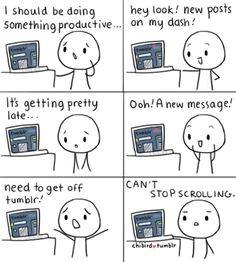
Image credits: https://i.pinimg.com/236x/30/45/87/3045878c6aa46dd6bfea09f7d747870d–chibi-time-management.jpg

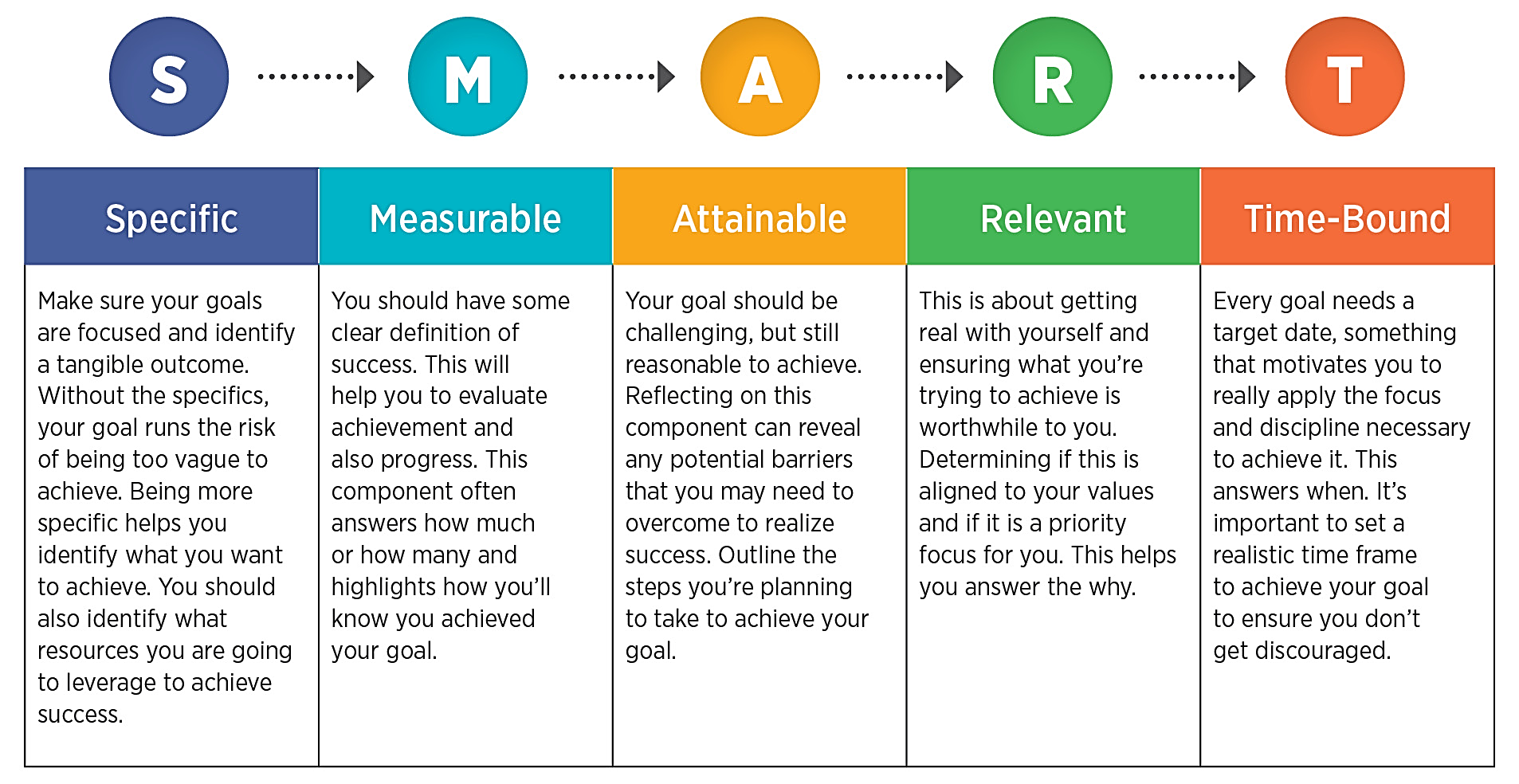
Setting short-term and long-term goals can help you remain focused on what you are supposed to do. It is easy to get distracted by what your friends are doing and forget your goals. Look at how you can set S.M.A.R.T goals.

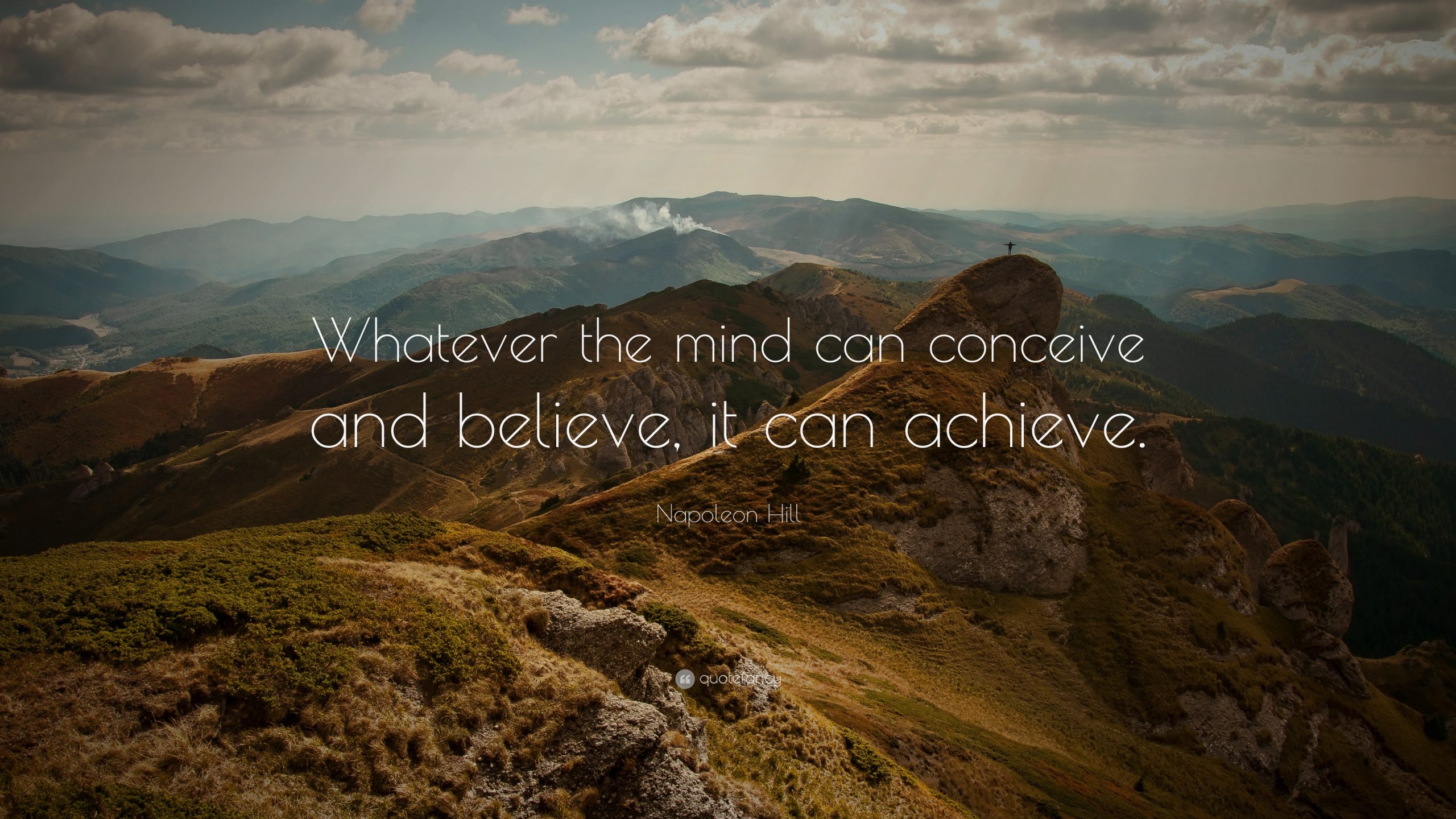
For example, if your goal is to score at least 65% for an upcoming test, your current actions should help you achieve that goal. Some of the things can include taking notes in class, reviewing your notes daily and clarifying any doubts before the test. Teachers are generally more than happy to assist students in meeting their goals. To achieve results, you must be determined to overcome challenges and be consistent in your efforts. Here is a motivational quote that I held on to when I was a secondary student.

This quote reminded me to aim high and strive towards my goals. It also kept me motivated and optimistic.  Are there some motivational quotes that you can print out and put it in your journal or file to inspire you to work hard?

  1. Energy management to achieve high productivity

“Time management is an oxymoron. Time is beyond our control, and the clock keeps ticking regardless of how we lead our lives. Priority management is the answer to maximizing the time we have.” John Maxwell

All of us have 24 hours but why is it that some people can achieve so much in that same amount of time as compared to others?

Our time is limited and finite, but our energy can be renewed in different ways. Our energies can be classified into 4 domains: physical, emotional, mental and spiritual. Optimal energy management results when our physical, emotional, mental, and spiritual energies are maximised.  When we manage our energy well, we can be productive and achieve more within a stipulated time.

  • Physical energy

Instead of relying on caffeine and high sugar level foods to boost short-term energy, sufficient sleep, good nutrition and adequate exercise are what will provide us with the fuel for consistent and heightened energy levels.

However, there are many factors that hold students back from maintaining physical energy. These include academic and non-academic responsibilities, social schedules, improper nutrition, lack of sleep, and lack of motivation. Possible negative results from a lack of physical energy could be decreased hours of sleep as well as attention to physical fitness. Being aware of your current levels of physical energy as well as how you can regulate to minimise. a possible crash and burn.

  • Emotional energy

Emotional energy requires students to view each day an opportunity to better the world around them. While our bodies produce our physical energy to maximize our movement, emotional energy levels help us to sustain our motivation by building enthusiasm for what we are accomplishing throughout our daily routine. Students can combat the negatives of the day by changing their mindset to a positive one filled with the motivation and inspiration needed to complete the tasks of the day. Challenging themselves to start the day with a positive disposition and move successfully throughout the day will allow students to increase their self-awareness of their energy levels in times of negativity, depression, and stress. Once students realize the difference between energy levels, they can utilize positive emotional energy to help regulate their productivity.

  • Mental energy

Mental energy directly connects to a student’s ability to stay focused, retain information, and be productive in the moment. With attention spans decreasing and levels of focus negatively impacted by multi-media and increased out-of-class stimulation, the ability to increase mental energy is imperative to the success of today’s students. Students can combat low mental energy levels by setting short-term and long-term goals for their productivity, only focusing on a single task at a time (decreasing the amount of multi-tasking), taking the time to write notes and making scheduled times to take short breaks once goals have been met. Making students aware of their mental energy levels and how to regulate mental energy can help them to achieve increased levels of success through studying and work completion.

  • Spiritual energy

Spiritual energy means having the ability to be mindful and thankful for all that one has accomplished throughout the day. As students find that the roller-coaster of their day will lead them through both controlled and non-controlled levels of energy, it is important that they are reflective of the day’s activities. Tools for success such as gratitude journals, self-talk, listing three positive things that happened during the day, meditation, and praying all assist in the documentation, communication, and application of increased spiritual energy. Making students aware of their current levels of spiritual energy and how to maintain their positivity throughout the day will help increase levels of presence and gratefulness.

Reflection question 1: Which energy domains do you feel that you need to replenish? How can you be recharged again?

Reflection question 2: On average, it takes more than 2 months before a new behavior becomes automatic — 66 days to be exact. What positive habits do you want to develop to help you perform better in school?

 Sources:

  1. https://www.impossiblepsychservices.com.sg/our-resources/articles/2020/01/06/coping-with-major-life-transition-psychologist
  2. https://www.moe.gov.sg/education-in-sg/our-programmes/social-and-emotional-learning
  3. https://familiesforlife.sg/discover-an-article/Pages/Coping-with-Secondary-School-Tips-for-Parents.aspx
  4. https://files.eric.ed.gov/fulltext/EJ1178733.pdf

Watching movies and shows allows us to temporarily take a respite from the reality of lives. The special effects of films can be so real that sometimes we feel that we have been transported into another world. There are also some genres of movies and shows that provoke us to reflect and think critically about prevailing social attitudes and behaviours.

There is somehow a special lure of horror, gore and thrillers.

Fear isn’t everyone’s cup of tea (or coffee). In fact, fear is not exactly a positive emotion. Lying in bed and bingeing on It and It Chapter Two, trembling as the darkness pushes in around us — this is not a feeling we would describe as pleasant. However, some people still love to consume horror and gore. From popular shows like American Horror StoryThe Walking Dead, Train to Busan to haunted theme parks and scary Stephen King novels, we crave for all kinds of frightening experiences.

What is it about horror, thriller or gore, that humans are so drawn to? Why are some of us willing to spend our hard-earned money on a scare while others go great lengths to avoid it?

  1. Experience stimulation
  • One reason people consume horror is to experience stimulation. Exposure to terrifying acts, or even the anticipation of those acts, can stimulate us — both mentally and physically — in opposing ways: negatively (in the form of fear or anxiety) or positively (in the form of excitement or joy). For instance, watching a horror video simultaneously activates both types of stimulation, with the most pleasure experienced at the most fearful moment. The biochemical inside our bodies also changes when we consume horror. Fright can trigger the release of adrenaline, resulting in heightened sensations and surging energy.
  1. Gain novel experiences
  • Another reason we seek horror is to gain novel experiences. Apocalypse horror films, for example, allow us to live out alternative realities — from zombie outbreaks to alien infestations. Some novel experiences can even contribute to our sense of accomplishment, like visiting a notorious haunted house. Being adventurous in this way makes us feel more worldly or daring (not to mention grants us bragging rights).


  1. Satisfy curiosity about human nature in a safe manner
  • Lastly, horror entrainment may help us safely satisfy our curiosity about the dark side of human psyche. Observing storylines in which actors must confront the worst parts of themselves serves as a pseudo character study of the darkest parts of the human condition. After all, in real life, we might not have the opportunity to get to know a Hannibal Lecter or wander the streets during The Purge. As an inherently curious species, many of us are fascinated by what our own kind is capable of. Observing storylines in which actors must confront the worst parts of themselves serves as a pseudo character study of the darkest parts of the human condition. 

Who loves horror? 

There are notable individual differences in how much we are attracted to consuming horror.

  1. Personal traits

Some research indicates that people with a higher sensation-seeking trait (i.e., a stronger need for experiencing thrill and excitement) tend to seek out and enjoy horror-related experiences more. Those with a lower sensation-seeking trait may find those experiences unpleasant and avoid them. Relatedly, the trait of openness to experience (or the need to engage in imaginative activities) is also a predictor of horror consumption — a stronger openness to experience is associated with increased affinity towards horror.

In addition, individual differences in empathy are associated with enjoyment of horror. Those who are not so empathic can enjoy horror more. This is because those with a higher level of empathy tend to feel more strongly and negatively about distressing situations (eg, people being tormented by a devious murderer in a film) the characters are in.

  1. Gender and age

Gender and age also appear to matter in an individual’s interest in horror. One survey found that, on average, younger individuals tend to be more attracted to this scary genre and that men are more likely to be fans of horror than women. Women and men also like different aspects of a horror experience. For example, women may enjoy a horror movie more when it offers a happy ending (e.g., the evil entity ends up destroyed), whereas men may enjoy a horror movie more when it is loaded with intensely terrifying acts.

  1. Economic development

Lastly, the preference for consuming horror may differ across the stages of economic development. Individuals from countries with a higher GDP per capita consumed horror movies to a greater extent, but the same pattern was not observed for other movie genres such as romance. This pattern occurred because lacking financial resources can degrade the psychological protective frame needed for horror enjoyment.

Are there any benefits to consuming horror?

Beyond the pleasure we get from the scary entertainment, consuming horror may yield a few hidden benefits:

Catalyst for falling in love: Research suggests that consuming horror (e.g., watching a horror movie, visiting a horror theme park) together with a date may facilitate feelings of romance. Why? Co-experiencing horror (like a non-stop pounding heart evoked by scary scenes) can add to the excitement we feel toward each other.

Conduit for social bonding: Consuming horror in a group is a great way to bond and connect with our friends and family. Research suggests that such bonding is linked to oxytocin, which is often released when we are in frightening situations. This hormone facilitates feelings of closeness and affinity among the group members. (Maybe, it’s time to test this out with a horror night with your teammates!)

Post-horror relaxation: While we feel highly stimulated during a horror experience, a sense of relief arrives after a positive conclusion of the experience (e.g., the evil entity gets obliterated), triggering the release of endorphins in our brain which helps us in relieving stress and improving our moods.

“What if I want to watch horror movies but I am… scared?”

If you are fearful of watching horror movies, you have the choice of not watching. It does not make you less courageous or brave in any sense. However, if you still choose to watch horror movies, you can protect yourselves with psychological “protective frames”.

Protective Frame 1:

You need to believe that you are physically safe — a safety frame. For example, although the evil entity in a movie might be committing terrifying acts in front of your eyes, you can manage your fears and even enjoy the movie as long as you believe that the evil entity is physically distant from you and hence cannot cause harm to you. If, however, you start to believe that the evil entity is coming out of the screen to hurt us, then the experience will no longer be fun. Some movies might also be inspired by true stories and hence causing your mind to wonder if fiction can become reality. This train of thought must be stopped as it has gone beyond the ‘safety frame’.

Protective Frame 2:

The second category of protective frame involves detachment — whether you can psychologically detach from a horror experience. When you see a psychotic murderer chasing down a bloodied victim in a film, you can activate psychological detachment by reminding ourselves that they are just actors, and great acting is what is happening on the screen.

Protective Frame 3:

The third category of protective frame involves your confidence in controlling and managing the dangers you encounter. If you visit a haunted house, for instance, and a realistic-looking, blood-thirsty zombie charges at you, you can still feel thrilled or excited from the encounter if you feel confident about overcoming the danger. (“We can easily outrun that slow zombie!”)

Research suggests that the absence of any of these psychological protective frames in the moment reduces the preference for horror consumption, which may explain why some people stay away from spooky movies, books, or events. If you are unable to form a safety frame, it might be wise to just avoid watching horror movies entirely.

Understanding the psychology of horror consumption allows us to enjoy the genre more. At the very least, we should get our psychological “protective frame” ready before soaking in all the horror.

If you are interested in the horror, mystery and suspense genre and would like to improve your English language at the same time, do check out these books from the libraries! Finding a genre that you like can ignite your love for reading. Imagine the surprise in your parents’ face when you choose to read instead of scrolling on social media!

Fiction

  1. Series written by Karin Slaughter: https://mysterysequels.com/karin-slaughter-books-in-order
  2. Books by Thomas Harris:https://www.howtoread.me/hannibal-lecter-books-in-order-thomas-harris/

Take a look at this compiled list by Reader’s Digest here: https://www.rd.com/list/scariest-books/

What is your favourite genre of movie? Why?

Adapted from article written by Haiyang Yang and Kuangjie Zhang:

https://hbr.org/2021/10/the-psychology-behind-why-we-love-or-hate-horror)%20For%20all%20fans%20of%20horror,%20Happy%20Halloween!