
Archives For Uncategorized

Cultural faux pas can happen when we are unaware of the cultural etiquette in certain countries. It is particularly common to come across certain gestures and behaviors which mean different things in different countries. Part of traveling abroad is familiarizing yourself with the code of conduct in the different countries. Failing to do so can not only cause social embarrassment but could lead to being arrested or deportation in serious cases. Therefore, before visiting a country for the first time, whether for business or leisure purposes, it is crucial to do some research to find out about the culture, customs and social norms.

Social norms are the unwritten rules of beliefs, attitudes, and behaviors that are considered acceptable in a particular social group or culture. Norms provide us with an expected idea of how to behave, and function to provide order and predictability in society.

The following is a list of taboo types of behavior to avoid while touring different countries.

Thailand: Do not insult the king

 In Thailand, defaming, threatening, or insulting the king or the royal family can come with harsh consequences. Lèse–majesté (wounded majesty) laws in the nation are some of the strictest in the world. The offender stands to be imprisoned for three to fifteen years for each count. Convictions under this law have increased since the 2014 military coup in the country. Read more about the cultural etiquette in Thailand here: https://www.tripsavvy.com/thailand-etiquette-dos-and-donts-1458305

China: Do not leave your chopsticks upright in a rice bowl

The use of chopsticks is an important element of dining etiquette in China. Chopsticks take the place of knives and forks at Chinese tables, and the food is served in bite-sized pieces for easier holding. It is not advisable to leave chopsticks upright in a rice bowl as it is said to resemble incense sticks offered to the dead. The Chinese offer food to the dead with the chopsticks upright, meaning the practice is otherwise taboo. Holding chopsticks upright is also viewed as impolite to hosts. In other countries like Japan and Korea, these actions are also frowned upon.

Sri Lanka: Do not show tattoos Of Buddha

 The religious and cultural lives of the majority of Sri Lanka’s population revolve around Buddhism. Buddhas are highly revered figures in the nation. There have been cases where foreigners have been barred from entering Sri Lanka or have been deported for sporting a Buddha tattoo. According to authorities, having a Buddha tattoo is a sign of disrespect and insensitivity to other people’s religion and culture. If you have a buddha tattoo and decide to venture into Sri Lanka, it’s best to cover it up. Also, avoid wearing any clothing with the image of Buddha.

 United Arab Emirates: Do not wear revealing clothing
Out of respect and in keeping with the dress codes of local establishments, women are generally advised to wear clothing that covers from the shoulders to the knees. Tight-fitting sports apparel, such as cycling shorts, is generally not advised for either men or women unless worn in a sports venue.

United Kingdom: Do not show a backwards/reverse peace sign

While the two-fingers salute formed in a ‘V’ shape might be interpreted as a peace sign in most countries, the case is not so in the United Kingdom. When done with the palm of the hand facing inward, the sign becomes as insulting as using the middle finger is in the US. The gesture is commonly used to communicate contempt or defiance. It is best to avoid gesturing this to Brits. Read about other hand gestures that are considered rude in different countries here: https://www.rd.com/article/common-hand-gestures-rude-in-other-countries/

Amsterdam – Do not walk in the cycling lane

Cycling lanes are a common feature in Amsterdam and cycling has become the transport choice for most of the city’s inhabitants. The Amsterdam transportation infrastructure also includes sidewalks for pedestrians. Pedestrians using cycle lanes block the way for cyclists and can even cause collisions. It is advisable to stick to the clearly-marked pavements when walking and the cycling lanes when cycling. 

Mexico: Don’t give marigolds as a gift

When gift-giving in Mexico, be sure to avoid marigolds. The reason is that marigolds are prominently featured in the Dia de Los Muertos holiday celebrated on the first two days in November. It is believed that dead spirits are guided to their altars by the scent and color of marigolds. Thus, marigolds in the country are associated with death. It is rude and inappropriate to bring marigolds to the home of a host or to give them as a gift.

Why do some people have wanderlust – and not others?
https://www.bbc.co.uk/ideas/videos/why-do-some-people-have-wanderlust—and-not-other/p07wg5kn?playlist=the-extraordinary-human-brain (3.31 mins)

Craving for Company

January 4, 2026 — Leave a comment

Why do young people feel so lonely?
https://www.youtube.com/watch?v=2USh8OmgiJE (6.15 mins)

Transcript: https://www.bbc.co.uk/learningenglish/english/features/6-minute-english/ep-181108

Are you feeling lonely?

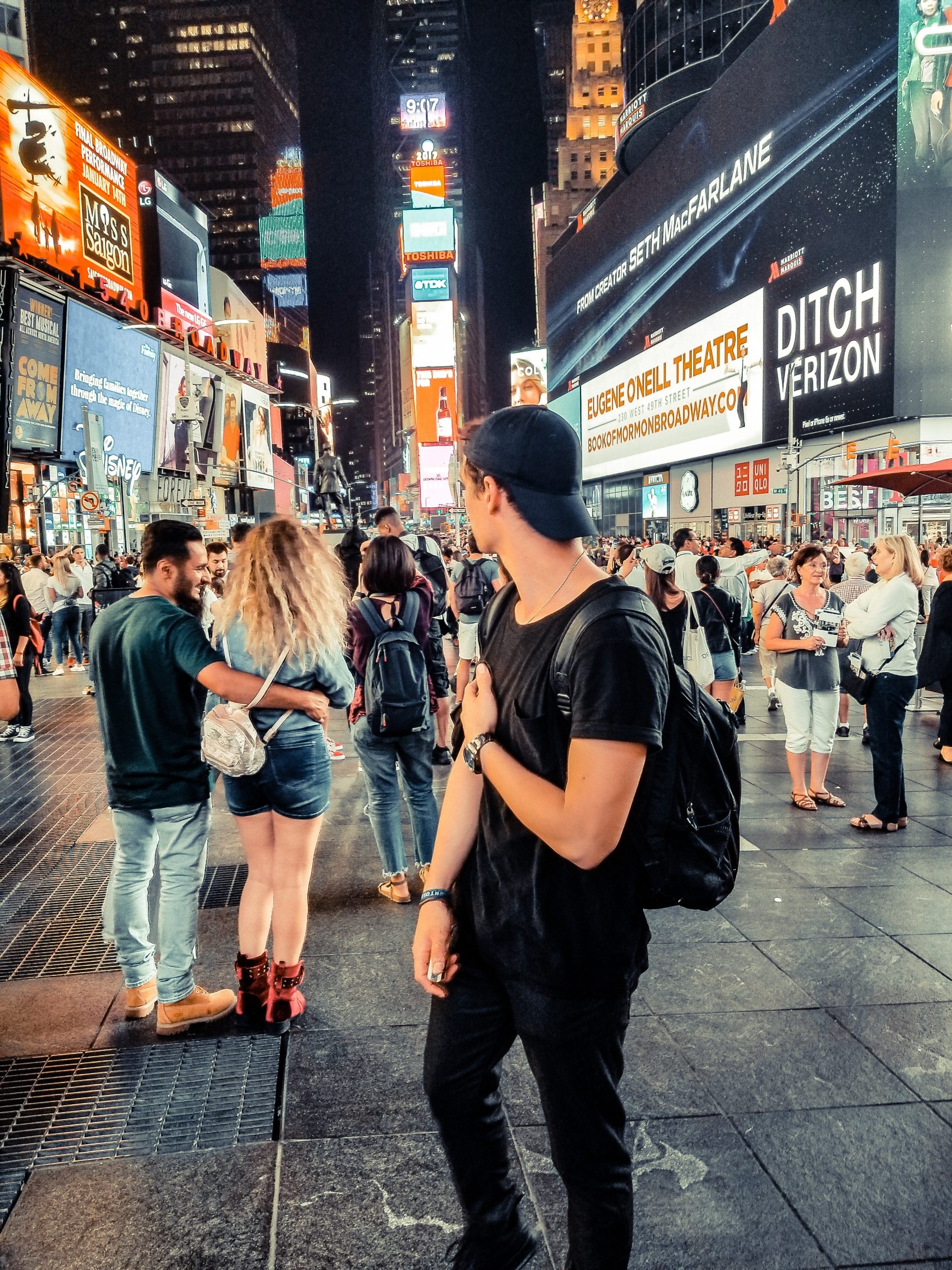
Loneliness is an emotional response that many people are familiar with. In the UK,   loneliness is defined as: ‘a subjective and unwelcome feeling which results from a mismatch in the quality and quantity of social relationships we have and those that we desire’.

Loneliness can be experienced within a crowd. For example, people can be with a group of few others but can still feel lonely. On the other hand, being on your own does not necessarily mean feeling lonely. Some prefer solitude and being alone makes them feel peaceful and happy.

https://www.pexels.com/photo/people-walking-on-road-between-high-rise-buildings-1461378/ (left)

https://www.pexels.com/photo/silhouette-of-person-on-top-of-rock-formation-2409694/ (right)

Psychologists worry that the coronavirus pandemic is triggering a loneliness epidemic. New Harvard research suggests feelings of social isolation are on the rise and that those hit hardest are older teens and young adults.

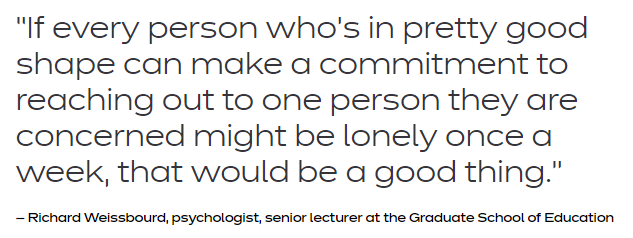
Richard Weissbourd, a psychologist and senior lecturer at the Harvard Graduate School of Education (HGSE) expressed his surprise at the degree of loneliness among young people. He stated that although other studies on the elderly reveal that their rates of loneliness are high, they don’t seem to be as high as they are for young people.

Here are the reasons why you might be feeling lonely

  1. Lack quality and genuine relationships

Many young people who reported serious loneliness also said they felt as if no one “genuinely cared” about them. Students entering new schools may be struggling to fit in while those not in school can feel disconnected from important social groups or communities. They may lack family support and connection with family members.  It is no surprise that some people who experience loneliness try means and ways to fit into the wrong crowd or become a victim of peer pressure.

  1. Individualistic society

Many people often choose to focus on the well-being of their small circle of family and friends and fail to reach out to others who experience loneliness or social isolation. A survey suggests that lonely people often feel they’re reaching out or listening to other people more than other people are reaching out or listening to them. When you feel like you’re trying hard while other people are not trying hard, or you feel like you’re going to get rejected again, you withdraw, which increases your loneliness and your anxiety about social situations.

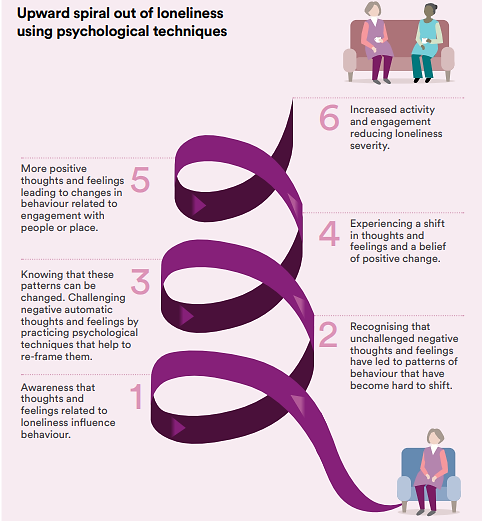
Feelings of loneliness can lead to a loss of confidence and influence behaviour, perhaps causing people to withdraw from contact with others. This behaviour can in turn set off a downward spiral of more negative thoughts and despair, leading to more intense feelings of loneliness, leading to more prolonged periods of isolation.

Loneliness is a normal human emotion that anyone can experience, regardless of age or background. It is not a personal failing. Everyone will have a different experience of loneliness and different reasons for why they are feeling this way.  There is no one way to effectively deal with loneliness but there are lots of different things that can and do help. To further reduce the stigma associated with loneliness, there can be local campaigns that stress the importance of maintaining social ties, and reassure those suffering that it’s OK to seek help.

There are psychological techniques to help someone who is down to be in the upward spiral out of loneliness. Read from 1 – 6.

Screenshot credit: https://www.campaigntoendloneliness.org/wp-content/uploads/Psychology_of_Loneliness_FINAL_REPORT.pdf (p.17)

Here are other practical suggestions to help with loneliness:

1.    Connect with others

a)    Catch up with old friends

We all need to invest time in maintaining friendships. Reach out to your friends by picking up the phone or sending them a message through social media. You may feel that your friends are busy and will not have time for you, but you may be surprised when you take the first step to connect

b)    Invest time in new connections

Joining local groups or classes based on your interests is one of the best ways of making new connections. Volunteering is another excellent way to get involved in your local community. Not only is it a great way to meet new people, but you can also develop your own skills and interests.

  1. Little things can make a difference

Say ‘hello’ to a neighbour, your local shop keeper or a person at the bus stop. Brief exchanges with others can positively impact how you feel about yourself and can make you feel more receptive to other, possibly more meaningful relationships.

  1. Connect online

Technology is a great way to stay in touch with friends and family, and make new friends. There are often free courses offered in libraries and in community centres to help improve your digital skills.

2.    Other things you can do if you prefer to manage alone

a)    Plan your week to do something you enjoy

Plan your week to include a hobby or activity that makes you feel good, such as doing something creative, reading, gardening, or listening to music.

b)    Spend time outdoors

Going outside regularly, be it in your garden or a walk to the park, is a great way to boost your mood. It can help you to feel more connected to your neighbourhood and the natural world.

c)    Focus on the good things in life

When you are feeling lonely, you can sometimes get yourself into a negative frame of mind. Thinking about the good things in your life, or remembering happy times such as a holiday, can help you to think more positively.

d)    Look after yourself

Prioritise looking after yourself. Make sure you are eating healthily, being as active as you can be, and sleeping well. Physical health affects your mental health too.

3.    Consider support and services

a)    Find out what support is available in your school.

Teachers are equipped with basic counselling skills and are meant to keep a watchful eye over their students, provide a listening ear and reach out to students if they sense something is wrong. Students also have access to another group of teachers with specialised training, known as teacher counsellors, as well as a school counsellor, who is able to provide dedicated support. In some schools, there are also peer support leaders who will provide a listening ear.

b)    Don’t keep things to yourself

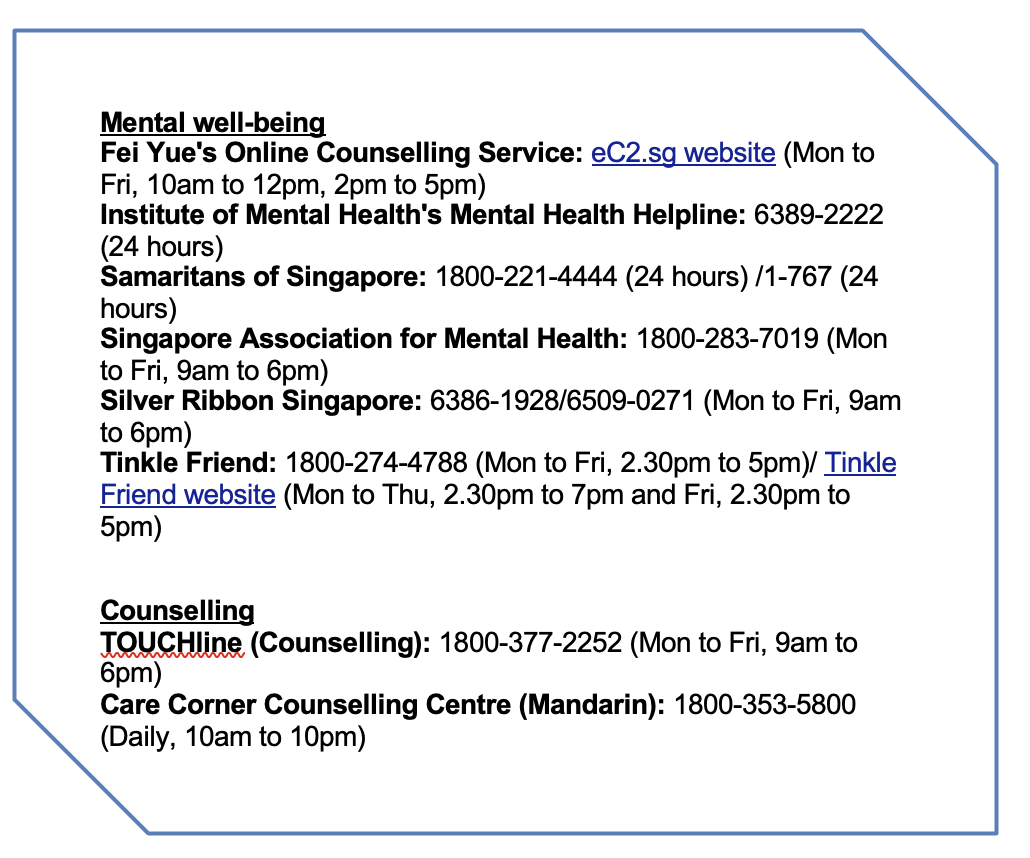
Talking to someone about how you feel and learning positive coping techniques can be a helpful way to cope with the negative emotions associated with loneliness. Don’t shrug off feeling lonely as a ‘small issue’ and don’t be afraid of reaching out and being judged. If you feel that you are unable to manage with some strong emotions, below are some helplines available:

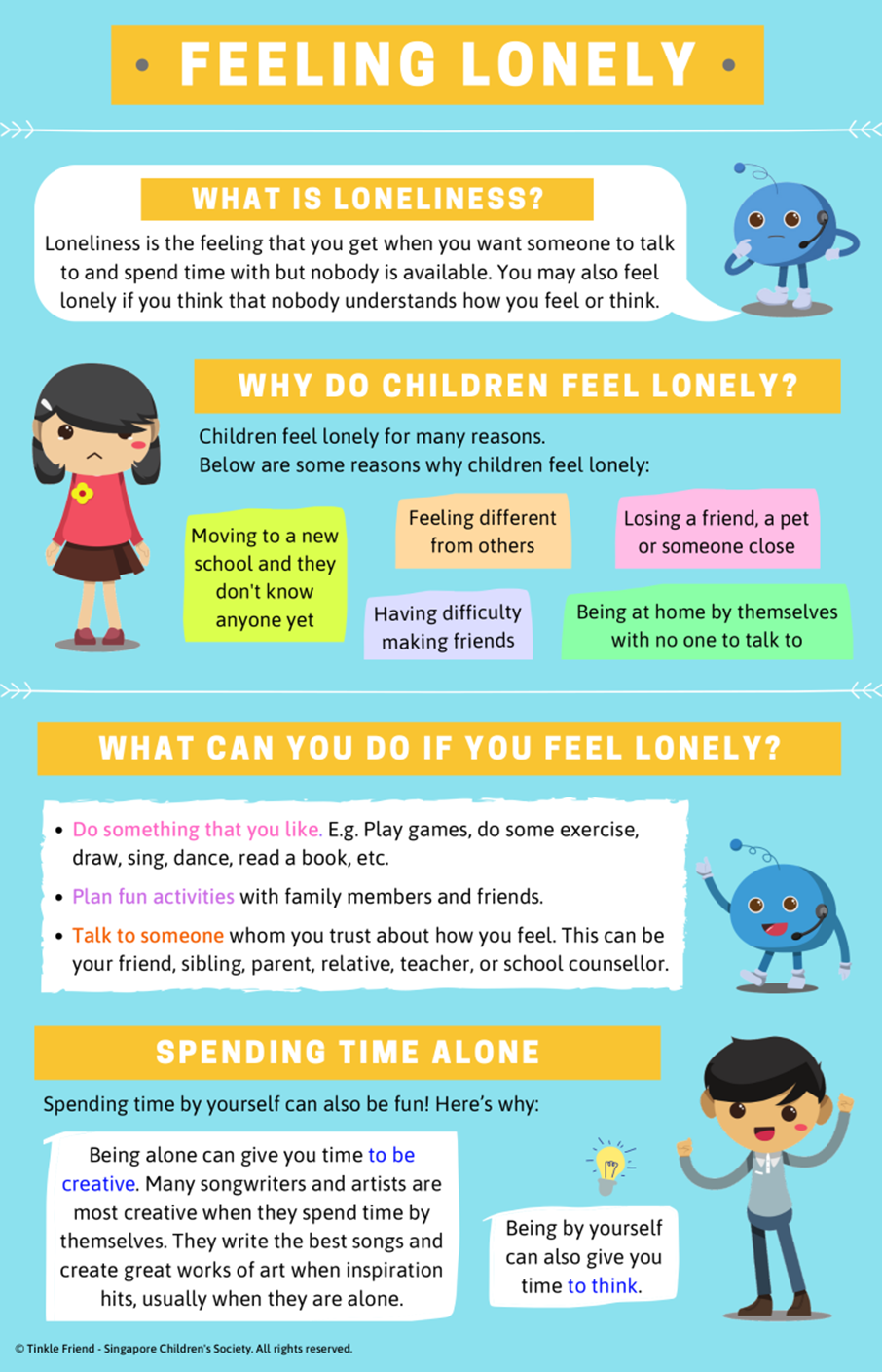
Image credits: https://tinklefriend.sg/info-detail/feeling-lonely

  1. When you are feeling lonely, what are some meaningful activities that you can do?
  2. What can you do to reach out to people whom you think are feeling lonely and left out?

Sources:

  1. https://www.campaigntoendloneliness.org/the-psychology-of-loneliness-why-it-matters-and-what-we-can-do/
  2. https://www.campaigntoendloneliness.org/feeling-lonely/
  3. https://news.harvard.edu/gazette/story/2021/02/young-adults-teens-loneliness-mental-health-coronavirus-covid-pandemic/
  4. https://www.channelnewsasia.com/cna-insider/mental-health-what-schools-doing-help-students-2655911
  5. https://www.straitstimes.com/singapore/parenting-education/more-than-counselling-how-schools-help-students-with-mental-health


In the movie King Kong (1933, 2005), the great ape is always portrayed as enormous beings with fiery strength and immense power. The imagery of a King Kong beating chest and releasing a fierce and intimidating growl is not unfamiliar to us. One of the key messages of the King Kong is to serve as a warning against mankind’s desire to exploit Nature for personal gain. The great ape is personified as the unbridled force of nature, which when belittled by men, unleashes a fury that has severe repercussions. Ironically though in every Kong movie till date — there have been 8 so far — the ‘beast’ exudes more empathy than other ‘human’ beings. 

   Image credits: https://www.imdb.com/title/tt0360717/mediaviewer/rm2524386304/

Are the great apes misunderstood creatures?

In Kong: Skull Island, the humongous ape was wrongfully depicted to be a murderous creature when he was in fact the king and guardian of the island, trying to protect his habitat.  

It is time to truly know gorillas for who they are.

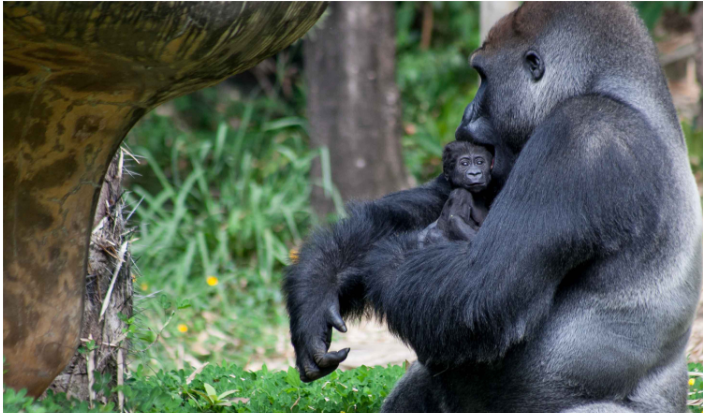
Gorillas are incredibly smart individuals, who are able to learn sign language and use tools. The eastern gorilla, the largest living primate, sounds like a hurricane wind shredding through the jungle when “displaying,” or showing off to prevent competing males from taking over their harem of females. They sit with a unique awareness, eyes ever vigilant on the forest and their group. In 2012, a staff member of the Dian Fossey Gorilla Fund‘s Karisoke Research Center saw something unlike anything ever witnessed: several juvenile gorillas worked together to destroy snares after a poacher’s snare had killed one of their own days before. Now, instead of just finding the best mates, foraging for food or raising their young, adaptation for gorillas means surviving being the constant target of those with weapons aiming to harm them or capture them, relentlessly.

In 2018, the International Union for Conservation of Nature (IUCN) listed the eastern gorilla as critically endangered in their Red List of threatened species. In 1995, there were close to 17,000 in the wild. Now, there are about 2,600 mature eastern gorillas in the whole world.

What are the causes of the decreasing population of gorillas?

  • Slow reproduction rate
  • Like humans, gorillas reproduce slowly, giving birth to only one baby at a time and then raising that infant for several years before giving birth again. This slow reproduction rate makes gorillas especially vulnerable to any population declines. Gorillas’ low reproductive rates means that even low levels of hunting can cause a population decline, which could take many generations to be reversed.
  • Habitat loss
  • Habitat destruction is a problem across their central African range. Only 17% of the gorilla population currently lives in protected regions, and vast areas of gorilla forest has already been lost. That destruction continues as logging companies open up fast tracks of forest, forests are cleared to make space for subsistence farming or ape habitat becomes fragmented by road building.
  • There is also a strong link between habitat loss and the bushmeat trade. As previously inaccessible forests are opened up by timber companies, commercial hunters gain access to areas where gorillas roam and often use logging vehicles to transport bushmeat to far away markets, as well as sell meat to employees of the logging companies.
  • Hunting and trade
  • Gorillas are killed for the bushmeat trade, or accidently killed or maimed by iron snares that are set in the forests in search for other bushmeat species such as pigs (red river hog). That trade has helped spread the Ebola virus, which is deadly to both gorillas and humans. Efforts to protect gorillas are often hampered by weak law enforcement, lack of rule of law, and civil unrest in many places where gorillas live.
  • The commercial trade in bushmeat, which occurs throughout west and central Africa, is the biggest threat to gorillas today. Apes are being killed primarily to supply high-end demand for meat in urban centers, where the consumption of ape meat is considered to be prestigious amongst the wealthy elite. Although gorillas may constitute only a small proportion of all animals killed for the bushmeat trade, they present easy targets for hunters, and in many areas gorillas are favored by hunters because of the weight of meat they can sell.
  • Disease
  • Ebola hemorrhagic fever is a severe, infectious, often fatal disease that has devastated many African great ape populations. Scientists in 2003 estimated that a third of the wild gorilla population had been killed by the Ebola virus, and the species remain at risk. Additionally, because gorillas share so many traits with humans, they are susceptible to other human diseases. Populations of gorillas that are in frequent contact with humans are particularly vulnerable to deadly respiratory infections. In mountain gorilla range, where gorillas frequently raid farms or come in contact with humans through tourism, they are susceptible to scabies, tuberculosis (TB), and a host of other diseases from human transmission.
  • Weak law enforcement
  • Both the killing of gorillas and trade in gorilla products are illegal across the animals’ range, but due to weaknesses in law enforcement capacity and broader governance issues in some of the regions where the gorillas live, poachers, traders, and consumers are rarely apprehended.

From the reasons explained above, we are cause of the deaths of gorillas. The International Union for Conservation of Nature (IUCN) considers all six species of great apes endangered, with four of the six—the eastern gorilla, western gorilla, Bornean orangutan, and Sumatran orangutan—critically endangered.

Regretfully, gorillas are not the only great ape species listed who suffer for the beastly nature of humanity. The Bornean and the Sumatran orangutan, and the western gorilla are all on a path toward extinction as well, and are listed as critically endangered. Bonobos are also endangered, as are the beloved chimpanzees. Great apes, the animals we share a most recent familial past with (and potentially a thrilling and fascinating future with), are fading from our world. Some estimates conclude that we have 10-15 years before these animals are gone entirely. The gorilla, and other great apes, will disappear if we do nothing.

Image credits: https://news.janegoodall.org/wp- content/uploads/2016/09/15699353109_477294e313_o-e1473794315615.jpg


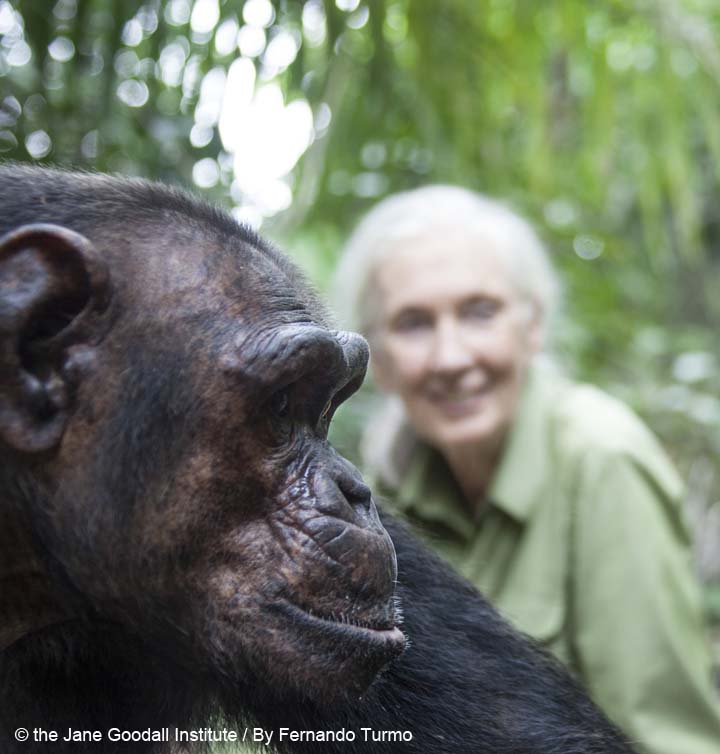
Jane Goodall, at the IUCN World Congress in 2016, discussed corruption in governments and corporations, who either drive this devastation or do nothing to stop species loss.

“Unfortunately, the progress we are making is on greater awareness – overall the numbers [of apes] are still falling. It’s worst in Indonesia with palm oil and the orangutans, but we are now seeing palm oil move into Africa. We’re also seeing a resurgence of chimpanzees in the pet trade we thought that had more or less stopped. Some of the protected places are working well, some aren’t. We will lose more apes, but we are not going to lose,” said Dr Goodall.

Ulengue after his release at Tchindzoulou Island.

It didn’t take an official listing by the IUCN for an awareness of the consequences of doing nothing to be known for those who understand conservation and the primates (along with other species) we need to protect.

The Jane Goodall Institute coordinates CAP (Conservation Action Plan) in the Democratic Republic of the Congo, working with the Dian Fossey Gorilla Fund, the Disney Conservation FundGRACE (Gorilla Rehabilitation and Conservation Education)Gorilla Doctors, and conservation planners with support from the Arcus Foundation. This project targets 66 million acres, roughly the size of Colorado, where 35,000 chimpanzees and 2,500 to 3,000 gorillas live. CAP works to engage these groups to collaborate in protecting critical ape habitats using community centered conservation, GIS (geographical information systems), land use planning, monitoring, rehabilitation and research in a holistic way. We can do something to save these animals.

Humanity’s relationship with great apes has been consistent over time; fear, intrigue and exploitation, culminating in tragedy. However, this need not be the end of the story. It will take all of us – billions of people who share this earth – to revive these species in time. We can write our own story; each page bound by hope, each word inked by action. We will not let great apes fall. 

Do you think that gorillas should be kept in zoos?

Here are other links to find out more about gorillas:

  1. WWF: Facts about Gorilla https://www.worldwildlife.org/species/gorilla#:~:text=The%20largest%20of%20the%20great,a%20lowland%20and%20upland%20subspecies
  2. Do Gorillas Even Belong in Zoos? Harambe’s Death Spurs Debate

https://www.nytimes.com/2016/06/07/science/gorilla-shot-harambe-zoo.html

  1. Where the gorillas live https://www.cincinnati.com/story/news/2018/05/18/cincinnati-zoo-travels-congo-where-gorillas-live/570218002/
  2. Gorillas Beat Their Chests to Communicate With Each Other

https://www.smithsonianmag.com/smart-news/gorillas-beat-their-chests-communicate-each-other-180977477/

  1. https://www.instagram.com/savinggorillas/

Sources:

  1. https://news.janegoodall.org/2016/09/13/lost-in-the-mist-the-fall-of-the-great-apes
  2. https://toistudent.timesofindia.indiatimes.com/news/top-news/the-symbolism-of-king-kong/19282.html
  3. https://www.commonsensemedia.org/movie-reviews/kong-skull-island


Image credit: https://lkyspp.nus.edu.sg/gia/article/research-spotlight-series-how-much-does-a-singapore-household-need-for-a-basic-standard-of-living

Plight of migrant workers in Singapore

Dr Mohan Dutta states that migrant workers are an invisible community in Singapore. Advocacy group Transient Workers Count Too (TWC2) calls them  the “hidden backbone” of Singapore society. Singapore’s 1.4 million foreign workers make up about one-third of the country’s total workforce, according to government figures. Most of the low-wage workers are from India, Bangladesh, Myanmar, China and other countries and they normally work in industries like manufacturing or construction.

TWC2’s vision statement states that, “All labour is dignified and should be treated with respect and consideration. Ethnicity, colour, gender, language, religion or class are irrelevant – no worker should be subjected to inhumane or degrading treatment.”

In 2020, Covid-19 clusters detected in the overcrowded dormitories and industrial worksites highlighted the poor living conditions of vulnerable migrant workers. With no legal maximum occupancy rules, in pre-Covid times it was normal for up to 20 men to share a room in a dorm. 

The pandemic has brought about added stress to the migrant workers due to the almost impossible feat of adhering to social distancing rules in the tiny spaces which they were living in. Their right to live in Singapore is tied to their job and their employer must provide accommodation, at a cost. Therefore, due to fear of losing their jobs, many do not complain about their living and working conditions.  “Not only are they unseen, but their voices are also unheard,” says Dr Dutta, a professor who studies the intersection of poverty and health at Massey University in New Zealand.

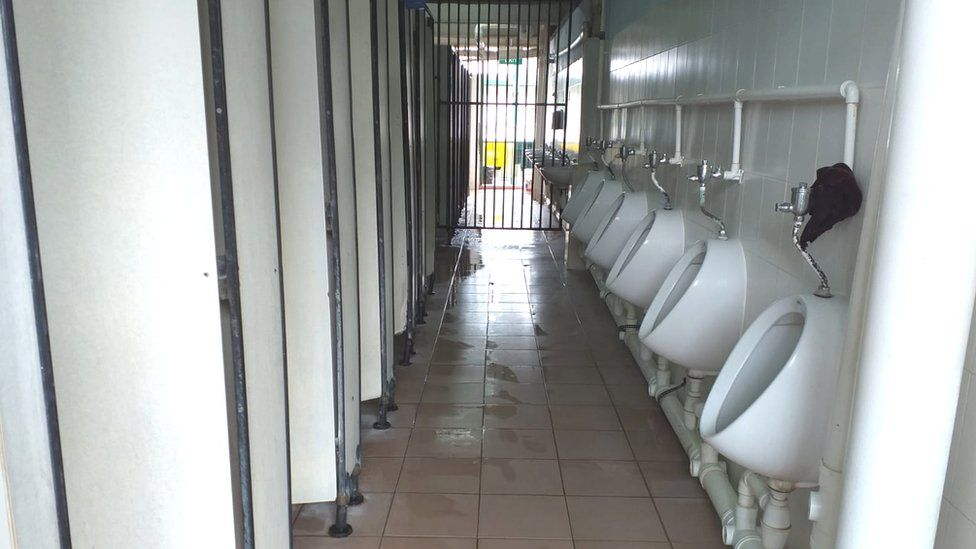
Zakir Hossain Khokan, a migrant worker from Bangladesh shares that his room which measures around 6m by 7m, is shared by up to 12 men. In a usual dormitory, each floor is home to 15 such rooms – or up to 180 men assuming each room is fully filled. They share one toilet facility, with six basins, shower cubicles, toilets and urinals.

Image credits: https://www.bbc.com/news/world-asia-54082861

Government guidelines state that there should be 15 beds to one toilet, shower and sink. On a daily basis, they commute from their dorms in packed vans to building sites where they work and take breaks alongside men from other crowded dorms – perfect conditions for the virus to spread.

Non-governmental organisations (NGOs) in Singapore such as Migrant Worker’s Centre (MWC) and Transient Workers Count Too (TWC2) promotes fair treatment for migrant workers and provide opportunities for social acceptance and integration through outreach activities, community engagement, advocacy and public education. They also extend assistance to workers in need to ensure that they have fair resolution of their cases, dignity in work and living conditions, access to medical care, and protection of their rightful autonomy. By engaging in public education, they also strive to promote the social conditions in which exploitation, abuse and injustice become history.

What else can we do to help migrant workers?

  • Be their voice and advocate

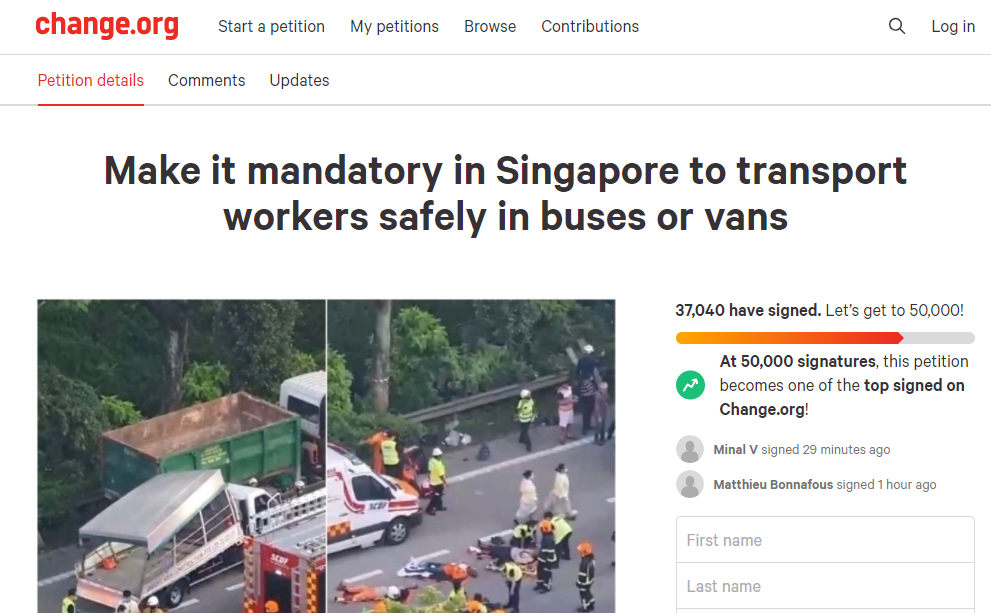
Voice out concerns and push for changes to improve their safety and well-being. News of the tragic deaths of migrant workers in road accidents and pictures of migrant workers travelling on the roads in unsafe conditions highlighted the need for things to change. Bridget Chen started a petition to “appeal to Land Transport Authority (LTA) to review outdated practices, and make it mandatory for employers to transport workers by safe and humane standards, such as hiring vans, buses or even using old SBS buses or installing collapsible seats with seat belts like in SUVs.

Image credits: https://www.change.org/p/land-transport-authority-make-it-mandatory-to-transport-workers-in-buses-or-vans?redirect=false

  • Get involved with organisations who actively seek to meet the needs of the migrant workers

Non-profit organisation group ItsRainingRaincoat aims to improve the lives of migrant workers in Singapore, and build bridges to strengthen their integration into our broader community. They do this by using imaginative, innovative, authentic and nimble strategies.

Watch this video to find out how an encounter with migrant workers led Ms. Dipa Swaminathan to start ItsRainingRaincoat:

https://www.ted.com/talks/dipa_swaminathan_helping_migrant_workers?fbclid=IwAR3vzK926tcjeKEv6qdVxhi-okARS1upZeu_XmeYHKjpBKkBIg28YwRVXl4

You may not be a lawyer like Ms. Dipa (for now), or have plenty of resources at hand, but a word of appreciation or small act of kind gesture to the migrant workers for their contributions, can light up their day.

Do visit: https://www.facebook.com/itsrainingraincoats to find out more on how you can contribute to the cause.

What are the other vulnerable and ‘overlooked’ groups of people in Singapore? What can you do to help improve their circumstances?

Sources:

  1. https://lkyspp.nus.edu.sg/gia/article/meritocracy-in-singapore-solution-or-problem
  2. https://www.bbc.com/news/world-asia-54082861
  3. https://time.com/5825261/singapore-coronavirus-migrant-workers-inequality/
  4. https://www.straitstimes.com/singapore/stepping-up-in-a-crisis-how-migrant-workers-took-on-leadership-roles-during-covid-19
  5. https://twc2.org.sg/


Learning with new innovations

Students in the 21st century learn differently from the past generations. In this century, teachers are no longer the main source of knowledge. This means that the roles of teachers have also changed. Rather, they are facilitators in the classroom, assisting and directing students to think critically as students search for relevant information from various sources.

All Secondary school students in Singapore will own their own personal learning devices to support their home-based learning and to support teachers in facilitating learning in the classrooms.

How has students’ learning changed with advances in technology?

Technology has enabled learning to become more interactive.  It can transport students into real-world or simulated locations or simulated environments, and interactively test and record their skills and reactions in a wide range of situations.

VR and AR can be used to invite world-renowned experts into the classroom, and introduce exhibits and examples that might be otherwise too costly, rare, destructive or hazardous to actually bring into the academic environment. 

Virtual Reality (VR)

VR refers to a computer-generated simulation in which a person can interact within an artificial three-dimensional environment using electronic devices, such as special goggles with a screen or gloves fitted with sensors.

Virtual Reality has the potential to immerse audiences, capture attention and dramatically reveal and showcase crafts, skills, sciences and systems in very memorable ways.  It can transport students into real-world or simulated locations or simulated environments, and interactively test and record their skills and reactions in a wide range of situations.

For example, SuperChem VR is a virtual reality Chemistry laboratory which allows students to interact safely in a lab environment. Perform actual measurements correctly in order to complete tasks. Learn real lab procedures, without having to worry about breaking materials and running out of resources.

Watch this to find out more: https://www.youtube.com/watch?v=UUUL7ToMgwk

Augmented Reality (AR)

AR offers two-dimensional methods of presenting information as compared to the traditional one-dimension. As a result, students can visualise and recall information more easily.

AR can add real value to science-based learning. For example, not everyone can buy a skeleton to learn about the human body or explore specific aspects of its build in more depth. However, everyone with access to an AR-enabled book or application could retrieve such information in 3D format and satisfy their preference for visual learning. It is not just anatomy though, think about visualization of how protons, atoms, neutrons, and electrons work in chemistry and what the applications could be for biology. Some examples of how learning is made more interesting with AR.

Art lessons made alive with AR  

https://www.youtube.com/watch?v=SWzurBQ81CM

Learning Biology through AR

https://www.youtube.com/watch?v=fErORRhozYk

Learning Chemistry through AR

https://www.youtube.com/watch?v=Qi3h18wJJiI

What are some other creative ways you can use to learn better?

Sources:

  1. https://www.thevrara.com/blog2/2017/10/17/virtual-reality-the-next-generation-of-e-learning-in-schools
  1. https://overlyapp.com/blog/augmented-reality-in-the-classroom-ideas-for-digitizing-education-and-training/