Archives For Uncategorized

The Bystander Effect (Examples + Experiments)
https://www.youtube.com/watch?v=GZgIYGaeWy0 (5.28 mins)


Teachers’ Resource:

Resource Kit for Pick-A-Hero
https://www.srtlearning.com.sg/resources/ck/files/SRT_Pick_A_Hero_LearningPack_19Feb21_FINAL.pdf

Videos of Pick-A-Hero
https://www.srtlearning.com.sg/programme/pick-a-hero

Cyberbullying is defined as the deliberate and repetitive act of aggression, when a perpetrator intends to cause another person distress or harm. It can happen on any digital platforms: social media, gaming, text messages or emails.

As the social life of young people has moved onto the internet, ‘electronic bullying’ becoming a significant new problem in the past decade. Whereas bullying was once largely confined to school, the ubiquity of handheld devices affords bullies constant access to their prey. Cyber harassment can be especially disturbing because it can often be carried out anonymously; victims may have no idea who the perpetrators are.

Common types of bullying behaviours among children include: 

  • Name calling
  • Insults and abuse
  • Public and humiliating pranks
  • Spreading unpleasant rumours
  • Sharing personal photos or information of someone without their consent
  • Altering images of people without their permission and sharing them
  • Exclusion, which involves intentionally singling out and excluding someone from an online group, and gossiping about them behind their back.

Cyberbullying can cause physical, emotional, and mental health trauma in those who are being bullied. People go through bullying often exhibit symptoms of depression, stress, and anxiety, which can foster feelings (or worsen existing feelings) of worthlessness, isolation, and low self-esteem. Serious or persistent harassment can contribute to depression, self-harm, suicidal thoughts, and for a small minority of victims, even suicide attempts (this is called bullycide or death by bullying).

As victims often do not know who the bully is, cyberbullying is particularly unsettling and extremely difficult to combat. Furthermore, there is no opportunity for bystanders to witness incidents and potentially intervene them. But perhaps most distressing of all is that it can be inescapable and relentless, affording victims no safe haven.

Cyberbullying can happen to anyone, even celebrities. It is a complex phenomenon, and there’s more to it than meets the eye. Children (like adults) can be intentional or accidental cyber-bullies. Therefore, we have to be careful of what we say or do online.

Frequently Asked Questions on Cyberbullying:

Q1. Why do people cyberbully others?

Cyberbullies usually are the ones who have been a victim of bullying themselves and have pent-up anger and frustration.

Bullying also is a way of establishing social dominance, although over time, as children’s behavioral repertoires generally broaden, it becomes an increasingly dysfunctional way. They want to feel powerful and control other people’s lives by dominating them by making mean comments, threatening them, etc. They believe that these actions can make them feel important, strong or powerful.

People may also bully because it can be an effective way of getting what they want, at least in the short term, and because they lack the social skills to do so without harming others.

Q2. Are bullies born or made?

Bullies are made, not born, and it happens at an early age; if the normal aggression of 2-year-olds is not handled with consistency, children fail to acquire internal restraints against such behavior. Bullying remains a very durable behavioral style, largely because bullies get what they want—at least at first.

Q3. What are the psychological features of bullies?

Research finds that bullies have a distinct psychological makeup. They lack prosocial behavior, are untroubled by anxiety, and do not understand others’ feelings. They exhibit a distinctive cognitive feature, a kind of paranoia: They misread the intentions of others, often imputing hostility in neutral situations. Others may not like them, but they typically see themselves quite positively. Those who chronically bully tend to have strained relationships with parents and peers.

Q4. Can girls be bullies, too?

Yes. Girls are just as likely as boys to be bullies, but they are far less likely to engage in overt aggression. Instead, they tend to hurt others by damaging or manipulating their relationships. They may spread false rumors about someone, tell others to stop liking someone in order to get even with him or her, engage in social exclusion, threaten to withdraw friendship to get their way, or give someone the silent treatment.

Q5. How can people manage cyberbullying?

Although cyberbullying is inevitable, even for grown-ups, we have the ability to handle such situations with maturity and tact. Even though we can’t control how others behave online, we can modify our own experiences and choose to ignore the negativity. 

  • Never reshare/repost/retweet anything that can harm another person’s reputation. Resharing means that you are complicit in the bullying.
  • Flag inappropriate comment/content  
  • Think twice (or even thrice!) before you post anything – not everything is meant to be documented or shared online
  • Make sure that your accounts are secure by setting strong passwords and setting up your privacy controls (limit who can see your posts and who can see you online)
  • Only add people whom you trust. Beware of ‘catfishes’  
  • Log out after using public computers
  • Track your digital wellness and check-out of social media every once in a while (sometimes it is better to skip the unnecessary drama by not going online)

Q6. Should I seek therapy for cyberbullying?

Cyberbullying can be an extremely difficult thing to face on your own. If you feel overwhelmed and do not know how this will impact your mental health, seeking help from a school counsellor might be a good idea.

Dealing with cyberbullying can be a challenge due to its public and uncontrollable nature. The anonymity of the bullies at times also proves to be a major hindrance. But the most important thing is how you choose to deal with it. You are not powerless.

Here are some reminders if you have experienced or are experiencing cyberbullying:

a)    It is not your fault

When we become targets of any form of bullying, we tend to blame ourselves. We are made to feel ashamed and start believing that all of this is our fault. No one deserves to be bullied.

b)    You do not have to respond.

No matter how angry, sad, confused or curious you are feeling, please do not reply to any of the hurtful messages or posts written about you. The people who bully may want to provoke you, and by responding (even by asking, “Why are you doing this?”), you are giving them power and a reason to continue their bullying. Replying with a vengeance may make the matter worse, and there would be no end to the chain of cyberbullying.

c)    Report

Immediately report the post or messages and block the person responsible for it. By reporting their actions, they will not be able to post further and hurt someone else. If you have witnessed any bullying online, screenshot the bullying incidents as evidence and report to the relevant authorities (teachers/principal/police).

 d)    Block the person

Cut all forms of communication with the bullies by blocking them on all your social media accounts or on Whatsapp. In this way, they will not be able to bully you and affect you. When we do not have the ability to control their actions, we can control our reactions.

e) Seek support

When faced with bullying, it is very important to have a network of people who you trust and those who can support you by boosting your morale and ensuring that it doesn’t get the better of you. You can talk with your friends, parents, teachers, or even a counsellor to help you deal with this and make you come out of it stronger. They might also be able to help you in finding ways on how to prevent cyberbullying.

Do have a chat with your parents/carers if you are being bullied online or in school. Please do refer them to this link as well so that they can provide you with the necessary support that you need: https://www.betterinternet.sg/-/media/Resources/PDFs/Parents-Guides/Clique-Click.pdf

If you feel troubled and need mental health support, please seek through these organisations: https://stayprepared.sg/mymentalhealth/i-need-support-now/ 

If you prefer online services, you may visit:

  1. Fei Yue’s Online Counselling Service: https://www.fycs.org/our-work/youth/ec2/ (Live Chat available)
  2. Samaritans of Singapore (SOS): https://www.sos.org.sg/ (24-hour hotline & 24-hour CareText & CareMail)

Discussion questions:

  1. What are your online comments and social media posts usually about? Are they generally encouraging or discouraging?
  2. What can you do to transform digital spaces positively?
  3. What do you think you should do when you witness bullying online/offline?

 Sources:

  1. https://incontact.com.sg/cyber-bullying/
  2. https://www.psychologytoday.com/sg/basics/bullying#cyberbullying
  3. https://www.srtlearning.com.sg/programme/pick-a-hero
  4. https://cybercognizanz.com/theres-more-to-cyberbullying-than-meets-the-eye-could-your-child-be-a-victim-or-bully/
  5. https://www.dqinstitute.org/wp-content/uploads/2020/02/2020COSIReport.pdf

Can we be just friends?

Having friends of the opposite gender helps children learn how to socialise properly from a young age, says Dr Lim Boon Leng, a psychiatrist from Dr BL Lim Centre for Psychological Wellness. Interactions with the opposite gender helps children appreciate gender differences and gain respect for one another. Incidentally, sexual urges and attraction as well as romantic interests — such as crushes and infatuations — can occur with the onset of puberty. But that doesn’t have to come at the cost of their friendship. 
There are occasions when precious and valuable friendships were destroyed because someone has confessed their interest in being more than just friends. When socialising with friends of any gender and in any context and settings, it is important to set healthy emotional and physical boundaries. Create some rules for interaction with friends to ensure that friends remain in the ‘friend zone’.  

Here are some suggestions:

  • Respond to teasing firmly

When friends of opposite genders hang out together, it is easy to be teased by others. Simply tell those who find great interest in ‘shipping’ people together firmly that, “No, she’s/he’s just my friend.” Ignoring what others say may also prevent the situation from escalating. However, unavoidably, the teasing can cause a certain level of awkwardness between friends. Hence, it is important to communicate with each other if both parties want to remain friends despite what others are saying.  

  • Set emotional and physical boundaries

Be clear about maintaining the platonic nature of the friendship you enjoy with your friends. Initial admiration can slowly progress into romantic feelings. It is generally not recommended for teenagers below 16 to be involved in a romantic relationship because of how emotionally overwhelming it can get. For personal safety, it is best to avoid oversharing friends from the opposite gender and avoid situations where physical intimacy can happen. Avoid sitting too close, friendly hugs, holding hands, and also ‘harmless flirting’ even though it may “mean nothing” to you. Feelings can be hard to control.

  • Think no further than friends

It is normal to wonder what it would be like if a best friend who truly understands you and spends so much time with you become a boyfriend/girlfriend. However, it is important to note that when friendships become relationships, people behave differently. If you find yourself in a group where there are many couples and you feel the pressure to “couple up”, it will be wise to leave the group. You may chat with your parents, form teachers, or school counsellors on how to manage that situation.


How does an unhealthy relationship look like?

A relationship is unhealthy when it involves mean, disrespectful, controlling, or abusive behavior. Some people live in homes with parents who fight a lot or abuse each other — emotionally, verbally, or physically. For some people who have grown up around this kind of behavior it can almost seem normal or OK. It’s not!

Many of us learn from watching and imitating the people close to us or get the wrong ideas of how relationships are supposed to work from movies. For example, someone who has lived around violent or disrespectful behavior may not have learned how to treat others with kindness and respect or how to expect the same treatment.

Qualities like kindness and respect are absolute requirements for a healthy relationship. Someone who doesn’t yet have this part down may need to work on it with a trained therapist before he or she is ready for a relationship.

Meanwhile, even though you might feel bad or feel for someone who’s been mistreated, you need to take care of yourself — it’s not healthy to stay in a relationship that involves abusive behavior of any kind.

Warning signs

When a boyfriend or girlfriend uses verbal insults, mean language, nasty putdowns, gets physical by hitting or slapping, or forces someone into sexual activity, it’s a sign of verbal, emotional, or physical abuse.

Ask yourself, does my boyfriend or girlfriend:

  • get angry when I don’t drop everything for him or her?
  • criticize the way I look or dress, and say I’ll never be able to find anyone else who would date me?
  • keep me from seeing friends or from talking to other guys or girls?
  • want me to quit an activity, even though I love it?
  • ever raise a hand when angry, like he or she is about to hit me?
  • try to force me to go further sexually than I want to?

These aren’t the only questions you can ask yourself. If you can think of any way in which your boyfriend or girlfriend is trying to control you, make you feel bad about yourself, isolate you from the rest of your world, or — this is a big one — harm you physically or sexually, then it’s time to get out, fast. Let a trusted friend or family member know what’s going on and make sure you’re safe. 

It can be tempting to make excuses or misinterpret violence, possessiveness, or anger as an expression of love. But even if you know that the person hurting you loves you, it is not healthy. No one deserves to be hit, shoved, or forced into anything they don’t want to do.

Relationships can be full of fun, romance, excitement, intense feelings (occasional heartaches are sometimes unavoidable) when both partners are at the stage where they are ready for long-term commitment and marriage. Whether you’re single or in a relationship, remember that it’s good to be choosy about who you get close to. If you’re still waiting, take your time and get to know plenty of people.  

Think about the qualities you value in a friendship and see how they match up with the ingredients of a healthy relationship. Work on developing those good qualities in yourself — they make you a lot more attractive to others.

Reasons to remain single for now. It’s ok to wait. 

  1. Focus on loving yourself first and on your own growth.

Ever heard about how it’s hard for someone to love you when you don’t love yourself? It’s a big relationship roadblock when one or both people struggle with self-esteem problems. Jealousy can happen very easily when people are insecure. Your girlfriend or boyfriend isn’t there to make you feel good about yourself. Focus on being happy with yourself, and don’t take on the responsibility of worrying about someone else’s happiness.

Ever notice that some teen relationships don’t last very long? It’s no wonder — you’re both still growing and changing every day. You might seem perfect for each other at first, but that can change.

  1. Unreasonable demands and expectations by your partner

What if you feel that your girlfriend or boyfriend needs too much attention, time and energy from you? There are personal boundaries that you should observe but in relationships, you may find it hard to reject for the fear of breaking up.  However, if the relationship feels like a burden or a drag instead of a joy, it might be time to think about whether it’s a healthy match for you. Someone who’s not happy and confident may have trouble being a healthy relationship partner.

  1. It is just too much to handle.

Your energy is limited and it is already allocated to studies, CCAs, other school commitments and home responsibilities (Have you cleaned up your room?!). Intense relationships can be very draining for teens especially when your priority is to focus on your own developing feelings and responsibilities. You don’t have the emotional energy it takes to respond to someone else’s feelings and needs in a close relationship.

Don’t worry if you’re just not ready yet. Take all the time you need until you feel that you are ready to commit long-term. Having more ‘exes’ doesn’t mean that you will have more successful relationships in the future. In fact, past hurtful relationships can cause more emotional baggage that can prevent you from fully experiencing the joys of a healthy relationship or marriage.

What do you think are necessary ingredients for a healthy relationship? 

Sources:

  1. https://kidshealth.org/PrimaryChildrens/en/teens/healthy-relationship.html?WT.ac=t-ra
  2. https://www.smartparents.sg/child/social-life-skills/5-tips-help-junior-build-healthy-boy-girl-friendships

6 Stages of Having a Crush
https://www.youtube.com/watch?v=YpkP6BZIFDE (5.51 mins)


Teen Voices: Friendships and Boundaries
https://www.youtube.com/watch?v=yjzGxLq1Dqs (5.04 mins)


Art or vandalism?

January 5, 2026 — Leave a comment

Is graffiti art?

The question of whether graffiti is an innovative art form or a public nuisance has aroused much debate. Graffiti can be understood as antisocial behaviour performed illegally, rooted in crime, delinquency, and rebellion against authority.  It also can be understood as an expressive art form, depending on who you ask.

English graffiti artist and international prankster Banksy has managed to become one of the world’s most recognized artists while remaining relatively anonymous.

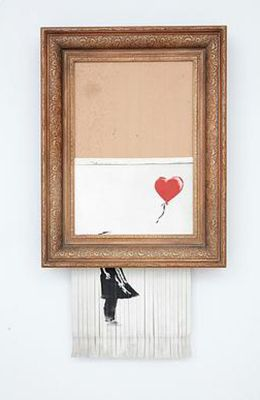
Balloon Girl (2018)

Image credits: https://www.theartstory.org/artist/banksy/

In October 2018, Banksy’s iconic image of Balloon Girl, featuring a young girl letting go of a heart-shaped balloon as a beacon of innocent hope, was sold during a Sotheby’s auction for 1.04 million pounds.

The moment it was pronounced “sold,” a strange alarm sounded from within the painting’s frame, its trigger source unknown. Immediately, the painting started to descend down through its bottom, which turned out to be a shredding mechanism. Although the painting was supposed to shred fully as Banksy later admitted, the device stopped working, leaving half the painting intact in the frame.

Banksy posted a video of the shredding with the words “Going, going, gone” on his Instagram page, leading people to believe he had planted a subversive ally in the auction room. But he removed the video promptly, after it had successfully winked at his social media audience.


The female buyer decided to keep the work, newly retitled Love is in the Bin, as it was now the subject of a grand scandal, the only artwork created at a live auction in history.

Banksy would go on to release a video showing how the shredder was installed into the frame upon its creation, stating it was purposefully crafted in case the work ever made it to auction. His reasoning came in the form of the quote: “The urge to destroy is also a creative urge.”

Witness the unexpected and dramatic moment here: https://www.youtube.com/watch?v=BZ9PAoKvqX8

See more of Banksy’s work here: https://www.theartstory.org/artist/banksy/

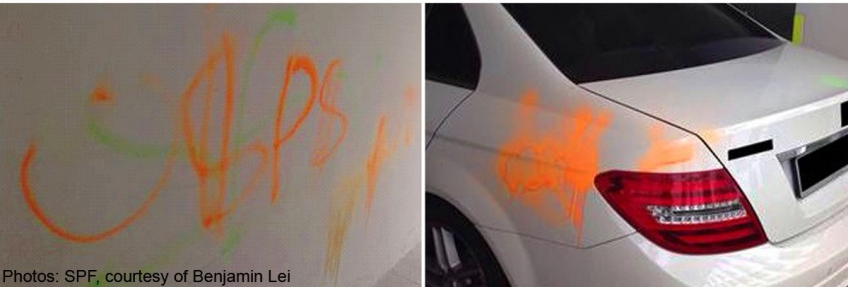
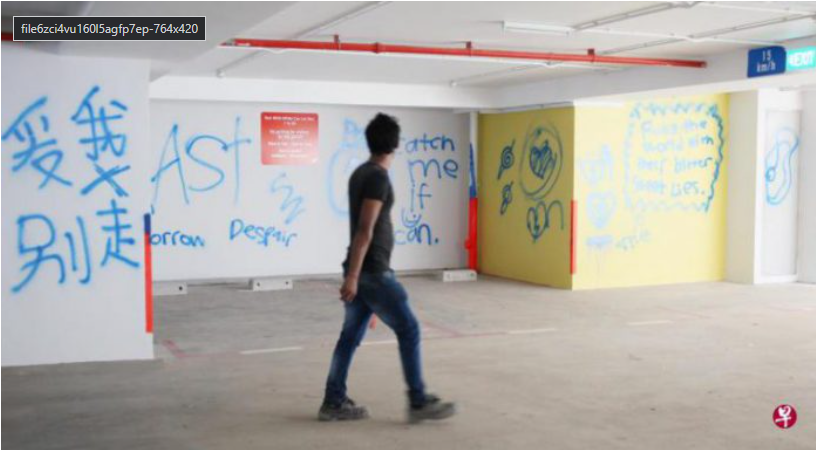
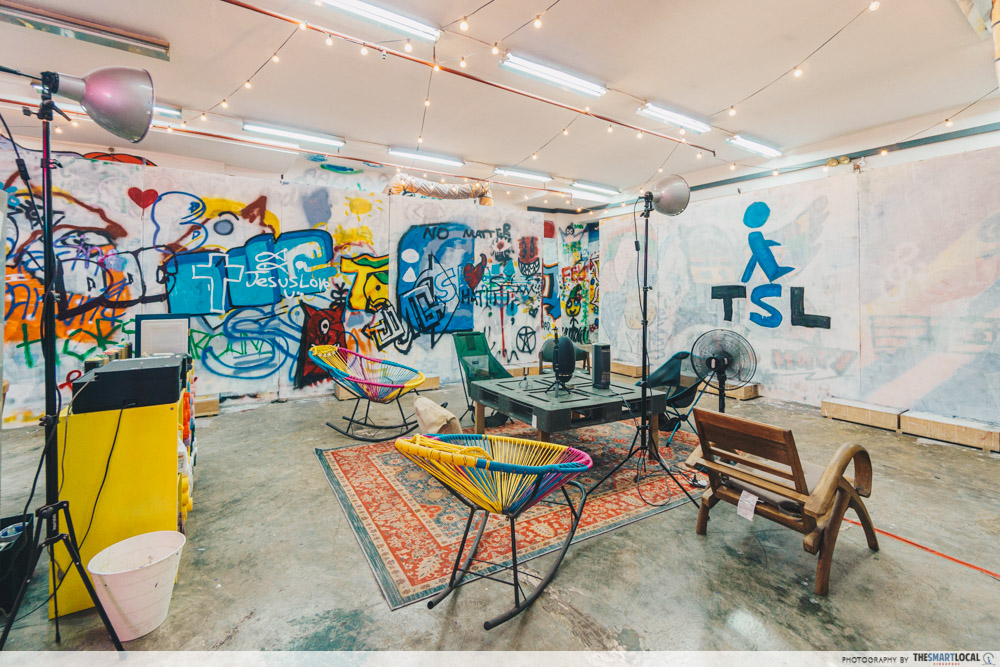
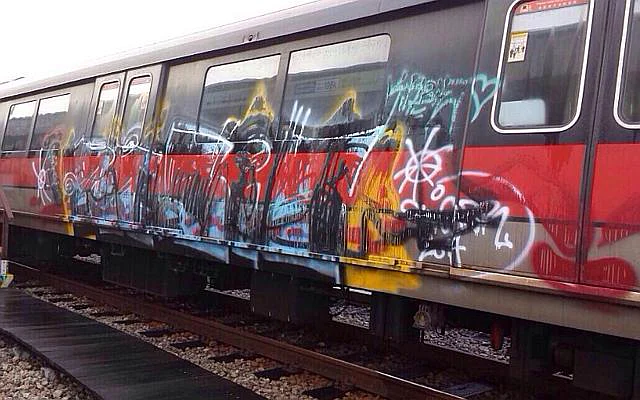
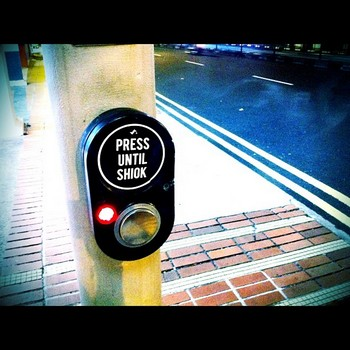
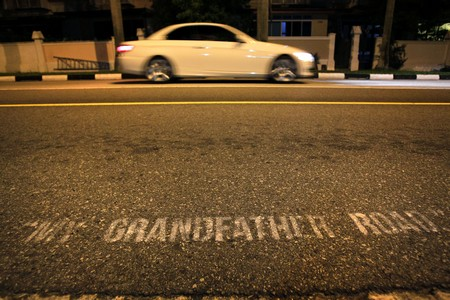
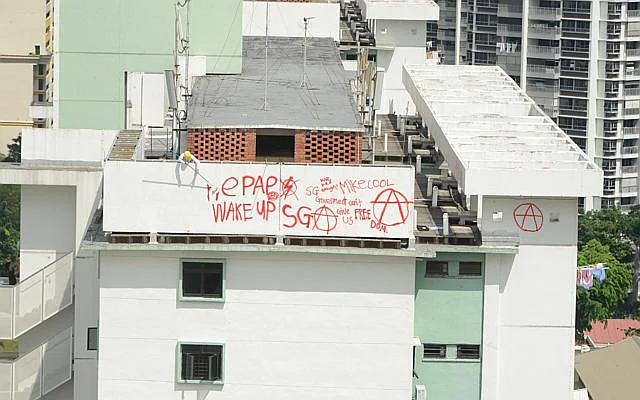
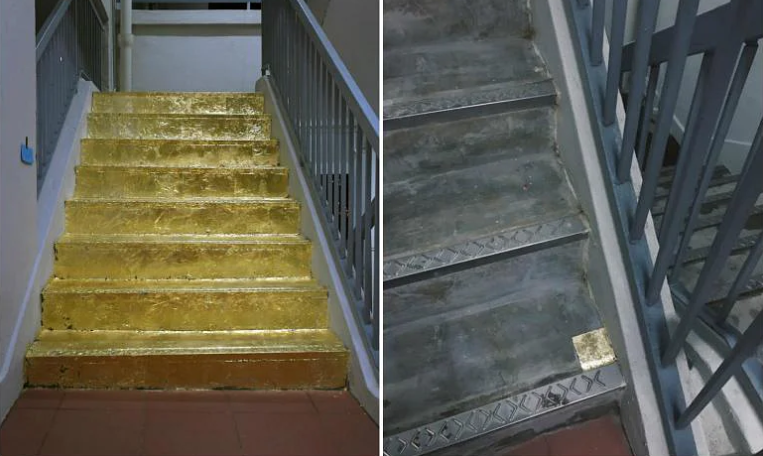
Look at the images below. Do you think they are acts of vandalism or art? Provide your reasons to support your answer. Click on the source links to find out whether they are creative output or vandalism.

Image 1:

Image 2:

Image 3:


Image 4:

Coloring the Streets of Singapore
https://www.youtube.com/watch?v=NtbabaQI3u8 (2.37 mins)

Art Coco: Singapore’s Sticker Lady
https://www.youtube.com/watch?v=AcgxYNsCkXY (4.41 mins)

AR.T Trail In Transit | Singapore Art Week 2022 | Behind-The-Scenes
https://www.youtube.com/watch?v=fRhxS3nml5Y (5.31 mins)

Witness the unexpected and dramatic moment here:
https://www.youtube.com/watch?v=BZ9PAoKvqX8

Art in Singapore

Public art is visual art that enlivens the environment, engages the community and stimulates conversations in the public space. However, as art is subjective, what one person considers as art can be considered as vandalism.

In Singapore, only commissioned artists can create art in the public space. According to the Vandalism Act in Singapore, if you have not gained permission from the relevant authorities, any one of the actions below will be considered as acts of vandalism:

(i)

writing, drawing, painting, marking or inscribing on any public property or private property any word, slogan, caricature, drawing, mark, symbol or other thing;

(ii)

affixing, posting up or displaying on any public property or private property any poster, placard, advertisement, bill, notice, paper or other document; or

(iii)

hanging, suspending, hoisting, affixing or displaying on or from any public property or private property any flag, bunting, standard, banner or the like with any word, slogan, caricature, drawing, mark, symbol or other thing; or


stealing, destroying or damaging any public property;


Read more about the Vandalism Act in Singapore here: https://sso.agc.gov.sg/Act/VA1966

Vandalism is a serious offence in Singapore. Here are some examples of vandalism cases in Singapore.

Year

Description

Consequences


1994


An American student who was studying in the Singapore American School hit the global headlines when he was caned for damaging cars and public property.  


He was sentenced to four months in jail, slapped with a $3,500 fine and given six strokes of the cane.


Former American President Clinton appealed to then-Singapore President Ong Teng Cheong for clemency and the Singapore Government reduced the teen’s punishment from six strokes to four.


2010


A Swiss national and British man trespassed SMRT’s Changi depot. They apparently spray-painted the train with the words “McKoy Banos” – the signature tag of two graffiti artists believed to have spray-painted trains around the world.


One was sentenced to seven months in jail and three strokes of the cane while his accomplice remains at large. Singapore has issued an arrest warrant for the accomplice.

2012

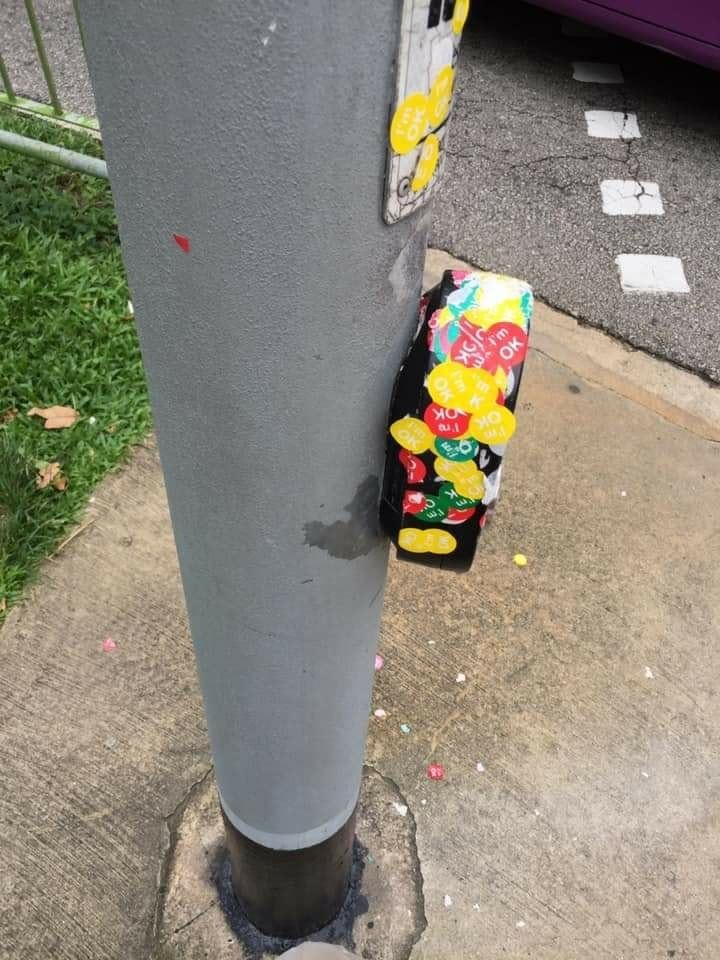
A 25-year-old street artist sprayed the words “My Grandfather Road” on Maxwell Road and Robinson Road. The artist also pasted circular stickers at public spaces, including traffic-light junctions.


The street artist was arrested and served 240 hours of community service.

There was an online wave of support for the Singaporean artist because people viewed the actions as creative art that reflect Singapore’s culture and identity.

However, the police maintained that what was done was an offence according to the law. In addition, considerable time, effort and cost also had to be deployed to clean up the roads and affected areas.


2013

A security guard committed the offence at the Esplanade Park at Connaught Drive at about 11.10pm on April 23. Using a can of spray paint, he wrote the word “DEMOCRACY'” and marked an “X” on the Cenotaph which was built in built in 1922 and is dedicated to Singaporeans who died in the two world wars.

He was sentenced to three months’ jail and the minimum three strokes of the cane. He also ordered to pay $208 compensation to the State for the cost of repair.

When confronted by eyewitnesses, the security guard argued that his graffiti was art and a revolution.


2014

Five 18-years-old Singaporean teenagers stole four cans of spray paint from a lorry at a carpark and spray-painted graffiti on Toa Payoh rooftops. It included expletives directed against a local political party.

24 months of probation, 180 hours of community service, stay indoors from 10pm to 6am and electronically tagged for six months.


2015


Two young German men in their early twenties trespassed the Bishan train depot where they spray painted graffiti measuring 1.8m in height and 10m in length on a train carriage.

Nine months in jail and three strokes of the cane for vandalising an MRT train.


2017


Laselle student used removable gold foil and made the grey staircases of her HDB block gold. It was part of the student’s final-year project.

Jalan Besar Town Council stated that the act was unauthorized but there was no action to remove the gold foil.

Jalan Besar GRC MP Lily Neo said the town council appreciated her work and hoped there will be more spaces for creative expressions.

The student voluntarily removed all the gold foil other than a small square of gold foil. She insisted that it was art and not vandalism.

Street art brings art to places where everyone and anyone can appreciate and this experience is different from going to an art gallery. In Singapore, there are many locations that display beautiful street arts available for everyone to access.

These places are not only highly ‘Instagrammable’ but these wall murals can be a rich place of cultural heritage. If you want to find out more, grab your grandparents, friends and family members and check out some places mentioned in the websites below:  

  1. https://www.timeout.com/singapore/art/the-best-urban-art-trails-in-singapore
  2. https://www.mstravelsolo.com/wall-murals-in-singapore/
  3. https://travelforlifenow.com/street-art-singapore-haji-lane-street-art/#:~:text=Singapore%20has%20a%20street%20art,requires%20approval%20from%20the%20government
  4. https://www.visitsingapore.com/editorials/art-hunting-on-singapore-streets/
  5. https://nowboarding.changiairport.com/live-local/the-best-spots-in-singapore-to-see-graffiti—mural-street-art.html

There are many forms of arts such as graphic design, theatre studies, photography etc…

Which form(s) of art do you have an interest in?

Sources:

  1. https://sso.agc.gov.sg/Act/VA1966
  2. https://www.straitstimes.com/singapore/from-the-straits-times-archives-vandalism-cases-in-singapore
  3. https://www.straitstimes.com/singapore/art-student-returns-golden-staircase-to-grey-concrete
  4. https://www.dictionary.com/e/street-art-vs-graffiti/
  5. https://www.timeout.com/singapore/art/where-to-find-street-art-in-singapore
  6. https://www.theartstory.org/artist/banksy/

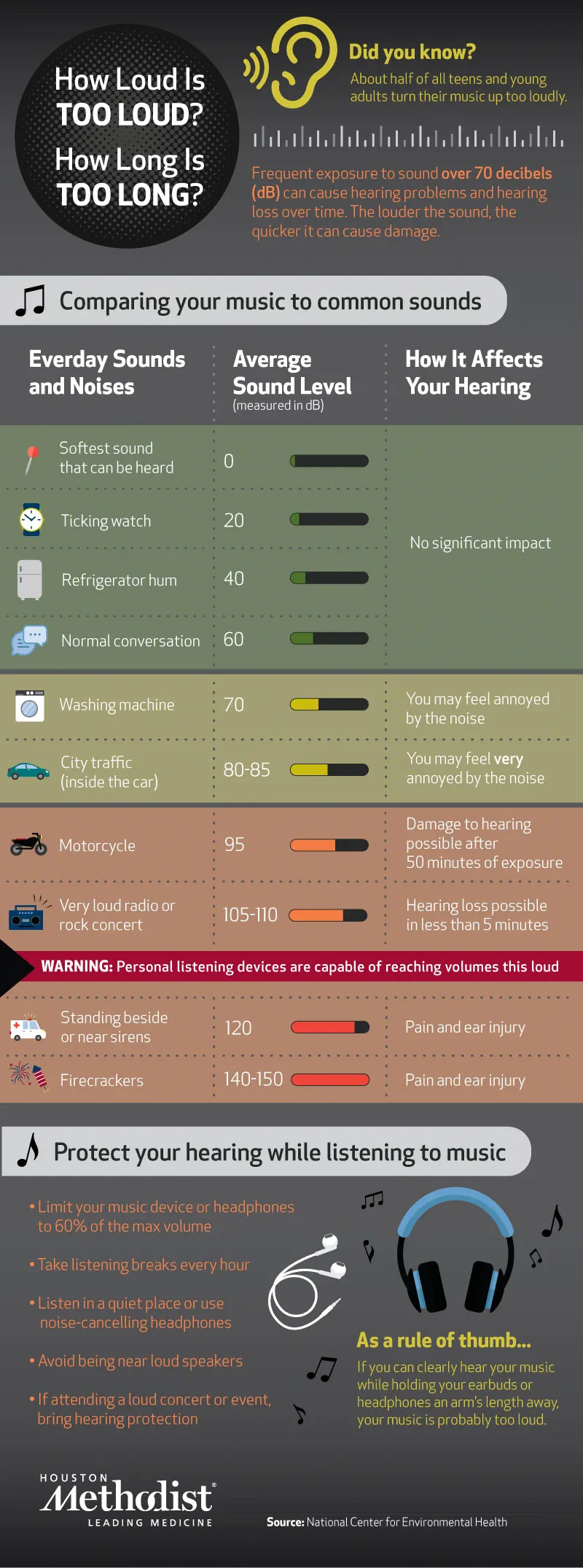
There’s nothing like listening to your favourite song on blast. But while jamming through a workout or bopping along to your playlist as you go about your daily tasks, you are putting yourself at greater risk of losing your hearing prematurely.

The World Health Organization estimates that 1.1 million teenagers and young adults are at risk for developing hearing loss from exposure to noise through headphones, at loud concerts, or at sporting events. Sounds are everywhere, and the volume of a sound is described in decibels (dB). Sounds less than around 70 dB are safe and won’t typically affect your hearing. Overtime, exposure to sound over 85 decibels can impair hearing. It’s not uncommon for headphone volume to reach 100 decibels – and rock concerts can register a whopping 120 decibels. As sounds get louder and/or the amount of time you listen to loud sounds gets longer, damage to your hearing becomes more and more likely.

A study by Johns Hopkins University showed that only 8 percent of adolescents and young adults are aware of the potentially damaging and sometimes permanent effects of noise-induced hearing loss. Young people are especially susceptible since many teens frequently wear headphones to listen to music, watch movies, or play video games. 

“What many people may not realize is that the maximum volume of personal listening devices is well above 70 dB, and when you’re using earbuds or headphones to listen to your music the sound is going directly into to your ear,” explains Dr. Wang. “Listening to your music too loudly, as well as loudly for extended periods of time, can indeed cause damage to your hearing over time.”

“Our ears are incredibly complex and sensitive. There are thousands of cells with millions of tiny hair-like structures in our inner ear that facilitate hearing, but these cells and structures can be damaged by loud sound,” warns Dr. Brian Wang, ear nose and throat doctor specializing in hearing loss at Houston Methodist.

“If damage accumulates over time and causes you to lose hearing, you can’t get it back. Similarly, if you’re exposed acutely to a very loud noise like a firecracker, it’s very hard to recover from that trauma.”

https://www.houstonmethodist.org/blog/articles/2021/feb/headphones-and-your-health-can-loud-music-cause-hearing-loss/

If the noise around you is so loud that you have to shout to be heard, there may be a chance that you have some trouble hearing. Loud noise can damage the parts of your inner ear that detect sound and send signals to the brain. Temporary hearing loss can happen when you are around loud noises. If you have temporary hearing loss, you won’t be able to hear as well as you normally do for a while.

It is time to learn and practise healthy hearing habits.

Experts recommend the 60/60 rule: Listen through your headphones for no more than 60 minutes at a time at no more than 60 percent of your device’s maximum volume

  1. Turn down the volume
  • Is loud always more fun? Today’s maxed out volume is tomorrow’s inability to enjoy dinner conversations or university lectures. Most smartphones have a volume limit that allows you to limit the volume automatically. It is recommended to set the volume control at no more than 60 percent of the maximum volume.
  • At home, lower the TV volume, turn down the radio and take other steps to keep excessive noise to a minimum in your home.
  • Make family dinners a time for easy conversation, without the background noise of music or kitchen appliances.
  1. Keep track of time

Limit listening time on headphones and take regular breaks to give your ears a rest. The damage from exposure to noise is cumulative. The louder the noise, the less time it takes for damage to occur. Give your ears a rest by not wearing headphones or ear buds all the time. Listen to the peaceful sound of silence or the music of nature.

  1. Protect your ears
  • Bring ear protection along on family outings to sporting events, concerts and movie theaters where sound can be especially loud.
  • A ticket to a concert or sporting event may be costly, but protecting your hearing is a fraction of the price. A pair of inexpensive foam earplugs or earmuffs can prevent exposure to excessive noise.
  • Avoid standing near loudspeakers.
  • Use your smartphone to help you keep track of decibel levels. Download a volume monitor app and use it when in doubt of noise levels. 
  • Caught unaware as a siren or loud explosion occurs? In an emergency, cover your ears with your hands to block the sound.
  • Buy quieter appliances, especially frequent-use items like hair dryers, and insist all family members use hearing protection when mowing the lawn or using power tools.
  1. Schedule a hearing test

A regular hearing checkup is an easy and simple yet important step to take to protect your family’s hearing health. Schedule hearing evaluations as part of annual health check-ups.

5. signs it is time to see an audiologist

Sign 1: You’re not hearing well in certain environments or situations. Whether you’re turning the TV volume up louder and louder or dreading social situations because you don’t always hear well enough to keep up with conversations, don’t ignore changes you notice in your hearing.

Sign 2: Someone else has noticed a change in your hearing. Dr. Martin notes that it’s not uncommon for hearing changes to first be noticed by a spouse, child, loved one or friend — not the person with hearing loss.

Sign 3: You have pain, pressure or drainage in your ears. These symptoms aren’t just themselves uncomfortable — they reduce hearing. They’re also typically a sign of an underlying ear problem that needs to be treated.

Sign 4: You’ve noticed a ringing in your ears. More formally called tinnitus, this early sign of hearing loss can also sound like static, buzzing, humming or cricket-like sounds.

Sign 5: You have a family history of hearing loss. Even if you’re not having trouble hearing yet, having a family history of hearing loss is a good reason to establish a relationship with an audiologist and get an early baseline.

It’s never too soon to be educated about the importance of healthy hearing habits. The smart listening behaviours will benefit you in years to come.   

What healthy hearing habits will you start practising today?

Sources:

  1. https://www.houstonmethodist.org/blog/articles/2021/feb/headphones-and-your-health-can-loud-music-cause-hearing-loss/
  2. https://kidshealth.org/en/kids/rock-music.html

https://www.campaignforbetterhearing.org/hearing-research/2017/its-never-too-late-to-protect-your-hearing

Take the High-Frequency Hearing Test | Brain Games
https://www.youtube.com/watch?v=sZHWY1KBHwc (2.50 mins)

How Old is Your Hearing? – Interactive Test for Your Ears
https://www.youtube.com/watch?v=iN3PBpInNJM (3.16 mins)

Can You Trust Your Ears? (Audio Illusions)
https://www.youtube.com/watch?v=kzo45hWXRWU (3.29 mins)

Gareth Chua – Silent Hero Story | 2021 Inspiring Youth | Singapore Silent Heroes
https://www.youtube.com/watch?v=nvpVijbkWI8&feature=emb_imp_woyt (3.12mins)

Inclusion of people with disabilities
https://www.youtube.com/watch?v=rjluLV1F-UI (2.31 mins)

Disability Etiquette – Respectful Ways To Interact with People With Disabilities
https://www.youtube.com/watch?v=iG3pQp6HoQM (1.58 mins)

Society in Singapore is made up of people of different nationalities, genders, religions, races and working different jobs. As we walk around the streets of Singapore, do we look beyond the superficial? Do we judge too quickly?

Recently, a woman expressed her worry for her child when she saw a dog on the train. She feared that the dog might suddenly attack them. However, this dog turned out to be a specially trained guide dog.  

Image credits: https://www.asiaone.com/singapore/passenger-worries-guide-dog-train-may-attack-her-and-baby-says-mrt-staff-just-ignored-it

The guide dog belongs to visually impaired Singapore paralympic swimmer and she has since took the opportunity to clarify and educate others about guide dogs being in public places in a short TikTok video:  https://www.tiktok.com/@sophsoon/video/7170625617640115458?is_from_webapp=v1&item_id=7170625617640115458

Ableism is the discrimination of and social prejudice against people with disabilities based on the belief that typical abilities are superior. At its heart, ableism is rooted in the assumption that disabled people require ‘fixing’ and defines people by their disability. Like racism and sexism, ableism classifies entire groups of people as ‘less than,’ and includes harmful stereotypes, misconceptions, and generalizations of people with disabilities.

Here are some examples of ableism:

  • Making a movie that doesn’t have audio description or closed captioning
  • Using the accessible bathroom stall when you are able to use the non-accessible stall without pain or risk of injury
  • Using someone else’s mobility device as a hand or foot rest
  • Talking to a person with a disability like they are a child, talking about them instead of directly to them, or speaking for them
  • Questioning if someone is ‘actually’ disabled, or ‘how much’ they are disabled
  • Asking, “How did you become disabled?”

To be more inclusive, it is time we start recognising the potential of people with disabilities. They have high potential and can most certainly enjoy a high quality of life! They can choose to get married, have ambitions, pick up new skills etc., just like any of us.

Read more to find out how people with disabilities can be people without limits!

In fashion

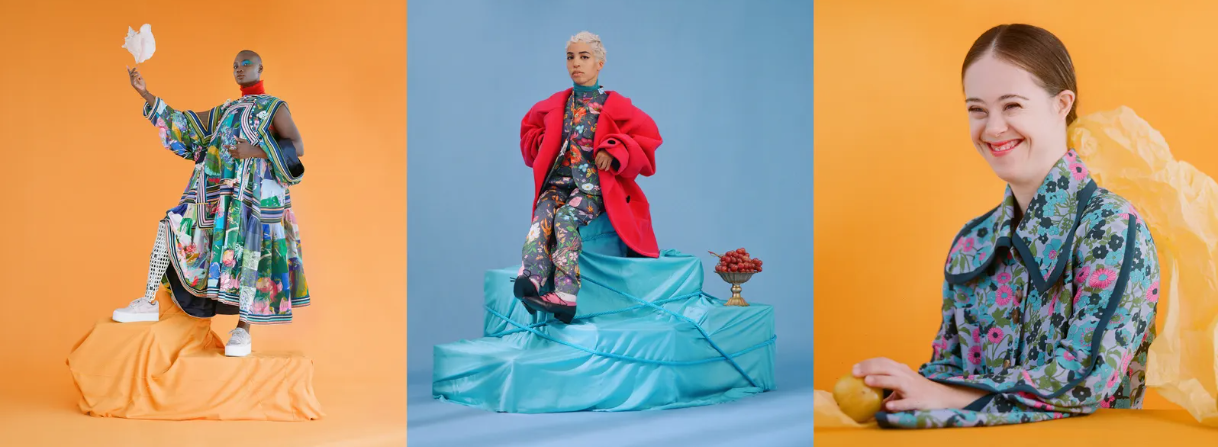
How often have you seen models who have special needs? In recent years, however, things have started to change. Social media became a tool through which people with disabilities could finally control the way they were being seen. Meanwhile, across the board, calls for greater diversity and the burgeoning body-positivity movement opened up the space to celebrate beauty in all its different forms. As a result, we’re seeing people with disabilities making appearances on the runway, on the cover of magazines, in fashion advertisements and in beauty campaigns. This long-awaited representation is slowly but surely eroding the historical stigmas surrounding people with disabilities. But it hasn’t been easy, nor has it been swift.

Image credits: Camila Falquez, https://www.teenvogue.com/story/cover-story-representation-fashion-industry-jillian-mercado-mama-cax-chelsea-warner

Read stories about models here:  https://www.teenvogue.com/story/cover-story-representation-fashion-industry-jillian-mercado-mama-cax-chelsea-warner 

In sports

The Paralympic Games represent the pinnacle of sporting events for athletes with physical and intellectual disabilities, and they usually happen immediately after the Olympics.

Image credits: https://www.wonderwall.sg/workplay/tokyo-2020-games-get-to-know-our-para-athletes-and-their-coaches/

In the Tokyo 2020 Games, 10 Team SG athletes represented Singapore to compete in the Paralympics. They trained hard with their coaches and gave their best and made Singapore proud!

Read more about the athletes here: https://www.wonderwall.sg/workplay/tokyo-2020-games-get-to-know-our-para-athletes-and-their-coaches/

Watch their competitions here: https://www.teamsingapore.sg/major-games/paralympic/tokyo-2020?date_and_time=show-all&sport=show-all&athlete=show-all&round=show-all

In social media

Motivational speaker and author Nick Vujicic is known as the man born without limbs. However, he did not let the absence of his four limbs define or limit what he can do.

Image from: Nick Vujicic’s Facebook

Nick faced tremendous obstacles in life from, living life without limbs, to being bullied at school and fearful for his future with no purpose in sight.  Without hope, his feelings of helplessness and isolation led him to attempt suicide. Nick persevered through life’s challenges and discovered key principles which enabled him to find his purpose and turn obstacles into opportunities; making him one of the most sought-after keynote speakers in the world!  Millions of people have found hope, purpose and the strength to overcome their challenges through Nick’s inspirational speeches and powerful coaching.

Read more about Nick’s story and watch his interviews here: https://nickvujicic.com/

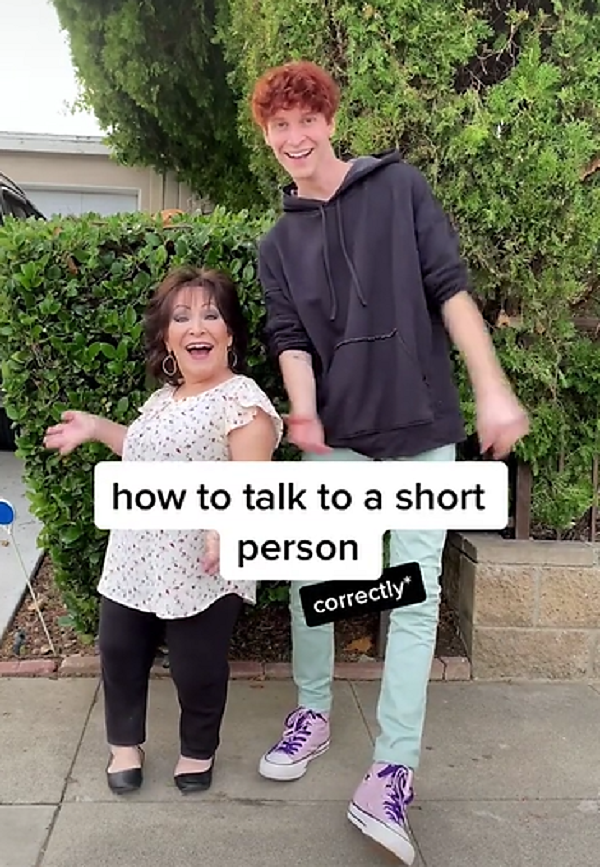
Image credits: https://www.tiktok.com/@peetmontzingo?lang=en&is_copy_url=1&is_from_webapp=v1

Peet Montzingo, who stands over 6 feet tall (183cm) has created funny TikTok videos with his mother, Vicki. The Seattle native is the only tall member of his family since his siblings and parents all have dwarfism. He shares hilarious videos of him with his mom and siblings on TikTok with the aim of destigmatizing dwarfism. Peet had a 75% chance of being like his parents and siblings, but he turned out to be tall, and he realized that he was different at the age of eight. He said that his height made him feel like the head of his family when he was only eight!

Promoting inclusivity and understanding on the public transport

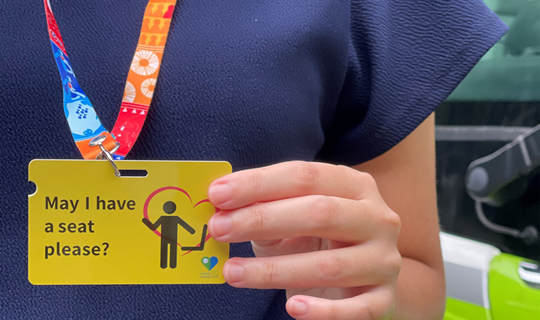
Have you ever observed that some commuters on the public transport wearing “May I Have A Seat Please?” lanyards?

Image credits: https://www.caringcommuters.gov.sg/in-the-spotlight/meet-the-designers-of-the-may-i-have-a-seat-please-lanyard

Some passengers may have invisible medical health conditions and they may hesitate to sit on the reserved seat for the fear of being questioned or judged. Therefore, to help commuters with invisible medical conditions alert fellow commuters that they would like a seat on public transport, the Caring SG Commuters Committee launched the “May I Have a Seat Please” initiative.

For instance, Joy has Down syndrome and flat foot. Joy’s mother shared that Joy will feel tired after standing long on the public transport but will feel shy to ask for a seat as she looks young on the outside. Even though she may look like a normal youth, some do not know she has an illness, and may need a little help at times when she stands among the crowds.

There are some commuters who may be afraid of rejection or misunderstanding and thus hesitate to offer or give up their seats. Hopefully the initiative will encourage people to not be afraid to step up and to offer their seats on public transport to those who need it.

If you know anyone who needs a “May I have a seat please” sticker, or lanyard & card, to alert fellow commuters that they require a seat, they can be obtained from the Passenger Service Centres at MRT stations, bus interchanges or TransitLink Ticket Offices.

In conclusion, we have to remind ourselves that disabilities and medical conditions do not determine someone and that having a disability or condition is not all to an individual. Being inclusive is important, as inclusion is all about looking at how a certain space or service can cater to people from different abilities and different backgrounds. 

Reflection: What are your perceptions of people with disabilities?

Read the statements below and record if you agree or disagree with the statement.

No.

Statement

Agree

Disagree

1

I feel uncomfortable around people with disabilities, or anyone who seems “different” in ways. 


2

I try to avoid talking to people with disabilities as I am afraid of offending them through what I say.


3

I feel awkward around people in wheelchairs or people with special needs. I do not know whether I should let them be or help them.


4

I pity people with disabilities because I feel that they are unable to enjoy life to the fullest.  


5

I tend to associate specific character traits with people with disabilities.


6

I have said or/and heard statements like, “Are you deaf/blind/dumb/lame/retarded?”


If you disagree to most of the statements above, continue to raise awareness on disability and support non-profit organisations that provide services and resources to people with disability.  Would you also consider volunteering in those charities and play your part in making your society more inclusive? Check out the organisations that need support here:  https://www.giving.sg/search?type=volunteer It will be good to get your whole family involved too!

If you agree to most of the statements above, do take the time to learn more about disabilities, before making assumptions, and open your mind to understanding more about the issues and challenges they face. One way to do so is to interact with them, and thereby learn how we can interact with people with disabilities respectfully.

Sources:

  1. https://www.accessliving.org/newsroom/blog/ableism-101/
  2. https://www.lta.gov.sg/content/ltagov/en/getting_around/public_transport/a_better_public_transport_experience/an_inclusive_public_transport_system.html
  3. https://www.caringcommuters.gov.sg/in-the-spotlight/meet-the-designers-of-the-may-i-have-a-seat-please-lanyard
  4. https://www.vogue.in/fashion/content/why-disability-representation-is-crucial-to-building-a-better-more-inclusive-fashion-industry
  5. https://www.moms.com/son-dwarf-mom-tiktok-videos/
  6. https://nickvujicic.com/
  7. https://cityofgood.sg/articles/disabilities-in-singapore/