Archives For Uncategorized

Have you ever thought you were well-prepared for an upcoming quiz, only to find that you’ve forgotten much of what you studied once it was time to take the test? If so, you may benefit from adding some of these simple memory-boosting techniques into your study routine.

Plan ahead, do not cram

Many studies show that cramming is not an effective tool for learning, and the stress it brings only reinforces the argument against its use. Distributed learning is generally better for memorization than cramming. What this means is that you should attempt to learn material over the course of time rather than during any single session. Plan ahead! Work backwards from your examination dates. As exam dates might be packed closely together, you need to make sure that you have sufficient time to revise (writing notes, doing practice papers and clarifying doubts). One strategy that seems to help in consolidating memories is to periodically conduct a short test reviewing what you have studied over an extended period of time (at least a few months ahead of the examinations).

Try to study in a setting that is similar to where you will be tested

It sounds simple, but if the testing is to take place at a desk it may be useful to study at a desk, and not on your bed, or where you would get easily distracted. Other strategies that can make the exam setting more realistic is to have similar noise levels (i.e., quiet!), or to use the same materials and tools at home that will be used during testing. Even drinking the same drink — be it tea, coffee, or water — while studying and taking the test can boost memory. The best option, however, is to do the bulk of the studying and memorizing during the same general time of the day, so that your body has the same level of preparedness and absorption.

Recap information just before you go to sleep

There have been a number of studies that indicate that if you quickly review material 15 minutes before going to sleep at night, you will be better able to tap into the information later, keeping it from slipping away into dreamland. Remember, this is not a full study session before bed — which can cause stress — but rather a simple recap, like reading or verbalizing out loud what you have already studied.

Schedule short breaks during revision and have sufficient sleep!

When trying to memorise new material, it’s easy to assume that the more work you put in, the better you will perform. Yet taking the occasional down time – to do literally nothing – may be exactly what you need. Just dim the lights, sit back, and enjoy 10–15 minutes of quiet contemplation, and you’ll find that your memory of the facts you have just learnt is far better than if you had attempted to use that moment more productively.

Learning and memory are often described in terms of three functions. Acquisition refers to the introduction of new information into the brain. Consolidation represents the processes by which a memory becomes stable. Recall refers to the ability to access the information (whether consciously or unconsciously) after it has been stored.

Each of these steps is necessary for proper memory function. Acquisition and recall occur only during wakefulness, but research suggests that memory consolidation takes place during sleep through the strengthening of the neural connections that form our memories.

When we are sleep-deprived, our focus, attention and vigilance drift, making it more difficult to receive information. Without adequate sleep and rest, over-worked neurons can no longer function to coordinate information properly, and we lose our ability to access previously learned information.

Engage in more physical and mental exercise

Research has shown that regular physical exercise is one way to improve cognitive functions like memory recall, problem solving, concentration, and attention to detail. However, it is not clear if the physical aspect alone boosts your brain or if a combination of other factors — like the mental challenge of the activity, the frequency you do it, and the desire to improve — also contribute.

A brain training activity doesn’t always have to be exercise-related. Much research has found that creative outlets like painting and other art forms, learning an instrument, doing expressive or autobiographical writing, and learning a language also can improve cognitive function. A 2014 study in Gerontologist reviewed 31 studies that focused on how these specific endeavors affected older adults’ mental skills and found that all of them improved several aspects of memory like recalling instructions and processing speed.

Your brain has the ability to learn and grow as you age — a process called brain plasticity — but for it to do so, you have to train it on a regular basis.

Is possessing a superb memory necessarily a beneficial thing for everyone?

Consider discussing from these various perspectives:

  • For a student who is preparing for a big examination
  • For parents who have lost their child
  • For a victim who has experienced a trauma
  • For a dementia patient and a family member of a dementia patient
  • For an eyewitness of an accident/suicide/abuse
 

Sources:

https://learningworksforkids.com/2013/04/5-tips-for-improving-memory-while-studying/

http://healthysleep.med.harvard.edu/healthy/matters/benefits-of-sleep/learning-memory

https://www.bbc.com/future/article/20180208-an-effortless-way-to-strengthen-your-memory

https://www.health.harvard.edu/mind-and-mood/train-your-brain

Looking at cute creatures floods our brains with feel-good chemicals. The science behind the cutesy faces is simple: we like baby animals because we are biologically programmed to like human babies, and we need to like our human babies so that we take care of them, ensuring the human race lives on.

There are certain features that a lot of baby mammals have in common and these are the triggers that make our hearts melt and go ‘sooooooo cute’. Among others, big eyes and fuzzy, podgy bodies push our buttons. Babies have these traits, as do puppies, along with many other things that you might not even notice.

Spending time with animals helps improve humans’ quality of life

Studies have shown that the human-animal interaction can help to reduce stress, with a simultaneous decrease in blood pressure and cortisol (a stress hormone) levels. Interactions with animals can provide emotional and physical health benefits for diverse human populations, including the elderly, children, physically disabled, deaf, blind, emotionally or physically ill patients. Animals have also been found to serve as a source of diversion during anxiety-provoking procedures such as physical examinations and invasive procedures.

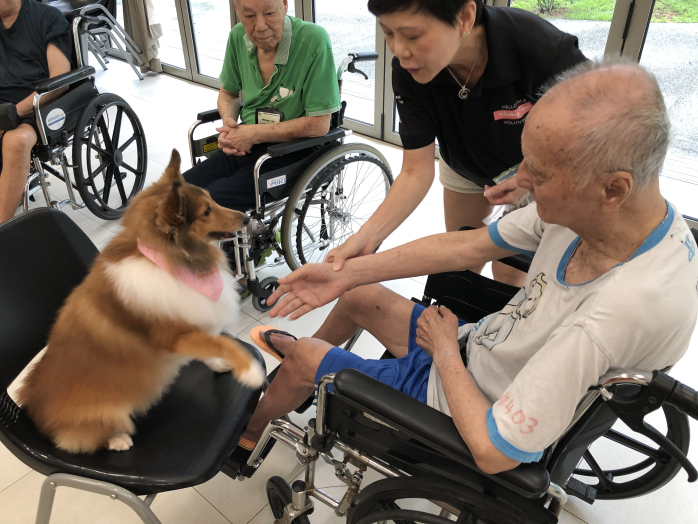
The Animal-Assisted-Activities (AAA) sessions help to improve people’s overall quality of life. AAA is the use of animals – often dogs but sometimes other animals such as cats – to provide opportunities for motivation, education, or recreation to enhance the quality of life of persons in need, through human-dog interactions.

One organisation that provides such sessions is Healing Paws. It was started in January 2014 and aims to provide comfort and warmth to persons in need via AAA. With proper training and guidance, animals can be taught to reinforce rehabilitative behaviors in clients, such as throwing a ball, walking or even performing simple tricks that involve the participation of the clients. For clients who are experiencing pain and undergoing medical treatments, the presence of the therapy animals can be soothing, providing a relief from anxiety, fear and loneliness.

                              Image taken from: https://aic-mosaic.sg/content/images/2019/01/paws2-1.png

It has also been established that children can receive positive benefits from AAA in class settings. Children are found to be more engaged with animals rather than a human being because animals seem non-judgmental to them. Animals are perceived as comforting, helping to raise children’s self-esteem and thereby making it easier for them to express themselves.

Was your experience with animals generally a positive or negative one?
How would you describe your interactions with animals?

Sources:

https://www.howitworksdaily.com/the-science-of-cute-why-do-we-find-baby-animals-so-adorable/

https://sosd.org.sg/community-outreach/healing-paws/

Suggested Videos:


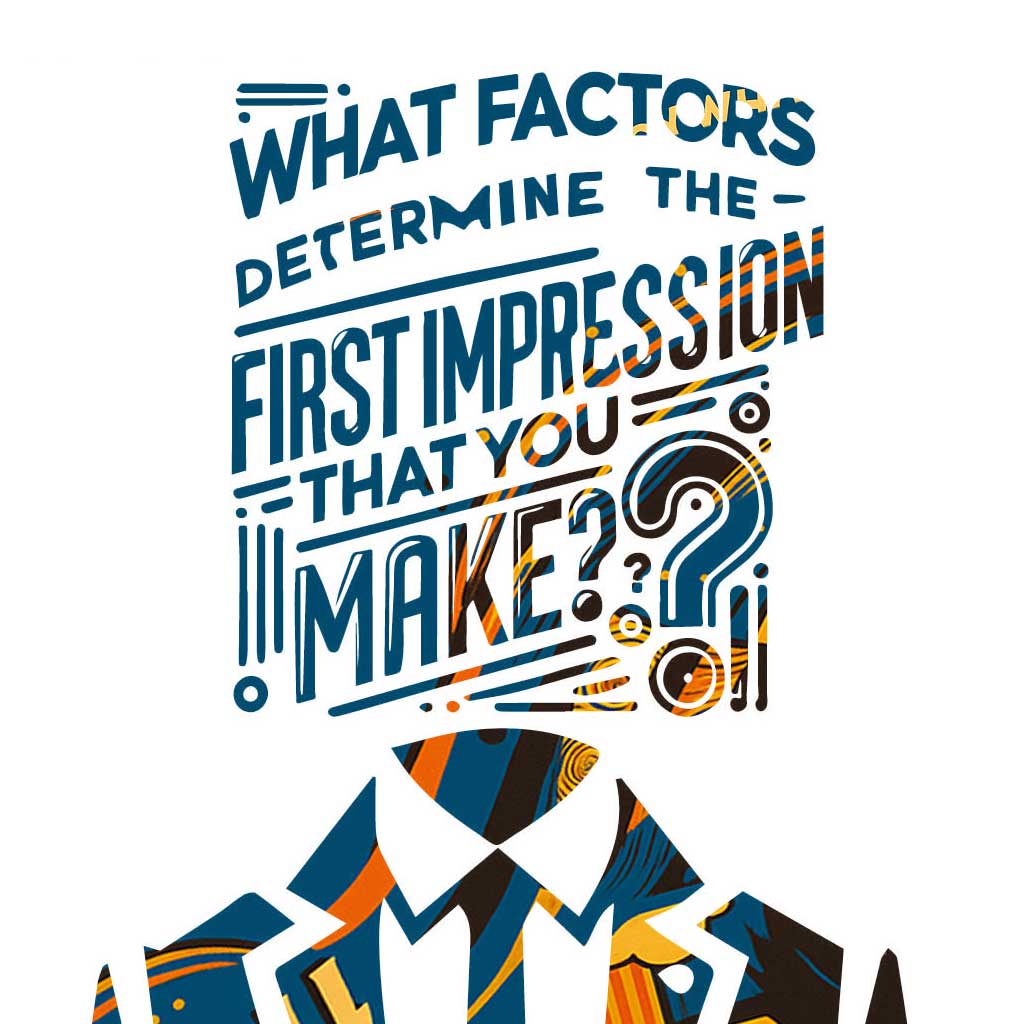
Psychologist Leslie Zebrowitz of Brandeis University studies the facial information we use to judge other people. Although first impressions are notoriously prone to error, we just can’t stop ourselves from making them — and it only takes a tenth of a second to form a judgement about another person’s character, even from a still photograph.

In her research, Zebrowitz has identified four facial cues that people use to judge the characteristics of other people:

1. Babyfaceness

Plenty of evidence shows humans have an innate tendency to find baby faces appealing. Savvy public speakers know that including a baby picture or two in their PowerPoint slides will elicit “oohs” and “aahs” from their audience. Likewise, videos of babies and kittens (which also have baby faces) are among the most popular on YouTube.

It makes evolutionary sense to have an inborn soft spot for babies who need to be protected and cared for. But people overgeneralize this predilection to adults whose faces are baby-like. Specifically, baby faces have big eyes, large foreheads, short chins, and rounded heads, among other characteristics.

People tend to treat baby-faced adults kindly, but they also assume them to be weak and needing care. For example, the elderly often take on a baby-face appearance as their hairlines recede and their faces round out. We tend to treat senior citizens in a careful manner, whether they need special care or not. In short, if you have a baby face, people may tend to treat you kindly, but they may not think you’re very capable.

2. Familiarity

Some people tend to judge people based on their facial similarity to other people that they know. For example, if you meet someone who looks like your grumpy uncle, you’ll assume he’s grumpy too. If you see someone who resembles your friendly aunt, you’ll think she must be friendly as well.

In part, this stems from the fact that our innate facial-processing mechanisms lead us to believe in a correlation between facial features and personality characteristics. However, most people that we feel as looking familiar actually don’t remind us of anyone in particular. Rather, it’s just a vague sense—the general ‘feel’ that they look like the other people we hang around with — specifically, members of the same family, race, and ethnicity. In these cases, the familiarity effect kicks in. Overall, people prefer who they are familiar with.

3. Attractive appearances

There is general agreement about what makes a face attractive. Underlying these judgements of attractiveness are facial features that are arranged in symmetry and proper proportion. The more faces diverge from the symmetrical and properly proportioned, the more they’re perceived to be ‘unattractive’.

Facial symmetry and proportion are signals of genetic diversity and a strong immune system capable of fighting off disease. Healthy people generally look attractive physically. People also assume they’re likable, intelligent, and capable, which may not be the case.

Some people perceive unhealthy people as unattractive. Due to people’s fear of illnesses and death, people tend to avoid those who may look ‘pale and sickly’. This is the evolutionary logic that drives people’s intuitions about others. However, these intuitions are baseless and they are unfair to individuals. Therefore, be wary of making such judgements.

4. Emotional resemblance

People are generally very good at reading the emotional expressions of others. However, some people have facial features that resemble emotional expressions, even when they are showing a poker face. For example, people with lower eyebrows may look angry, even when they’re not. Likewise, those whose mouths are turned upward at the corners appear to be happy no matter how they feel. All these misleading indicators cause people to judge someone inaccurately.

By and large, the intuitions that guide humans’ social interactions are largely innate, but that doesn’t mean we are powerless to overcome them. If people understand how their intuitions work, they can hold back in making a sweeping judgement on a person, and give the person the opportunity to reveal who they truly are.

Understanding how human intuition works also helps us to be more aware of how others may judge, thereby reminding us to be more careful of our actions that may unintentionally reinforce false stereotypes.

What kind of first impression do you want to make?
How would you go about making a positive lasting first impression?

Source: https://www.psychologytoday.com/au/blog/talking-apes/201708/the-psychology-first-impressions

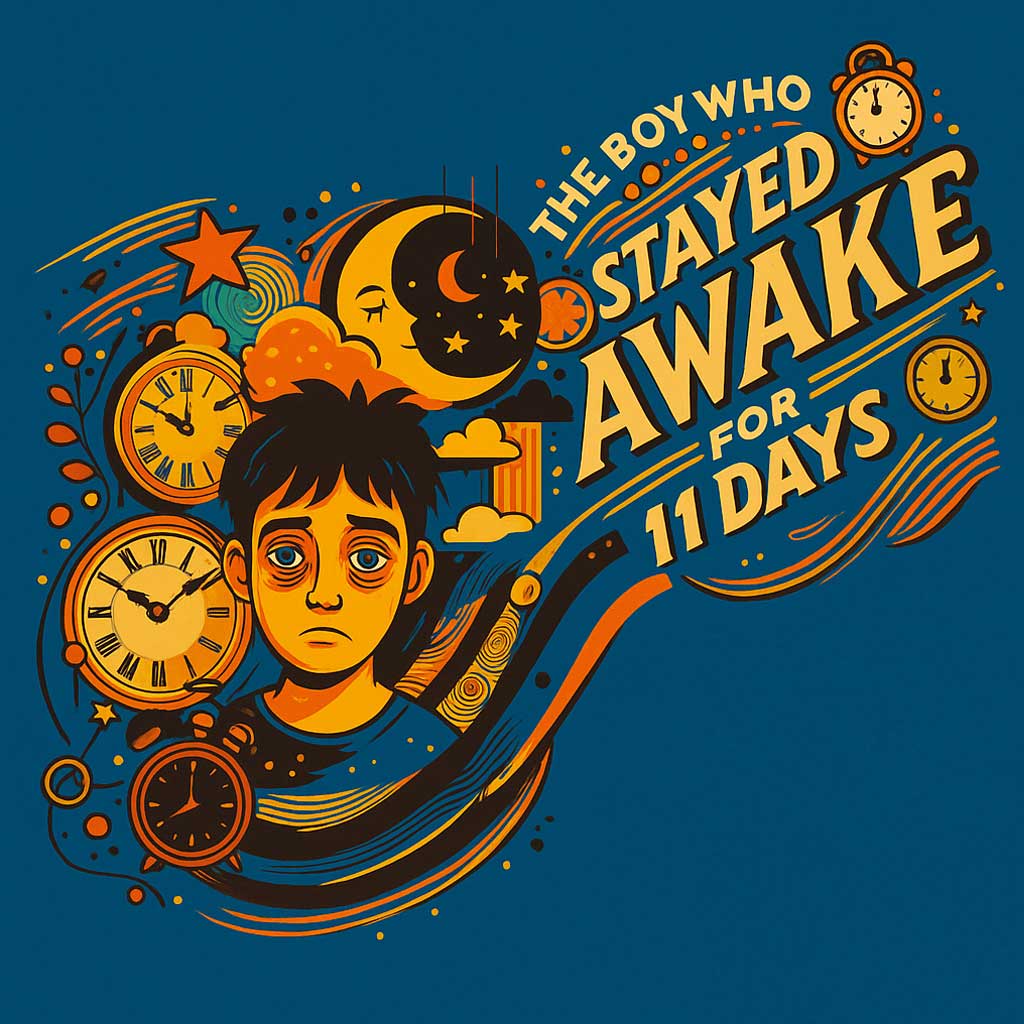
The boy who stayed awake for 11 days

In December 1963, two boys hit upon an idea for a school Science project – stay awake for as long as possible. The project ended on 8 January 1964. 17-year-old Randy Gardner had managed to stay awake for 11 days and 25 minutes.

After that, Gardner was whisked to a hospital where researchers attached electrodes to his head to monitor his brain waves before he went to sleep. He slept for only 14 hours. From the analysis of his brainwaves, doctors derived that “his brain had been catnapping the entire time… parts of it would be asleep, parts of it would be awake”.

Generally, Gardner seemed to show no ill effects from his 11 days of being awake. However, in 2007, he revealed that he had been experiencing insomnia over the years which he attributed to the Science project that he did in his teenage years. Fortunately, he was able to regain his ability to sleep eventually, but only for about six hours a night.

A number of people tried to break Gardner’s record for the longest time anyone had stayed awake in the following years – but the Guinness Book of Records stopped certifying attempts, believing it could be dangerous to people’s health.

According to scientific research, sleep loss, or even poor-quality sleep can lead to decreased productivity, increased errors at the workplace, and accidents that will cost both lives and resources.

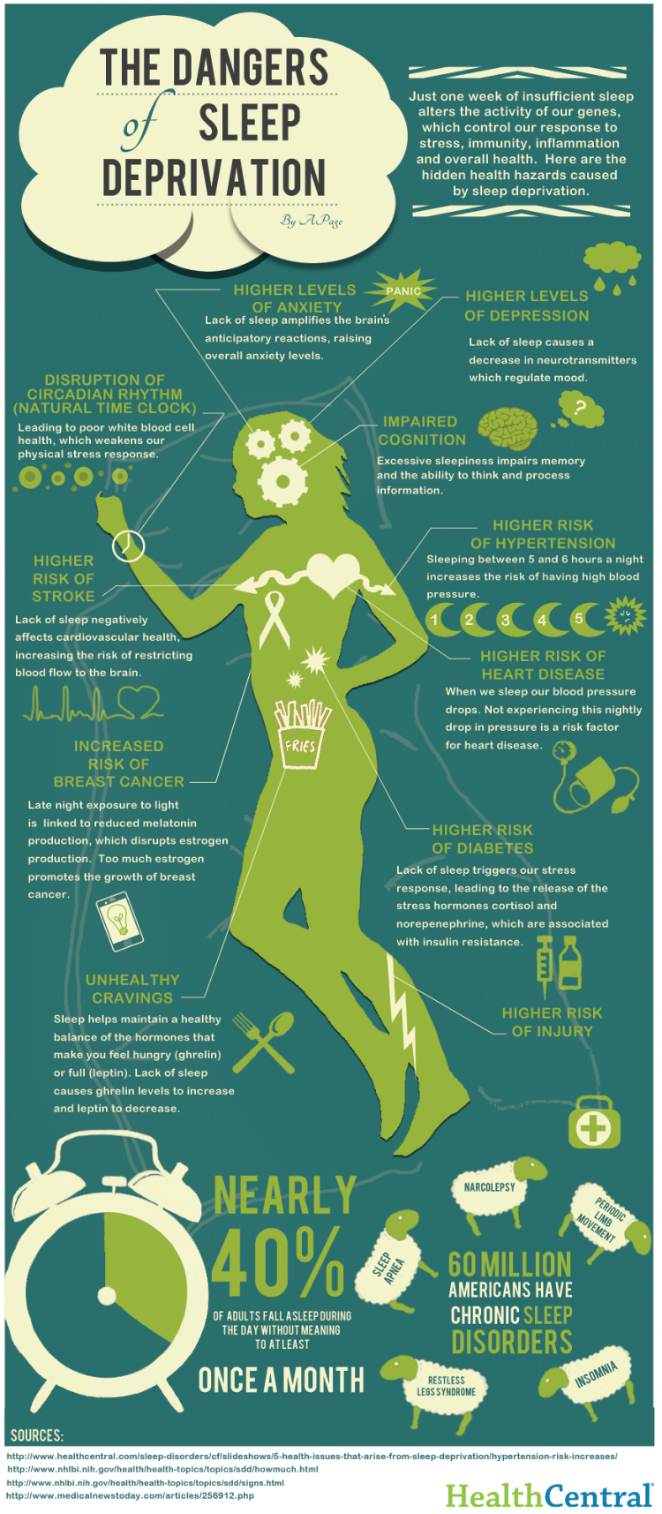
What are the effects of sleep deprivation?

Read the infographic below to learn more about the dangers of sleep deprivation.

How to get the sleep that you need

Whether you’re looking to resolve a specific sleep problem, or just want to feel more productive, mentally sharp, and emotionally balanced during the day, experiment with the following sleep tips to see which ones work best for you:

  • Rule out medical causes for your sleep problems: A sleep disturbance may be a symptom of a physical or mental health issue, or a side-effect of certain medications.
  • Stick to a regular sleep schedule: Support your biological clock by going to bed and getting up at the same time every day, including weekends.
  • Get regular exercise: Regular exercise can reduce the symptoms of many sleep disorders and problems. Aim for at least 30 minutes of physical activity as often as you can—but don’t do it too close to bedtime.
  • Be smart about what you eat and drink: Caffeine, alcohol, and sugary foods can all disrupt your sleep, as can eating heavy meals or drinking lots of fluids too close to bedtime.
  • Get help with stress management: If the stress of managing work, family, or school is keeping you awake at night, learning how to handle stress in a productive way can help you sleep better at night.
  • Improve your sleep environment: Keep your bedroom dark, quiet, and cool, and reserve your bed for just sleeping.
  • Develop a relaxing bedtime routine: Avoid looking at screens, studying, and engaging in stressful conversations late at night. Instead, wind down and calm your mind by taking a warm bath, reading by a dim light, or practising a relaxation technique to prepare for sleep.
  • Postpone worrying: If you wake during the night feeling anxious about something, make a brief note of it on paper and postpone worrying about it until the next day when it will be easier to resolve.

How can you manage your time better so that you can enjoy sufficient rest?

Sources:

https://www.bbc.com/future/article/20180118-the-boy-who-stayed-awake-for-11-days

https://www.healthcentral.com/article/infographic-the-dangers-of-sleep-deprivation?ap=831


Suggested Videos:

Fight your Fears

June 6, 2025 — Leave a comment


Fear is our emotional reaction to situations or things that make us feel unsafe or unsure.

How Fear Works

When we sense danger, the brain reacts instantly, sending signals that activate the nervous system. This causes physical responses, such as a faster heartbeat, rapid breathing, and an increase in blood pressure. Blood pumps to muscle groups to prepare the body for physical action (such as running or fighting). Skin perspires to keep the body cool. Some people may notice sensations in the stomach, head, chest, legs, or hands. These physical sensations of fear can be mild or strong.

These physical responses suggest that the person is in a “fight or flight” mode because that is exactly what the body is preparing itself to do: fight off the danger or run fast to get away. The body stays in this state of fight–flight until the brain receives an “all clear” message and turns off the response.

Sometimes fear is triggered by something that is startling or unexpected (like a loud noise), even if it’s not actually dangerous. That’s because the fear reaction is activated instantly — a few seconds faster than the thinking part of the brain can process or evaluate what’s happening. As soon as the brain gets enough information to realize there’s no danger (“Oh, it’s just a balloon bursting — whew!”), it turns off the fear reaction. All these can happen in seconds.

How can fear help us?

Fear protects us. It makes us alert to danger and prepares us to deal with it. Feeling afraid is very natural — and helpful — in some situations. For instance, someone who isn’t a strong swimmer might have a fear of deep water. In this case, the fear is helpful because it cautions the person to stay safe. Someone could overcome this fear by learning how to swim safely. A fear can be healthy if it cautions a person to stay safe around something that could be dangerous. But sometimes a fear is unnecessary and causes more caution than the situation calls for.

How can fear limit us?

Many people have a fear of public speaking; whether it’s giving a report in class, speaking at an assembly, or reciting lines in the school play, speaking in front of others. People tend to avoid the situations or things they fear. However, this doesn’t help them overcome fear — in fact, it can be the reverse. Avoiding something scary reinforces a fear and keeps it strong.

People can overcome unnecessary fears by giving themselves the chance to learn about the thing or situation they’re afraid of and gradually get used to it. For example, people who take the aeroplane despite a fear of flying can grow used to the unfamiliar sensations like takeoff or turbulence. They learn what to expect and have a chance to watch what others do to relax and enjoy the flight. Gradually (and safely), facing fear helps someone overcome it.

How can you manage or overcome your fears?

Face your fear if you can

If you always avoid situations that scare you, you might stop doing things you want or need to do. You won’t be able to test out whether the situation is always as bad as you expect, so you miss the chance to work out how to manage your fears and reduce your anxiety. Anxiety problems tend to increase if you get into this pattern. Exposing yourself to your fears can be an effective way of overcoming this anxiety.

Know yourself

Try to learn more about your fear or anxiety. Keep an anxiety diary or thought record to note down when it happens and what happens. You can try setting yourself small, achievable goals for facing your fears. You could carry with you a list of things that help at times when you are likely to become frightened or anxious. This can be an effective way of addressing the underlying beliefs that are behind your anxiety. Try to learn more about your fear or anxiety. Keep a record of when it happens and what happens.

Exercise & Relax

Increase the amount of exercise you do. Exercise requires some concentration, and it can take your mind off your fear and anxiety. Practising relaxation techniques can help you with the mental and physical feelings of fear. It can help by just dropping your shoulders and focusing on breathing deeply—or imagine yourself in a relaxing place. You could also try learning things like yoga, meditation, or massage.

Faith/spirituality

At different stages of your life, you may face different fears. Fear of failing your major examination, fear of not being accepted by your peers, fear of public speaking, fear of not getting into the desired course, fear of not being able to find a job, fear of losing your job, fear of a loved one dying, fear of a loved one leaving you etc… the list goes on.

If you are religious or spiritual, this can give you a way of feeling connected to something bigger than yourself. Faith can provide a way of coping with everyday stress, and attending church and other faith groups can connect you with a valuable support network to help you manage or overcome your fears.

Fears affect your self-esteem and limit your potential and experiences. Therefore, it is beneficial for you to overcome your fears. Overcoming fear can take time so be patient and believe that you will emerge stronger once you have overcome your fear.

What is your greatest fear? How can you overcome it?

Sources:

https://kidshealth.org/en/teens/phobias.html

https://www.mentalhealth.org.uk/publications/overcome-fear-anxiety


Suggested Videos: