Archives For Uncategorized

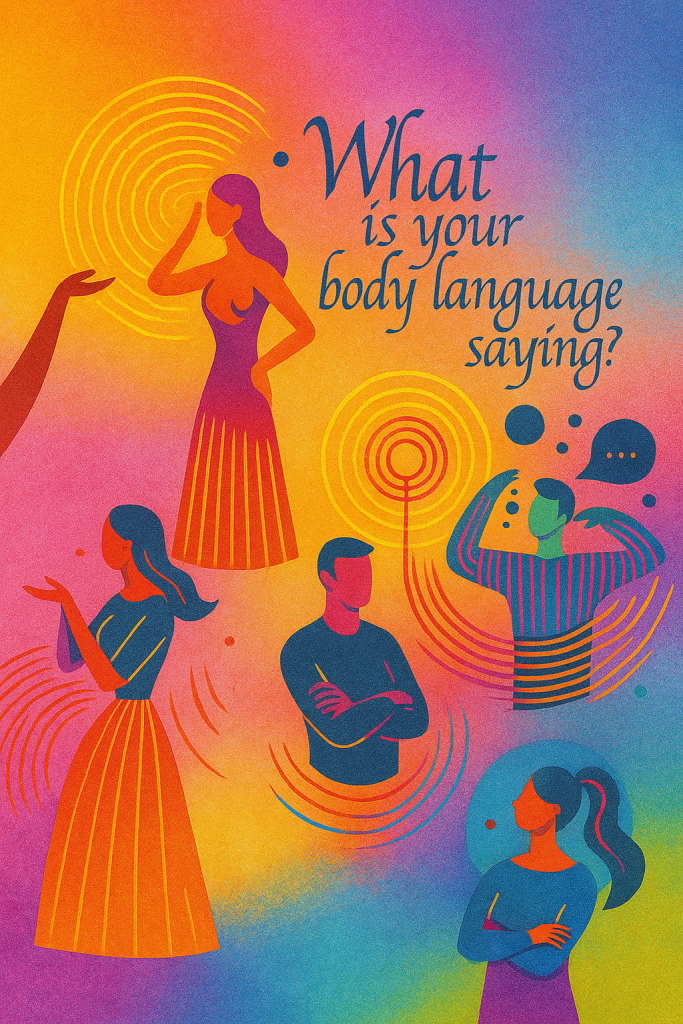
What is your body language saying?

Non-verbal communication is a rapidly flowing back-and-forth process that requires your full focus on the moment-to-moment experience. If you’re planning what you’re going to say next, checking your phone, or thinking about something else, you’re almost certain to miss nonverbal cues and not fully understand the subtleties of what’s being communicated. As well as being fully present, you can improve how you communicate nonverbally by learning to manage stress and developing your emotional awareness.

Types of Non-Verbal Communication

There are many different types of non-verbal communication. They include:

  • Body movements (kinesics),for example, hand gestures or nodding or shaking the head, which are often the easiest element of non-verbal communication to control;
  • Posture, or how you stand or sit, whether your arms are crossed, and so on;
  • Eye contact, where the amount of eye contact often determines the level of trust and trustworthiness;
  • Para-language, or aspects of the voice apart from speech, such as pitch, tone, and speed of speaking;
  • Closeness or personal space (proxemics), which determines the level of intimacy, and which varies very much by culture;
  • Facial expressions, including smiling, frowning and blinking, which are very hard to control consciously. Interestingly, the broad facial expressions that show strong emotions, such as fear, anger, and happiness, are the same throughout the world; and
  • Physiological changes, for example, you may sweat or blink more when you are nervous, and your heart rate is also likely to increase. These are almost impossible to control consciously and are therefore a very important indicator of mental state.

Body language is an outward reflection of a person’s emotional condition. Here are some tips by Joe Navarro on how to speed-read it:

  1. Squinted eyes

What it can mean:

“I don’t like what’s going on.”

“Something doesn’t feel right.”

“I disagree with what you’re saying.”

We often squint our eyes when we’re trying to focus our vision on something that’s far away. But squinted eyes and a furrowed “glabella” (the part of the forehead above and between the eyebrows) can also be a sign of disagreement or confusion.


  1. Touching the neck

What it can mean:

“I’m struggling with something.”

“I’m stressed by what you’re saying.”

“I’m concerned about this situation.”

If someone is touching their “neck dimple” (the visible indentation at the middle-front of their neck), it could mean they’re distressed or insecure. If you notice someone doing this, try communicating with more empathy to help comfort or ease their anxiety.


  1. Rubbing the chest

What it can mean:

  • “I don’t feel confident.”
  • “I’m troubled by something.”
  • “I’m very worried.”

This is another sign of stress and anxiety. If someone is rubbing the upper part of their chest with a palm of a hand (or even just the fingers), it can indicate discomfort or concern. I recently found myself doing this when discussing a family member’s health. 


  1. Arched eyebrows

What it can mean:

  • “I’m happy to see you!”
  • “I’m pleasantly surprised.”
  • “That’s a very intriguing point.”

If someone greets you with arched eyebrows (also called an “eyebrow flash”), it typically means they’re pleased to see you. This expression can also be used to show recognition when someone makes a good point in a conversation.


  1. Tilted head

What it can mean:

  • “I’m interested in what’s going on.”
  • “I’m listening and fully present.”
  • “I agree with what you’re saying.”

Head movements can go a long way in showing whether or not someone is fully engaged, especially during video conference calls. A slightly tilted head displays awareness and attentiveness. And, when combined with a few nods, it can show approval of what’s being said or heard.

Important things to note about non-verbal communication:


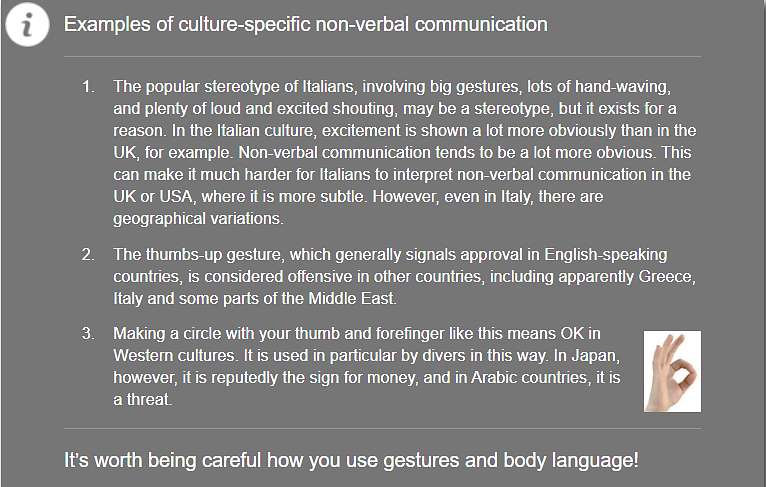
Non-verbal communication is influenced and driven by the context in which it occurs. 

  • It is important to note that non-verbal communication is not a language with a fixed meaning.  This includes both the place and the people concerned, as well as the culture.
  • For example, a nod of the head between colleagues in a committee meeting may mean something very different from when the same action is used to acknowledge someone across a crowded room, and again when two people are having a social conversation.
  • Non-verbal communication may also be both conscious and unconscious. 

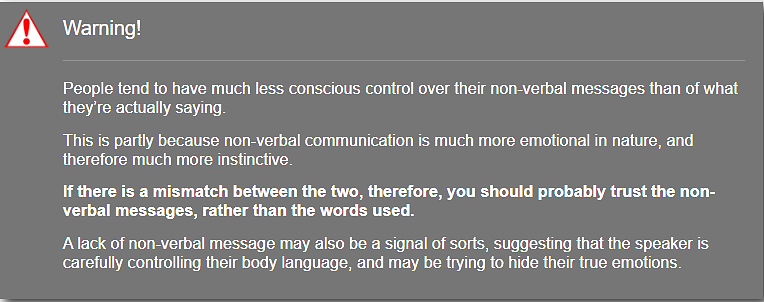
    • Facial expressions are particularly hard to control, because we cannot see ourselves to know what we are doing. We may, therefore complicate communication by trying to convey one message consciously, while in fact conveying quite another unconsciously.

    Interpersonal communication is further complicated because it is usually not possible to interpret a gesture or expression accurately on its own.

    • Non-verbal communication consists of a complete package of expressions, hand and eye movements, postures, and gestures which should be interpreted along with speech (verbal communication).
      In conclusion, non-verbal communication is an extremely complex yet integral part of overall communication skills. However, people are often totally unaware of their non-verbal behaviour.


      A basic awareness of non-verbal communication strategies, over and above what is actually said, can help to improve interaction with others. Knowledge of these signs can be used to encourage people to talk about their concerns and can lead to a greater shared understanding, which is, after all, the purpose of communication.


      How can you improve your communication skills with others to forge deeper relationships?

Sources:

Suggested Videos:

1. Former FBI Agent Explains How to Read Body Language | Tradecraft | WIRED
https://www.youtube.com/watch?feature=youtu.be&v=4jwUXV4QaTw&app=desktop (14.43mins)

2. Reading minds through body language
https://www.youtube.com/watch?v=W3P3rT0j2gQ (11.58mins)


What are some fun ways to pick up new languages?

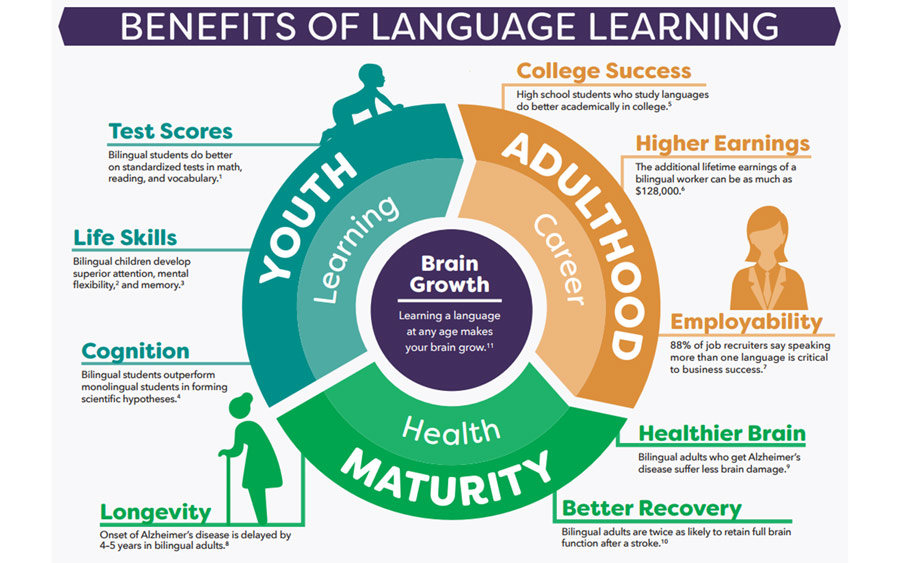
As we get older and seek out more education and job opportunities, fluency in more than one language proves to be a helpful skill: bilingualism has been linked to greater academic performance in college and to higher lifetime earnings.

For seniors, studies show that knowing more than one language is healthy for the brain. Fluency in more than one language has proven beneficial to Alzheimer’s patients and to individuals who have suffered strokes; they experience better brain function and recover more quickly than monolinguals.

Learning a language at any age is definitely good for your brain

!

Infographic from: Language-Learning-Infographic.pdf

If you’re a student who is keen on picking up a foreign language, you’ll know that it can be challenging to do.

Learning new words and practicing foreign pronunciations that don’t roll off your tongue so easily takes plenty of time and practice. If you’re frequently turning to dictionaries and audio files to facilitate your learning, it’s time to make things more interesting.

Here are four tips for picking up a new language:

Tip 1: Read children’s books

One of the most useful ways to learn the basics of a language is to read children’s books. After all, the content is shorter and the vocabulary is basic while the sentence structure is simpler to understand, making it useful for novice speakers. The illustrations or pictures in the books can also help you guess words, which makes learning more fun.

Diving into tougher materials such as newspapers can be demotivating as you may find yourself constantly looking up words, which can be frustrating.

Tip 2: Pick up the translated version of your favourite book

Once you’ve had a grasp of certain words, you can start reading tougher materials to help you expand your vocabulary.

For starters, you can consider reading the translated version of your favourite book. This can help you guess the words and context more easily compared to reading other novels as you’re already familiar with the plot and characters.

Alternatively, you could turn to audiobooks and listen to the translated version of your favourite book.

Tip 3: Use apps

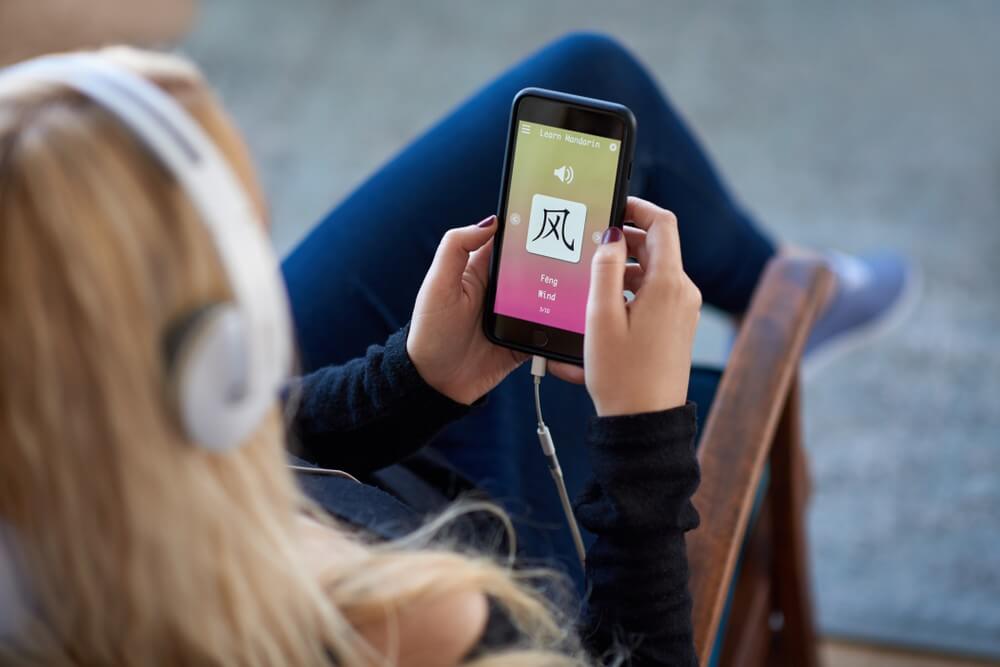
If you spend a lot of time scrolling through Facebook or Instagram on your phone, you might as well put your device to good use and download a language app to make learning a new language easier.

Apps such as Duolingo, Babbel, and busuu can be fun and useful to use, helping you brush up on your language at any time of the day. Research suggests using apps to learn a language can be useful for learners who are already subscribed to a language course.

Tip 4: Watch TV

Exposing yourself to native speakers of a new language can help you familiarise yourself with its sounds and structures. But this doesn’t mean you have to plonk yourself in a community of speakers of a particular language.

One informal way of familiarising yourself with a new language is by watching TV series or movies. You can turn on the subtitles to help you catch the words if the characters speak too quickly. This prolonged exposure may help you learn new words and phrases over time.

Watching TV is also a fun way of learning as you can avoid the motivation slump when you’re looking forward to watching your new favourite TV show.

It can definitely complement your formal learning of a new language.

Which languages are you interested to learn? Explain your answer.

Sources:

How can you achieve success when the odds are stacked against you?

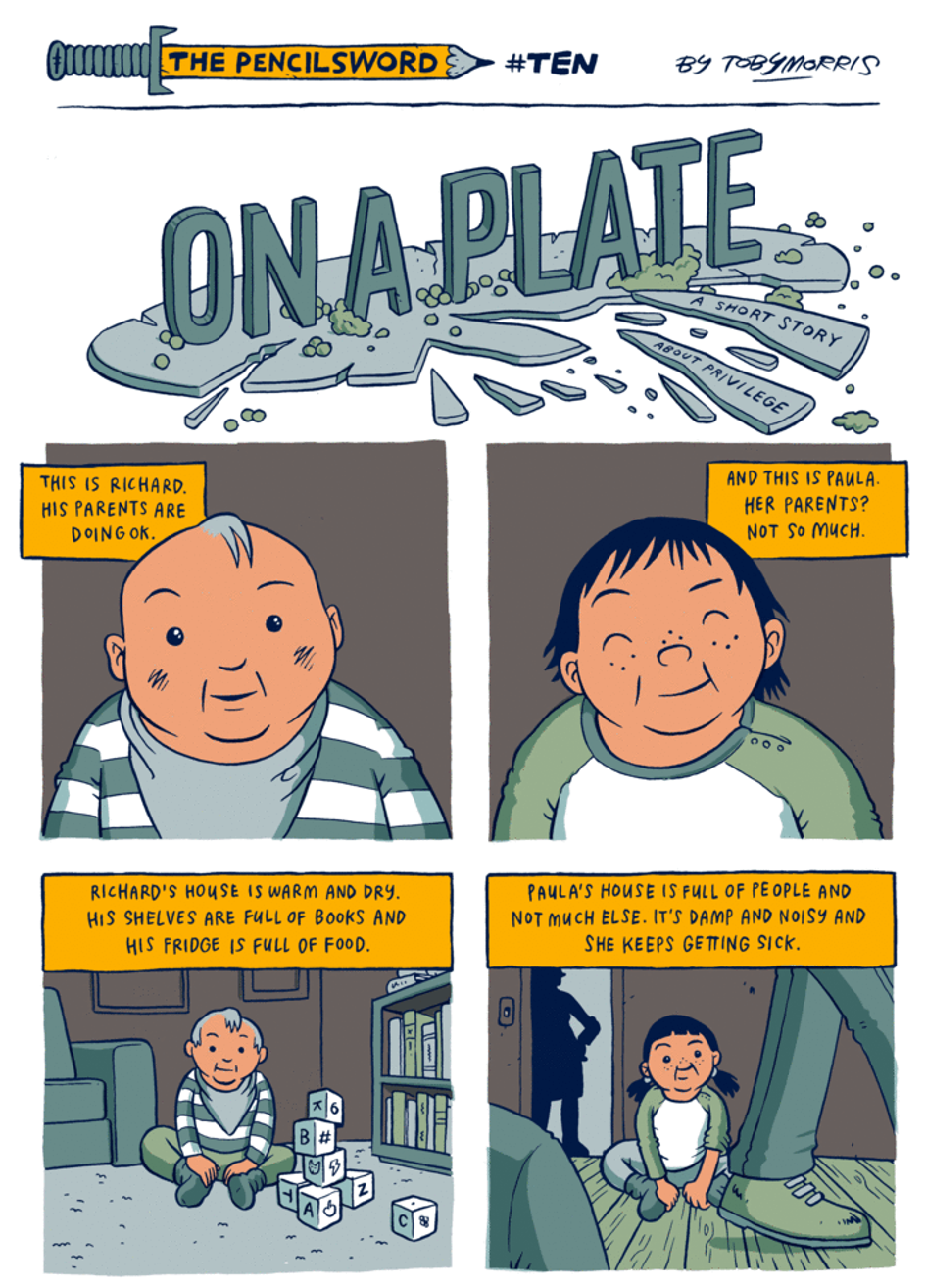
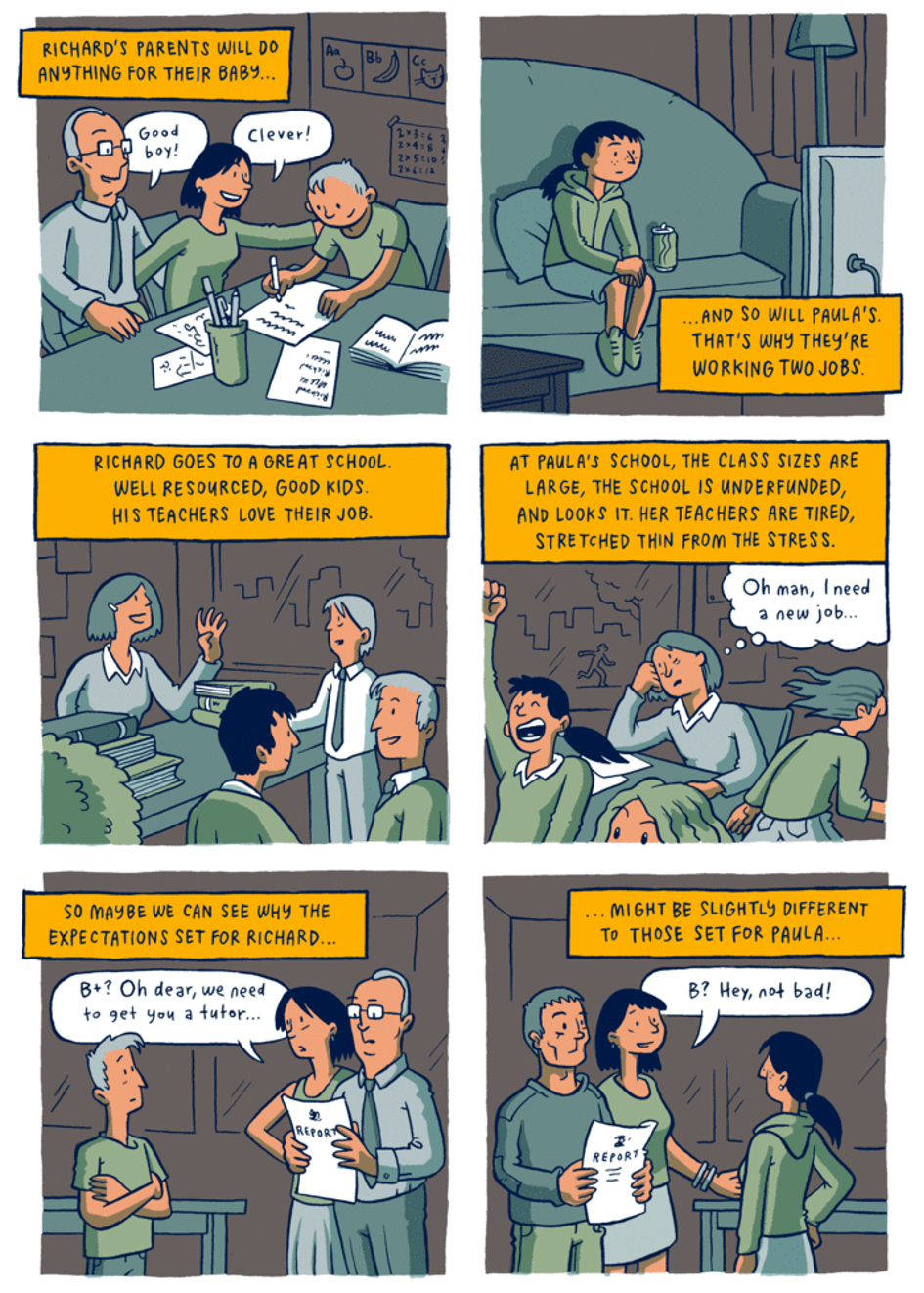
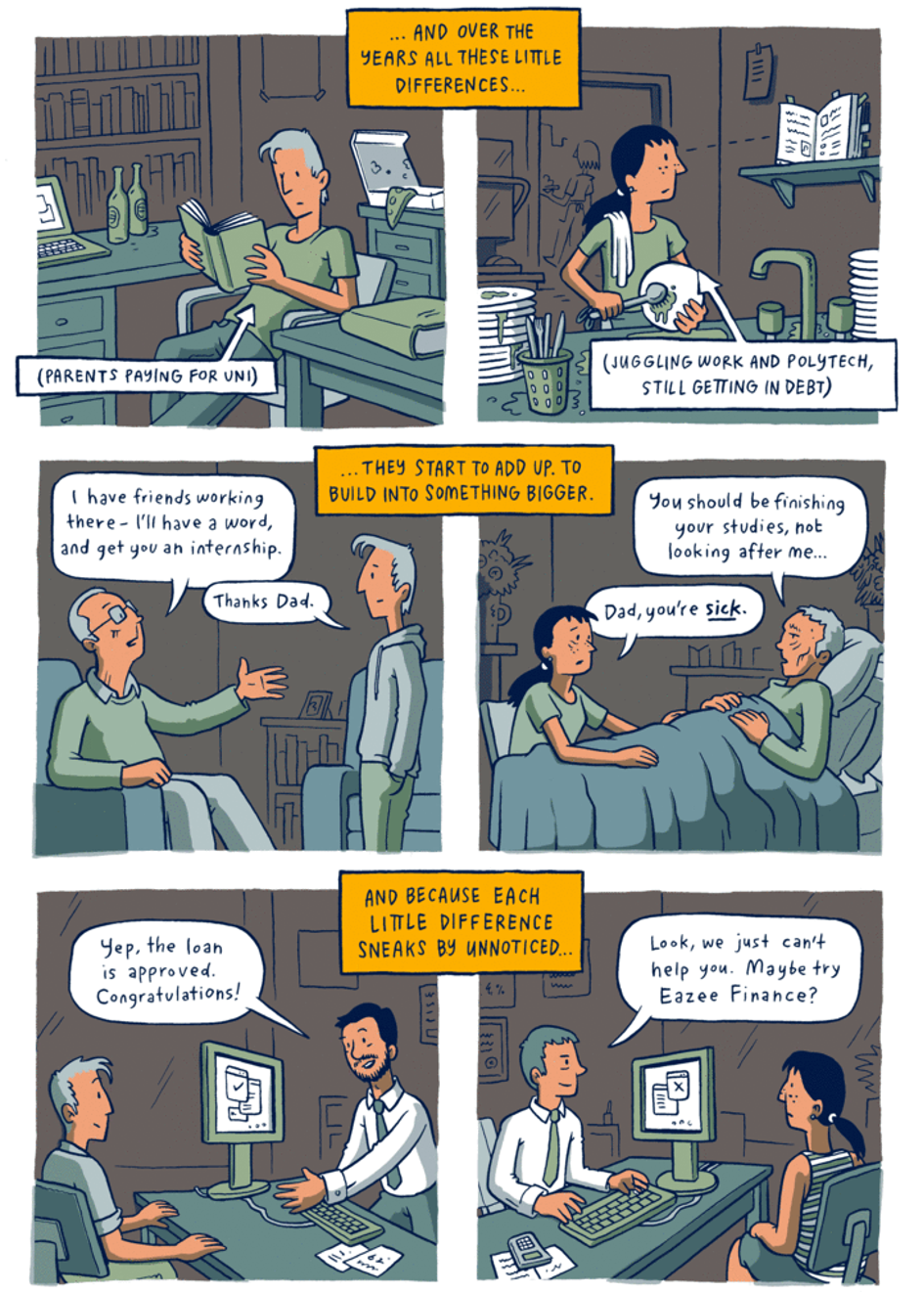
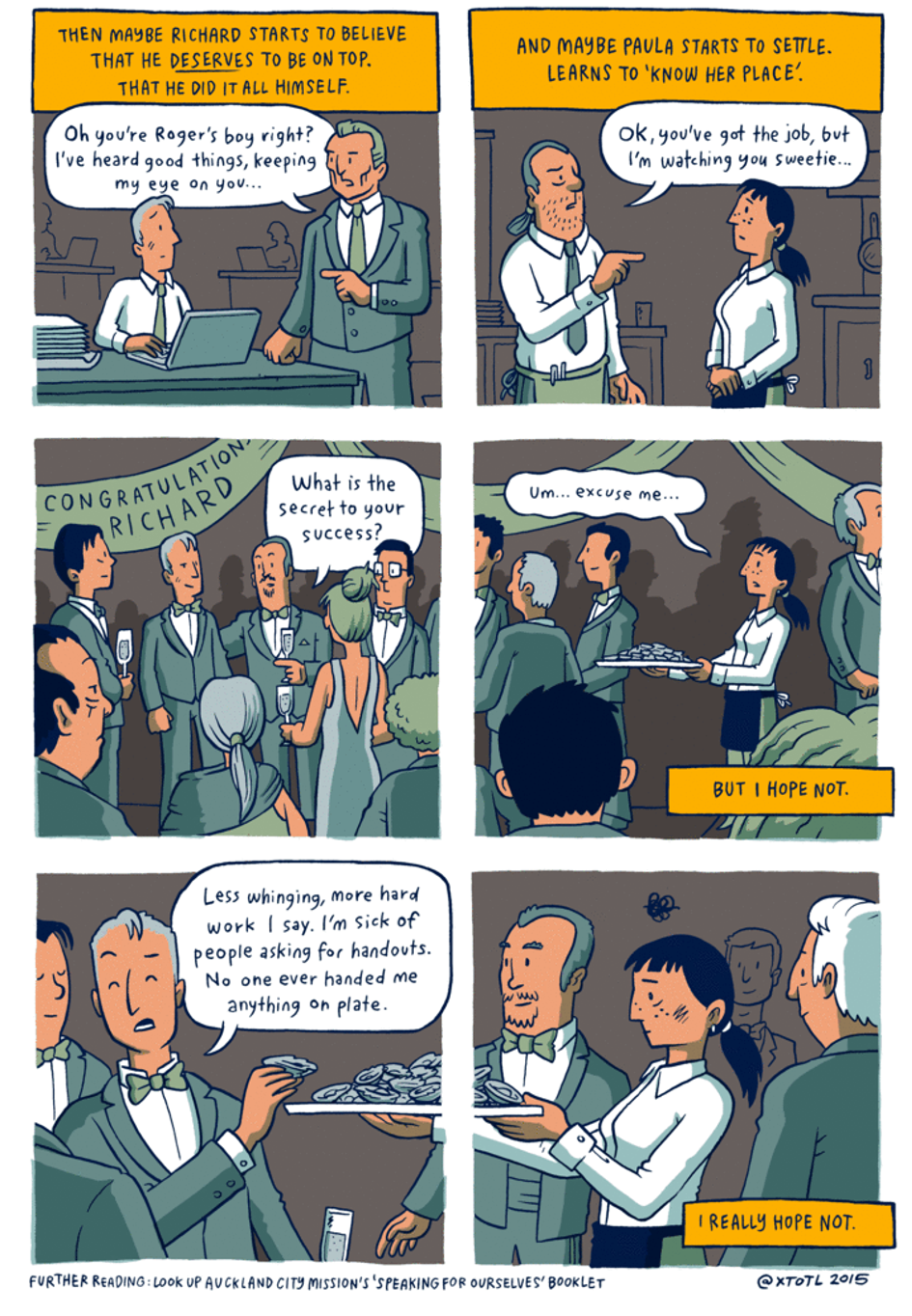
Singapore has progressed as a nation but there are still people who fall through the cracks. Stories of families who struggle financially are aplenty. Some students go to school burdened with family and financial problems. Some may worry constantly if they have enough money to eat lunch or to buy school essentials. Some may also have extra responsibilities such as household chores or to take care of their younger siblings after school. These burdens and worries are not clear for teachers and friends to see unless they take the intentional step to learn more about the experiences of others beyond school hours.

Here is a comic which succinctly explains why there are such diverse experiences amongst people when we all seem to be in the same ‘meritocratic system’.


Comic taken from: https://www.rnz.co.nz/news/the-wireless/373065/the-pencilsword-on-a-plate

If you can relate to Paula’s experience, do not feel discouraged or be in dismay. There is still hope as long as you change your perspective and believe that you can still succeed in your own ways.

Read the success stories of those who triumphed over their challenging circumstances and be inspired!

Ms Nurain Sanusi

From a broken family and even working part-time jobs to support her family, Ms Nurain has displayed resilience, compassion, kindness, and maturity throughout her Secondary School years.

https://mothership.sg/2019/12/n-level-interview-2/

Mr Tan Jun Xiang

He scored 181 for his PSLE and went to the Normal (Academic) Stream. His poor results disappointed his parents and this motivated Mr Tan to commit all his efforts to his studies. He realized his ambition of becoming a doctor in polytechnic and set his heart to enter NUS Medical School.

Read his story to find out how he did it

https://www.straitstimes.com/singapore/he-broke-the-mould-by-going-from-normal-stream-to-nus-medical-school

Mr M Thirukkumaran

He almost retained in Secondary 1 and 2. In Secondary 3, he scored 1 mark out of 50 marks. Find out how he overcame his challenges.

https://www.schoolbag.edu.sg/story/from-rock-bottom-to-top-of-the-class

After reading the inspirational stories, what can you do now so that you will be able to write your own success story in the future?

Sources:

Suggested Videos:

The Boy from the Normal Academic Stream who almost gave up on himself https://www.youtube.com/watch?v=g2ukoB8F6jo (6.33 mins)


What is the true meaning of life?

All of us do not have a choice in which family you are born into. As you read or watch about the lives of wealthy people, you may be green with envy, wishing that you were born with a silver spoon in your mouth. Indeed, it will be a dream to be able to satisfy any of your whims and fancies! Before bemoaning over what you are lacking in life, let us think about what is really important in life.

Read the story of Dr Richard Teo, a 40-year-old millionaire cosmetic surgeon who passed away in 2012 due to Stage 4 lung cancer. He shared with various audience about his life lessons, hoping to help them gain valuable perspectives on what is really valuable in life.

Photo taken from: https://www.inspirationboost.com/dr-richard-teo-keng-siang-thoughts-of-life-wealth-success-happiness/

This is an excerpt of a speech that he gave to a group of students who were in a medical course:

Currently as students, most of you are chasing for academic success so that you can get better opportunities in the future. It might also be common for most people to associate success with wealth. Practically speaking, we all need money to survive. But would you trade health for wealth?

When Dr Richard Teo was a student, he believed in excellence in all aspects of his life.

Images taken from: https://www.facebook.com/pg/InMemoryOfDrRichardTeo/photos/?ref=page_internal

“Since young, I was a typical product of today’s society. A relatively successful product that society requires. From young, I came from a ‘below average’ family. I was told by the media and from people around me that happiness is about success. And that success is about being wealthy. With this mind-set, I was always extremely competitive. Not only did I feel that I needed to go to the top school, I needed to have success in all fields. I participated in uniformed groups, track and almost everything. I needed to get trophies. I needed to be successful, I needed to have Colours award, National Colours award… everything. I went on to medical school and graduated as a doctor. Some of you may know that within the medical faculty, ophthalmology is one of the most highly sought-after specialties. I went after that as well. I was given a traineeship in ophthalmology. I was also given a research scholarship by NUS to develop lasers to treat the eye.

He became what most people would regard as ‘successful’. With his income, he could afford almost anything he desired. There was a constant pursuit of material goods. He led a luxurious and glamourous life – a life most people envy.

“How did I spend my weekends? Typically, I’ll have car club gatherings. With spare cash. I got myself a track car. We’ll go up to Sepang in Malaysia and go for car racing. And it was my life. With other spare cash, what do I do? I got myself a Ferrari.

So, what do I do after getting a car? It’s time to buy a house, to build our own bungalows. We went around looking for a land to build our own bungalows, we went around hunting. So how do I live my life? Well, we all think we have to mix around with the rich and famous. We hung around with the beautiful, rich and famous, spending our lives dining in Michelin-starred restaurants.

I reached a point in life that I got everything for my life. I was at the pinnacle of my career and all.

A sudden turn of events. He had everything, except the time to live.

“I started to develop backache in the middle of nowhere. I thought maybe it was all the heavy squats I was doing. I went to SGH and saw my classmate to do an MRI, to make sure it’s not a slipped disc or anything. And that evening, he called me and said that they found bone marrow replacement in my spine. I could not believe what I heard. I was like, “Are you serious?” I was still running around going to the gym you know. But we had more scans the next day, PET scans – positrons emission scans. They discovered that I actually have stage 4 terminal lung cancer. I was like “Whoa, where did that come from?” It has already spread to the brain, the spine, the liver and the adrenals. And you know one moment I was there, totally thinking that I have everything under control, thinking that I’ve reached the pinnacle of my life. But the next moment, I have just lost it. I was told that even with chemotherapy, that I’ll have about 3- 4 months at most. My world crashed and I went into depression, of course, severe depression. I thought I had everything.”

He says that there is nothing wrong with being rich or wealthy. But in the end, all the material possessions will not give you joy. Learn to love and serve others. Life is not all about yourself.

“See the irony is that all these things that I have, the success, the trophies, my cars, my house and all. I thought that brought me happiness. But I was feeling really down, having severe depression. Having all these thoughts of my possessions, they brought me no joy. The thought of… You know, I can hug my Ferrari to sleep, no… No, it is not going to happen. It brought not a single comfort during my last ten months. And I thought they represented happiness, but they were not true happiness. What really brought me joy in the last ten months was interaction with people, my loved ones, friends, people who genuinely care about me, they laugh and cry with me, and they are able to identify the pain and suffering I was going through.

“Don’t let society tell you how to live. Don’t let the media tell you what you’re supposed to do. Those things happened to me. And I led this life thinking that these are going to bring me happiness. I hope that you will think about it and decide for yourself how you want to live your own life. Not according to what other people tell you to do, and you have to decide whether you want to serve yourself, whether you are going to make a difference in somebody else’s life. Because true happiness doesn’t come from serving yourself. I thought it was but it didn’t turn out that way.”

How has Dr Richard Teo’s story changed your perspective about the true meaning of life?

Inside the lives of the rich kids of Singapore https://www.youtube.com/watch?v=KmwxpFzEx6g (9.53mins)


Source: https://www.facebook.com/drrichardteo/posts/860724050629046:0?__tn__=K-R

The Science of Love


Suggested Reading:

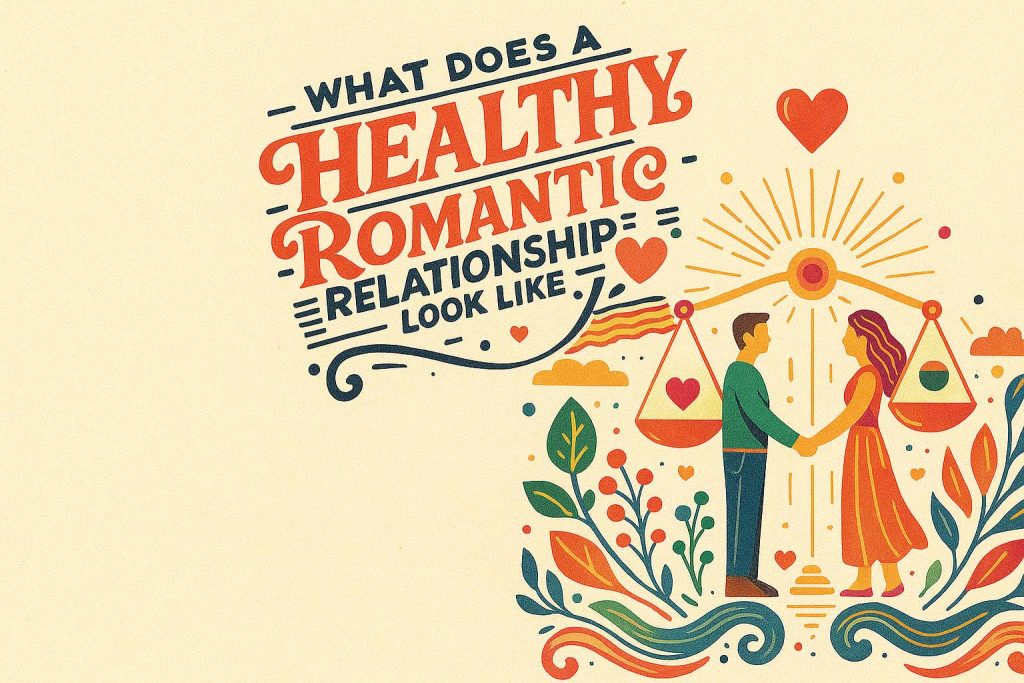
What does a healthy romantic relationship look like?

There are people who have their ideals of a romantic relationship and often these ideals can be perpetuated from television shows, movies, drama serials etc. It is important to develop the correct perspective on what a healthy romantic relationship looks like and most importantly, the skills necessary to build that relationship.

However, first let us look at what an unhealthy romantic relationship looks like.

Signs of an unhealthy romantic relationship

When a partner uses verbal insults, mean language, nasty putdowns, gets physical by hitting or slapping, or forces someone into sexual activity, it’s a sign of verbal, emotional, or physical abuse.

Ask yourself, does my partner:

  • get angry when I don’t drop everything for him or her?
  • criticize the way I look or dress, and say I’ll never be able to find anyone else who would date me?
  • keep me from seeing friends or from talking to other guys or girls?
  • want me to quit an activity, even though I love it?
  • ever raise a hand when angry, like he or she is about to hit me?
  • try to force me to go further sexually than I want to?

These aren’t the only questions you can ask yourself. If you can think of any way in which your boyfriend or girlfriend is trying to control you, make you feel bad about yourself, isolate you from the rest of your world, or — this is a big one — harm you physically or sexually, then it’s time to get out, fast.

If you are in an unhealthy relationship let a trusted friend or family member know what’s going on because your safety is important. It can be tempting to make excuses or misinterpret violence, possessiveness, or anger as an expression of love. But even if you know that the person hurting you loves you, it is not healthy. No one deserves to be hit, shoved, or forced into anything they don’t want to do. There can be long-term repercussions if you remain in the toxic relationship. Make the decision to leave the relationship as soon as possible. Seek assistance from your teacher or a trusted adult if the other party makes you feel threatened.

Why are some relationships just so hard to maintain?

Ever heard about how it’s hard for someone to love you when you don’t love yourself? It’s a big relationship roadblock when one or both people struggle with self-esteem problems. Your girlfriend or boyfriend isn’t there to make you feel good about yourself if you can’t do that on your own. Focus on being happy with yourself, and don’t take on the responsibility of worrying about someone else’s happiness.

What if you feel that your girlfriend or boyfriend needs too much from you? If the relationship feels like a burden or a drag instead of a joy, it might be time to think about whether it’s a healthy match for you. Someone who’s not happy or secure may have trouble being a healthy relationship partner.

Also, intense relationships can be hard for some teens. Some are so focused on their own developing feelings and responsibilities that they don’t have the emotional energy it takes to respond to someone else’s feelings and needs in a close relationship. Don’t worry if you’re just not ready yet. You will be, and you can take all the time you need.

Ever notice that some teen relationships don’t last very long? It’s no wonder — you’re both still growing and changing every day. You might seem perfect for each other at first, but that can change. If you try to hold on to the relationship anyway, there’s a good chance it will turn sour. It is better to part as friends than to stay in something that you’ve outgrown or that no longer feels right for one or both of you. Be honest about your feelings. Do the right thing.

Relationships can be really complicated but we all desire to have healthy relationships with people. “We may know what a healthy relationship looks like, but most people have no idea how to get one — and no one teaches us how to do so.” That’s what Joanne Davila, a professor of psychology and the director of clinical training at Stony Brook University in Stony Brook, New York, contends in a TEDxSBU talk.

The importance of romantic competence

Romantic competence is “the ability to function adaptively across all areas or all aspects of the relationship process [including] … figuring out what you need, finding the right person, building a healthy relationship, [and] getting out of relationships that are unhealthy.”

According to Davila and her colleagues, there are three core skills behind romantic competence: insight, mutuality and emotion regulation

The first skill is insight.

Insight is about awareness and understanding and learning. With insight, you’ll have a better idea of who you are, what you need, what you want, and why you do the things you do.

With insight, you’ll be able to anticipate the positive and negative consequences of your behaviour,” says Davila. Having insight means realizing when you say “thank you” after your partner hands you a coffee with a ½ teaspoon of sugar and a slug of oat milk – just how you like it – both of you will feel appreciated. Conversely, it also means knowing that when you forget to say “thank you” or delay responding to one of their texts for no good reason, they’ll probably feel annoyed or hurt.

Insight will also let you know your partner better. Let’s say your partner shows up late for a date. With insight, you’ll know why. For example, maybe your partner is late for everything. It’s nothing about you or the relationship. That’s just who your partner is.

The second skill is mutuality.

Mutuality is about knowing that both people have needs and that both sets of needs matter. With mutuality, you’ll be able to convey your own needs in a clear direct fashion; that increases the likelihood you’ll get them met.

Let’s say you have to go to a really stressful family event, and you’d like your partner to be there with you. You might say directly: “You know, this is going to be stressful for me. I’d really love for you to be there; you’ll be a really good buffer for me. Is there any way you can clear your schedule to come with me?”

Of course, mutuality is about ensuring your partner’s needs are addressed, too. Let’s say you know that your partner really likes to go to the gym first thing in the morning — it makes your partner feel better the rest of the day. Mutuality will let you be willing to support your partner in this even though you’d really rather have your partner spend quality time with you.

The third — and final — skill is emotion regulation.

Emotion regulation is an important skill to have in all of your relationships – romantic and platonic – because it enables you to tolerate uncomfortable feelings while also maintaining self-respect and a commitment to your own needs. It is about regulating your feelings in response to things that happen in your relationship. With emotion regulation, you’ll be able to keep your emotions calm and to keep things that happen in your relationship in perspective.

Emotion regulation means developing the ability to manage those moments when you might worry or snap. Davila gives the example of waiting for a text back from your partner: “That text isn’t coming. You’re getting really anxious. You’re checking your phone every two seconds. With emotion regulation, you’ll be able to tell yourself, ‘You know what? Calm down — the text is going to come. I don’t need to check my phone every second. I’m just going to put it away and focus on the task at hand’.

These three skills – insight, emotion regulation and mutuality will help you develop and enjoy healthier and happier relationships.

Relationships can be full of fun, romance, excitement, intense feelings, and occasional heartache, too. Whether you’re single or in a relationship, remember that it’s good to be choosy about who you get close to. If you’re still waiting, take your time and get to know plenty of people.

What skills do you need to work on to forge strong and healthy relationships?

How can you avoid being in unhealthy relationships?

Sources: