The Social Dilemma https://www.youtube.com/watch?v=uaaC57tcci0 (2.34mins)
The importance of securing what is private and valuable to us
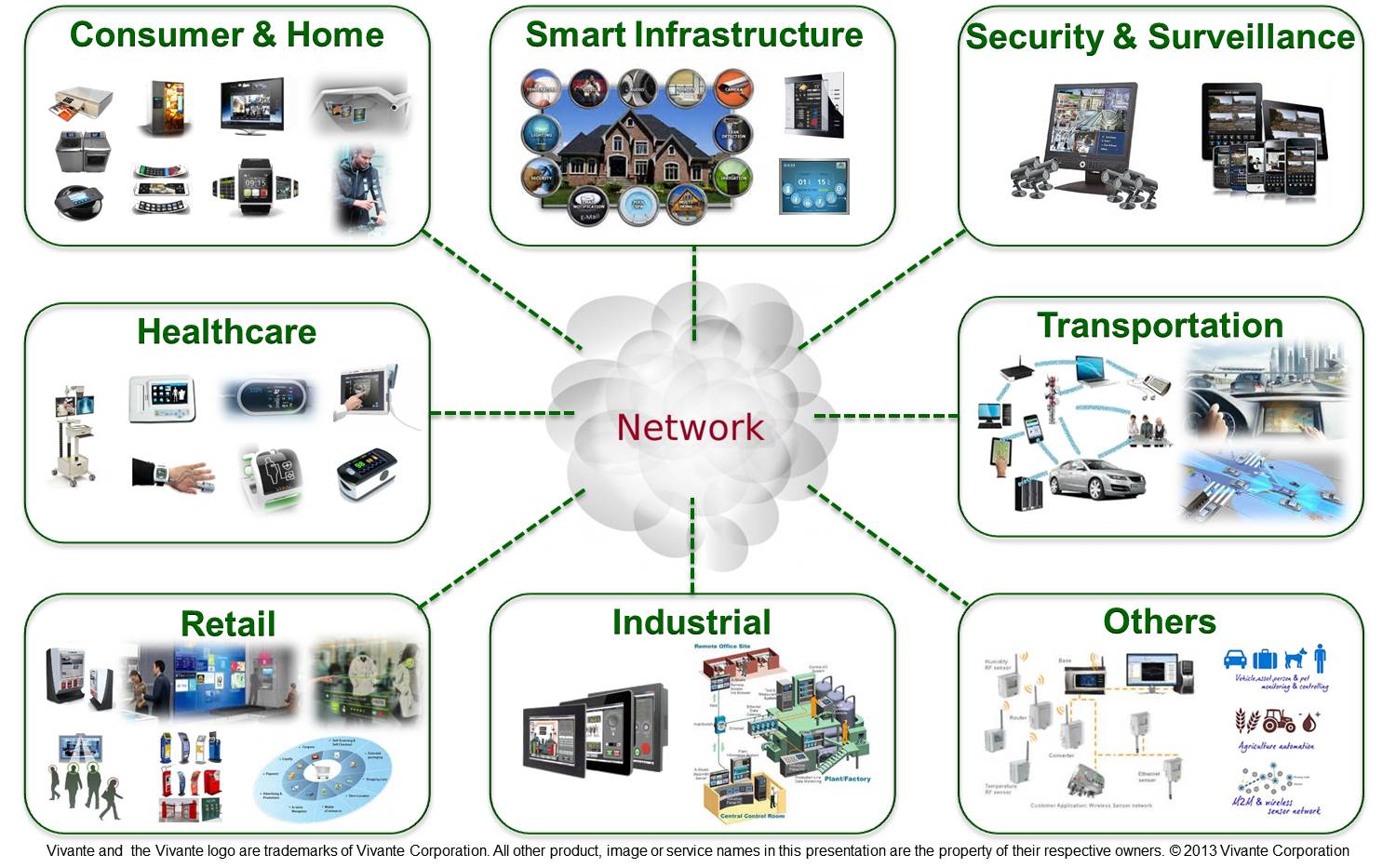
The variety and range of functions of ‘Internet of Things’ (IoT) devices have certainly made things more efficient for individuals, homes and businesses. IoT devices connect through computer networks to exchange data with the operator, businesses, manufacturers, and other connected devices, mainly without requiring human interaction.
As we embrace the use of such technology, we have to be aware that these devices can introduce blind spots and security risks. Vulnerable smart devices can create more troubles to IoT device users if the devices are not secured.
For example, cyber criminals can take advantage of security oversights or gaps in the configuration of closed-circuit television, such as security cameras used by private businesses or built-in cameras on baby monitors used in homes and day care centers. Many devices have default passwords cyber actors are aware of and others broadcast their location to the Internet. Most surveillance camera networks are usually connected to the internet which then allows users to access them remotely for various purposes. This then makes cameras extremely vulnerable to hacker attacks. Therefore, systems not properly secured can be located and breached by hackers who wish to stream live feed on the Internet for anyone to see.
Home security system hacked in Singapore
In a report by The New Paper, it is mentioned that hacked footage from security cameras used by Singaporean households have reportedly been sold and uploaded to pornography websites, with some showing those of breastfeeding mums and children—most of them in various state of undress or compromising positions.
It is said that the group of hackers has over 1,000 members across the globe and operate on social messaging platform Discord.
The group claimed that its members can access more than 50,000 hacked cameras—from Singapore, Thailand, South Korea and Canada. The group has also claimed to have shared more than 3TB of clips with over 70 members who paid a subscription fee of US$150 (S$203) for lifetime access. About 4,000 videos and pictures from the hacked footage are provided as a “sample.”
To protect your family from falling victim to these malicious cyber-related attacks, here are tips:
• Ensure all default passwords are changed to strong passwords. • Do not use common words, simple phrases, or passwords containing easily obtainable personal information. • If the device cannot change its password, ensure your router has a strong password. • Purchase trustworthy IoT devices from reliable manufacturers. • Update the software of your IP cameras regularly. • Prevent cameras from sending information to third parties. • Monitor your system for spikes in traffic. • Report any suspicious activities.
To what extent do you agree that technology has made our lives better?
As humans hibernate, animals take opportunity to roam free
https://www.youtube.com/watch?v=sefnYG2iGG0 (3.34mins)
Facts about sea turtles
https://video.nationalgeographic.com/video/animals-source/101-videos/00000168-c4be-d0fe-a76e-f4bf11e90000 (3.29mins)
Suggested Reading:
Giving nature a chance to recover
From cleaner air to liberated wildlife, coronavirus lockdowns across the world appear to have had a number of positive effects on the environment. Modern life, as we know it, has largely been put on pause with millions of us cooped up indoors as governments try to curtail the spread of the Covid-19 pandemic.
But outside, the natural world has continued to rumble on, and even showing signs of benefiting from our absence.
Lockdown in London and other cities across the world has seen streets deserted and air pollution levels decrease
Cleaner air has perhaps been the single greatest positive effect of the lockdowns on the environment. Citizens in Northern India are seeing the view of the Himalayan mountain range for the first time in their lives, due to the drop in air pollution. Those living in Jalandhar in northern Punjab have shared pictures of the mountains from rooftops and empty streets, amazed by the view which has been hidden by pollution for 30 years.
The Himalayas are visible in Northern India (Image credits: @parasrishi / Twitter)
In fact, cities across the world have seen pollution levels plummet as people have spent less time in vehicles, offices and factories and more time at home.
While in China, where the Covid-19 pandemic originated, carbon emissions fell by around 25 per cent over a four-week period at the beginning of this year as authorities shuttered factories and people were instructed to stay home, according to an analysis carried out for the climate website Carbon Brief.
Meanwhile, with aviation grinding to a halt and millions of commutes no longer taking place across the world, emissions patterns in many countries would appear likely to follow the same downward trend.
Clearer water
In Venice, famous for its winding canals, water quality appears to have improved amid Italy’s stringent coronavirus lockdown. Residents in the city have said the waterways are benefiting from the lack of usual boat traffic brought on by the hordes of tourists who visit each year.
With the decline in water traffic usually generated by tourism, muddy canal floors are no longer being churned up. Hence there is a reduced amount of sediment clouding the waterways, The change has reportedly offered locals clear views of shoals of small fish, crabs and multi-coloured plant-life. These sights are often obscured by busy boating movement in the Lagoon.
Emptied of the motorboat taxis, transport and tourist boats which usually clog Venice’s canals, there has reportedly been a sharp uptick in the clarity of the city’s waterways (Image credits: https://static.standard.co.uk/s3fs-public/thumbnails/image/2020/04/03/12/venicewater0304.jpg?w530)
Liberated wildlife
Wildlife has taken the opportunity presented by our widespread absence from suburban streets and city centres to venture out and explore.
While there has been a host of debunked fake stories about animals’ activities during Covid-19 lockdowns, there have also been plenty of instances of creatures across the world appearing to emboldened, and perhaps a bit bemused, by our ongoing lack of activity.
From a herd of marauding goats taking over a Welsh seaside town to deer in a Japanese city roaming the roads in search of food, the shift in behaviours ranges from the beautiful to the downright bizarre.
Goats take over the deserted streets of Llandudno, Wales.
“This is the habitat they [the animals] once had and that we’ve taken away from them,” said Marcelo Giagnoni, the director of the agricultural and livestock service that took part in an operation to capture the puma alongside police and the national zoo.
According to research released by conservation charity Plantlife, wild flowers have the opportunity to bloom exponentially throughout the UK this summer because of the councils cutting back on mowing services,
Trevor Dines, Plantlife’s Botanical Specialist said: “An unintended but understandable consequence of lockdown may be reduced mowing that has the potential to benefit wild plants and the bees, butterflies, birds, bats and bugs that depend on them for survival.”
Across the world, the lockdowns may just be showing us how quickly the natural world around us can adapt and thrive in our absence when given some space. Or to put it simply, when we move out, nature can move in.
These significant changes in the natural environment give us the opportunity to reflect deeply on how humans’ actions have impacted our environment. The condition and state of nature has certainly taken a backseat in the name of economic growth and development.
What other positive changes have you observed in your country during the Covid-19 lockdown?
This Turkish Language Isn’t Spoken, It’s Whistled
https://www.youtube.com/watch?v=l117wfB0g3o (2.40 mins)
What are the other forms of communication used by people around the world?
Language is thought to have originated when early humans started gradually changing their early communication systems. The structures of language as having evolved to serve specific communicative and social functions. Language is not the creation of one person or of one period but it is an institution, on which hundreds of generations and countless individuals have worked on.
Below are some languages that are used by many people in society to communicate:
Sign Language
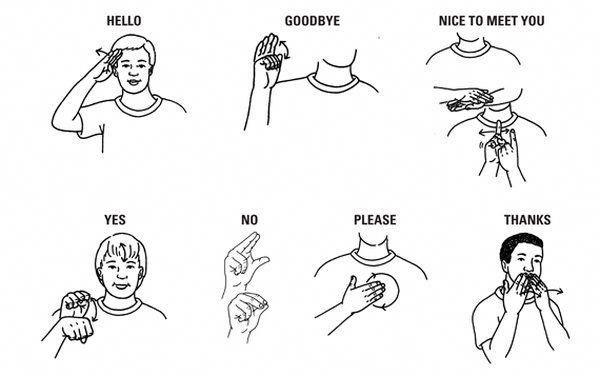
American Sign Language (ASL) is a language completely separate and distinct from English. It contains all the fundamental features of language, with its own rules for pronunciation, word formation, and word order. ASL is expressed by movements of the hands and face. It is the primary language of many North Americans who are deaf and hard of hearing, and is used by many hearing people as well.
While every language has ways of signalling different functions, such as asking a question rather than making a statement, languages differ in how this is done. For example, English speakers may ask a question by raising the pitch of their voices and by adjusting word order. ASL users ask a question by raising their eyebrows, widening their eyes, and tilting their bodies forward. They use their body language to assist in effective communication as well.
Fingerspelling is part of ASL and is used to spell out English words. In the fingerspelled alphabet, each letter corresponds to a distinct handshape. Fingerspelling is often used for proper names or to indicate the English word for something.
Did you know Starbucks Malaysia has a store dedicated to employing deaf employees?
Starbucks Malaysia Official Signing Store
You can make the life of a hearing-impaired person better by learning ASL. Watch this video:
CHP officer helps woman communicate with DMV workers using ASL
Braille
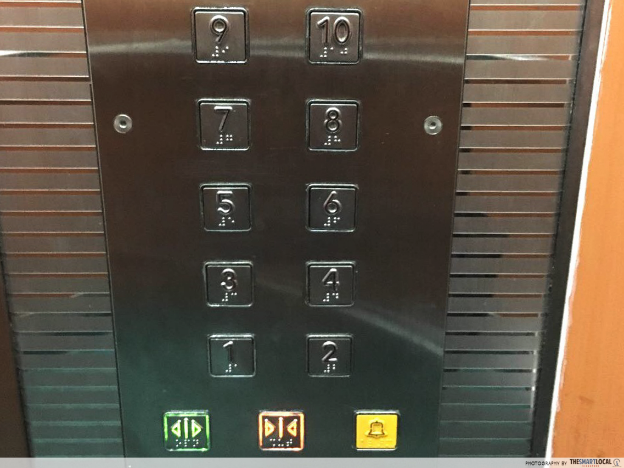
Did you notice that there is braille in most of the lifts?
This allows the visually impaired to use lifts independently.
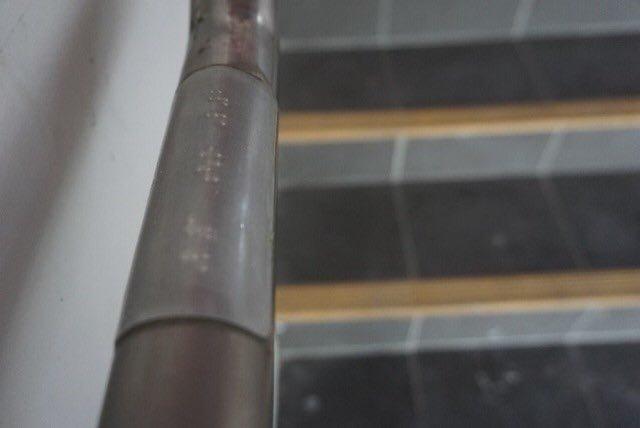
New bus interchanges even have braille on handrails, for persons with visual impairment to identify which bus lane they’re in and where the waiting areas are.
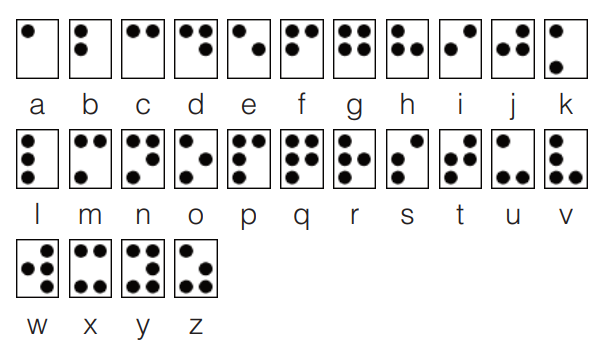
Braille is a tactile reading and writing system used by blind and visually impaired people who cannot access print materials. It uses raised dots to represent the letters of the print alphabet. It also includes symbols to represent punctuation, mathematics and scientific characters, music, computer notation and foreign languages.
Braille is not a language. It is a code by which all languages may be written and read. Through the use of braille, people who are visually handicapped are able to review and study the written word. It provides a vehicle for literacy and gives an individual the ability to become familiar with spelling, punctuation, paragraphing and other formatting considerations.
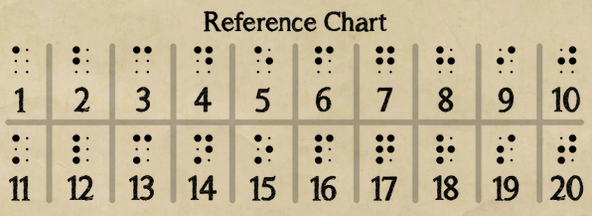
In Braille, the numbers 1-9, followed by the number 0, are made using the letters A-J respectively. To distinguish numbers from letters, Braille utilizes a number symbol in the cell proceeding the letter. To create numbers larger than one digit, a number symbol is followed by a series of cells with letters, one per cell. For example, the number 20 would use 3 cells: A number symbol, the letter B (represents 2), and the letter J (represents 0). To simplify the numbers on the dice to one cell, each die face has a ridged line that designates the bottom of the cell as a point of orientation for the dots. The Letters A-J represent the numbers 1-10 respectively, and the letters K-T represent the numbers 11-20 respectively. Below is a quick reference chart to help you learn the letters, and the numbers they represent!
Languages are important for humans to communicate and there are various modes of communication to make everyone in society feel a sense of inclusion. The easy accessibility and availability of other forms of languages used can give people with special needs the confidence to navigate the society they live in independently.
Morse Code
One of the Morse code systems was invented in the United States by American artist and inventor Samuel F.B. Morse during the 1830s for electrical telegraphy. The original “American” Morse Code invented by Samuel F.B. Morse is hardly in use today. However, International Morse Code is still used by the United States Navy intelligence specialists, amateur radio operator afficionados who form the International Morse Code Preservation Society, and aviators who communicate abbreviated identifiers via Morse Code.
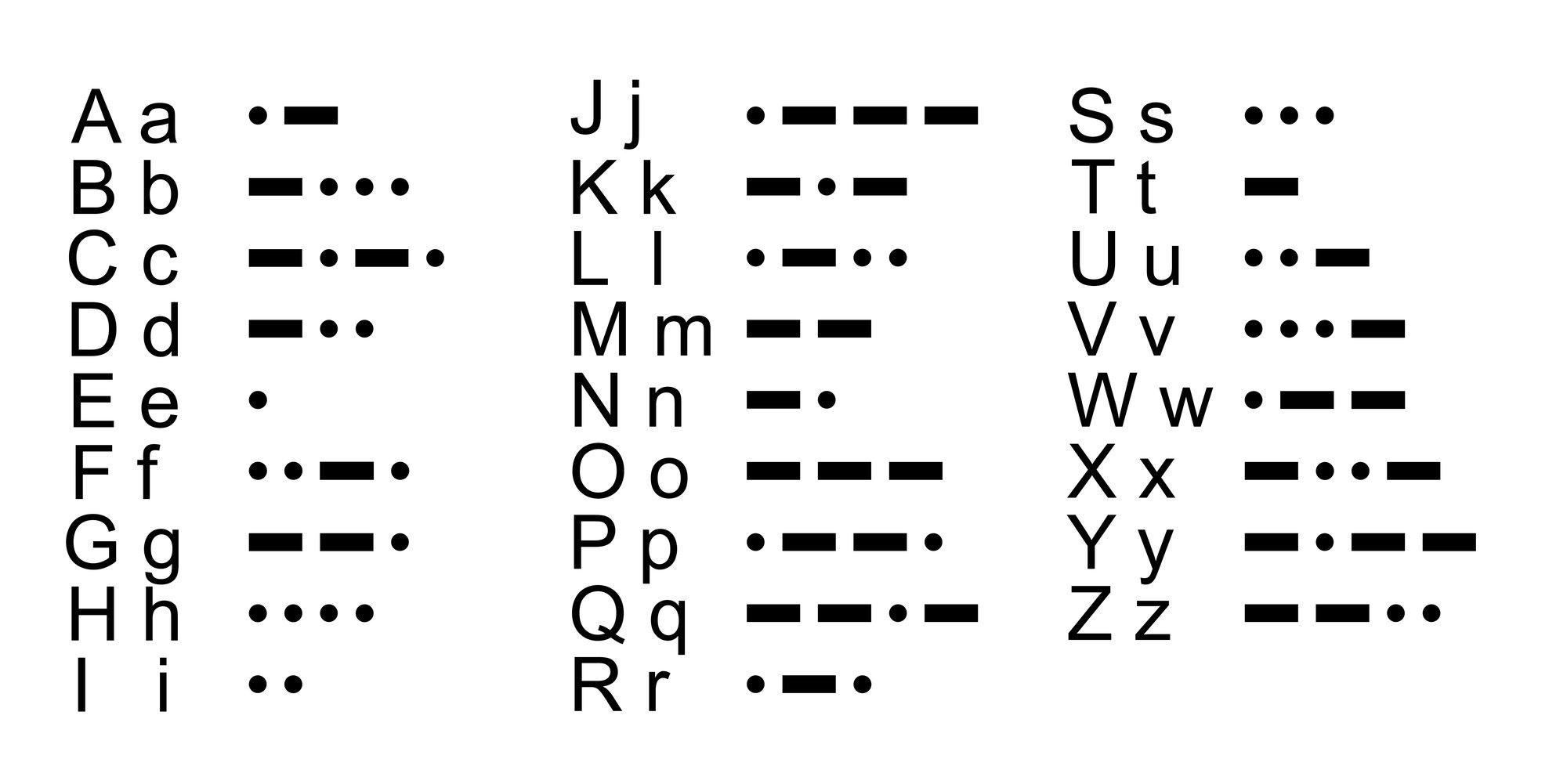
International Morse Code uses combinations of dots and short dashes to represent letters of the alphabet, numerals and punctuation marks by an arrangement of dots, dashes, and spaces. In addition, the International Morse Code uses dashes of constant length rather than the variable lengths used in the original Morse Code. For example, the universal distress signal “SOS” is communicated by three dots, three dashes, and three dots—three dots denoting the letter “S” and three dashes denoting the letter “O.”
See and hear Morse Code:
https://www.youtube.com/watch?v=_J8YcQETyTw (0.59 secs)
How does Morse Code work?
https://www.youtube.com/watch?v=iy8BaMs_JuI (3.28 mins)
What other forms of communication would you be interested to learn?
Extension Activity:
You are advised to write between 180 – 250 words for this activity.
You feel that students will benefit from learning a new language in school. Write your email in a formal and polite tone with the aim to convince your principal to offer an enrichment course on languages in school.
You must include the following details:
at least 2 convincing reasons for learning new languages
which language(s) you hope will be taught and why
suggested duration of the enrichment course
recommend which level of students should attend
Some key points mentioned in the website:
Importance of language for individuals
Importance of language for Career Development
Importance of language for Understanding Culture
Importance of language for Developing Children
Importance of language to society
Importance of language for improved social contact
Importance of language as culture-carrier
Importance of language for spreading ideas
Visit this website: https://www.importanceoflanguages.com/ to read about the importance of language. You may rephrase relevant information from the website in your email.
Jacinda Ardern’s full Christchurch speech: ‘Let us be the nation we believe ourselves to be’ https://www.youtube.com/watch?v=YdGq3frFsRo (7.17 mins)
What does a ‘servant leader’ mean?
The term ‘servant leader’ seems to be a paradox. We don’t commonly associate a leader and a servant together as leader conjures the image of someone powerful and commanding while a servant is portrayed to be someone lowly and submissive.
Therefore, what does the term ‘servant leader’ mean?
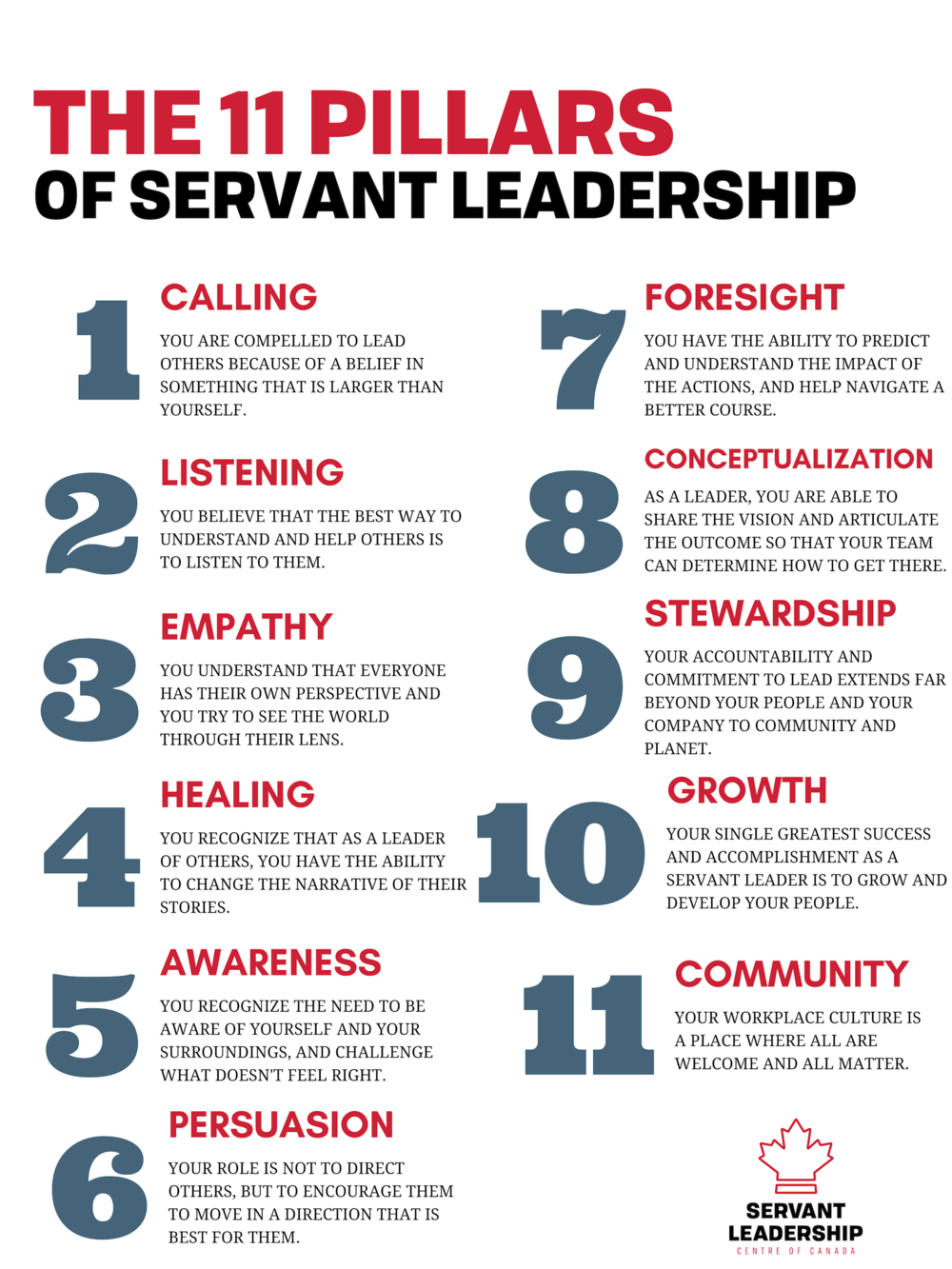
Servant leaders are categorized as those individuals who are able to lead with a primary focus, putting the needs of other people before their own. This type of leadership usually extends beyond an organization’s environment to reach everyone who is associated with it, such as stakeholders and customers, with “serving others” being its typical leadership trait. There are some other basic principles when being a servant leader.
Through her faith, Mother Teresa dedicated her life to serving other people. Like other servant leaders, she had her critics from time to time, but there was no one who could question her motives behind her desire to help others. Also, she never sought personal recognition, though she insisted on significant changes and was not afraid to express opinions that others would hesitate to say. Eventually, many call her to become a saint, with a life that many people consider as a miracle.
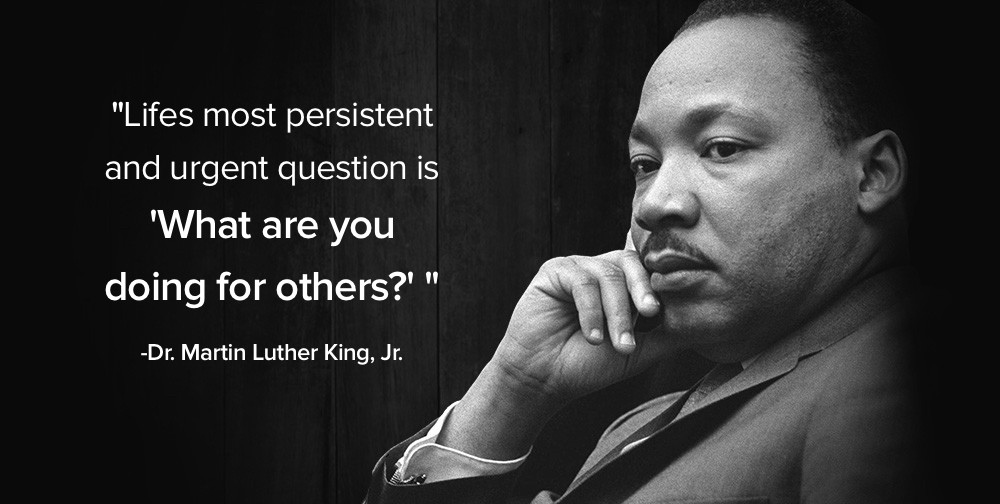
King did not always want to be the leader of the Civil Rights Movement in the US, but he just knew that there was a need for equality. By putting other people’s needs first, he was able to leave a lasting legacy, which proves that anyone can make a difference through a humble and serving perspective. Until today, some of King’s speeches are still listened to regularly, as people see them as having a ring of truth.
What are your key takeaways on being a ‘servant leader’?
Extension activity:
Scenario: The class has been rather unpleasant with how the Class Chairperson has been throwing his weight around. His bossy and demanding behaviour becomes exceptionally obvious during class competitions and the class feels that there is a need for a change in his attitude and behaviour.
Write an informal letter on behalf of the class, in an appropriate tone, to help the Class Chairperson understand how the class feels about his behaviour and give him some suggestions on how he can adopt a servant leader approach when leading the class in the future. You may include other relevant information from this article in the letter.
Free Solo 360 – National Geographic
https://www.youtube.com/watch?v=FRGF77fBAeM (6.48 mins)
What are the lures of extreme sports?
Extreme sports, also known as action sports or alternative sports, are sporting events or pursuits characterised by high speeds and high risk. Typically, extreme sports operate outside traditional mainstream sports and are celebrated for their adrenaline-pumping thrills.
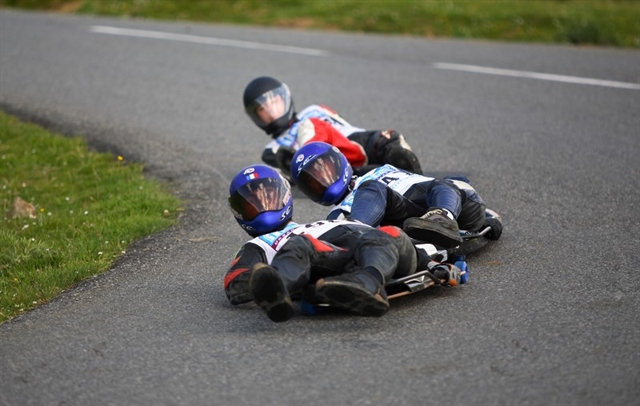
The sports most commonly categorised in this group are skateboarding, snowboarding, freestyle skiing, in-line roller-skating, street luge racing, BMX, big wave surfing and mountain biking. Racing and acrobatic competitions for motorcycles and snowmobiles are also often classified as “extreme,” and the term can be stretched to include pursuits such as rock climbing, BASE jumping and skydiving.
Image taken from: https://www.engineering.com/portals/0/BlogFiles/Street_luge_3.jpg
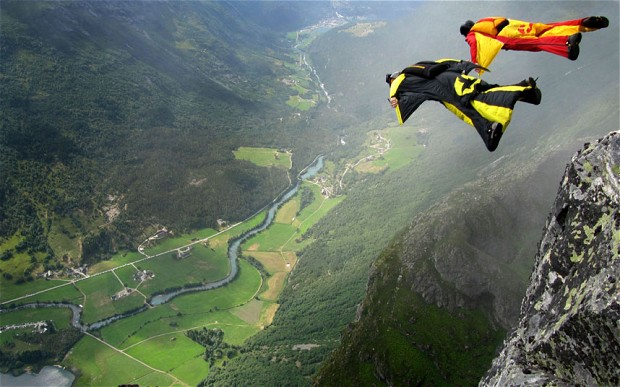
An example of BASE jumping in wingsuit
Image taken from: https://secure.i.telegraph.co.uk/multimedia/archive/02257/potd-base-jump_2257955b.jpg
There are definitely risks involved in all kinds of sports. Here is some information that will provide perspective on the probabilities of losing your life when you participate in certain sports.
Images taken from: https://www.tetongravity.com/story/news/your-chances-of-dying-ranked-by-sport-and-activity
What motivates people to do extreme sports despite the risks involved?
Contrary to popular beliefs, extreme athletes are not irresponsible risk-takers with a death wish. Some people might be yearning for the thrill and adrenaline rush associated with extreme sports but most participants want to enrich their lives. Researchers say extreme-sport participants seek experiences that are life-changing.
Dr Eric Brymer explains that the extreme-sport experience is hard to describe—participants feel intensely alive, hyper-aware, and deeply connected to their environment. Many describe sensations like time slowing down or merging with nature.
Would you consider participating in extreme sports?
Why or why not?