Archives For Uncategorized

We all have our fair share of personal crisis. Hence a little bit of kindness shown will not only help someone in need, it also reminds them there is always hope in the midst of a storm. Yet, it can sometimes be tough for some to make the first move to clarify the issue or intervene. “Oh how embarrassing/awkward if I were to help this person….even though I really want to… maybe someone else will step up to help… I will just wait and see…I’d better be minding my own business”. Does this train of thought sound familiar? What would you do if you see this person abusing an animal?

Image credits: https://mothership.sg/2019/09/dog-abuse-animal/
What would you do if you see this young child alone at the MRT station?

Image credits: https://www.shutterstock.com/image-photo/asian-kid-crying-lost-parent-live-1332212468
“Mind your own business” can be a convenient phrase for us to tell ourselves when we witness an issue in public and we don’t feel that it is in our place to step in, in case it causes trouble and inconvenience to ourselves.

However, there are times when interventions are necessary and your actions can make a huge difference to how the situation turns out. I do not mean that you literally step into a fight to stop a violent fight going on. However, you can act wisely by promptly alerting the teacher or police. When we start to internalise the “Mind your own business” phrase, we can become apathetic to the problems of people who truly need help, and become insensitive and cold-hearted. It is important to remember that we don’t have to possess super powers in order to help others. There are times when we have to make split second decisions to assist someone whose life is endangered because you are in that place in that particular time.

We live in a society and we all need to realise that to make society more caring, compassionate and inclusive for everyone, every individual has to make the first move to make a positive difference to the lives of others. Read stories of how strangers show kindness to one another and be inspired to make a difference to the lives of others.

Heartwarming story 1: Just driving through

Image from pexels.com

When my friend and I were injured in a car accident, a family from out of state stopped to help. Seeing that we were hurt, they drove us to the hospital and stayed there until we were released. They then took us home, got us food, and made sure we were settled in. Amazingly, they interrupted their vacation to help us. —Contributed by Cindy Earls, Ada, Oklahoma

Heartwarming story 2: A family’s food angel

While going through a divorce, my mother fretted over her new worries: no income, the same bills, and no way to afford groceries. It was around this time that she started finding boxes of food outside our door every morning. This went on for months until she was able to land a job. We never did find out who left the groceries, but they truly saved our lives. —Contributed by Jamie Boleyn, Emmett, Idaho

Heartwarming story 3: Lending a helping hand

Image credits: https://pride.kindness.sg/wp-content/uploads/2022/09/kindness-is-not-a-crutch-knee-surgery-forced-me-to-depend-on-others-and-i-was-surprised-by-their-compassion-760×427.jpg

I believe that most people who see a person with a physical disability fall into two camps. One, they instinctively come forward to assist; or two, they avoid the issue totally, to the extent of not even making eye contact. Thankfully, during my eight weeks (56 days) of recovery after my knee surgery, most of the people were kind to me.  Parents of small children might see me coming in my wheelchair or on crutches and remind their little ones to be mindful of a “handicap” person coming and they would open doors for me at entrances, hold the lift or give me a wide berth so I can pass easily. Due to help from many strangers, I was able to make it to work. — Contributed by Katelin Teo, Singapore

Heartwarming story 4:

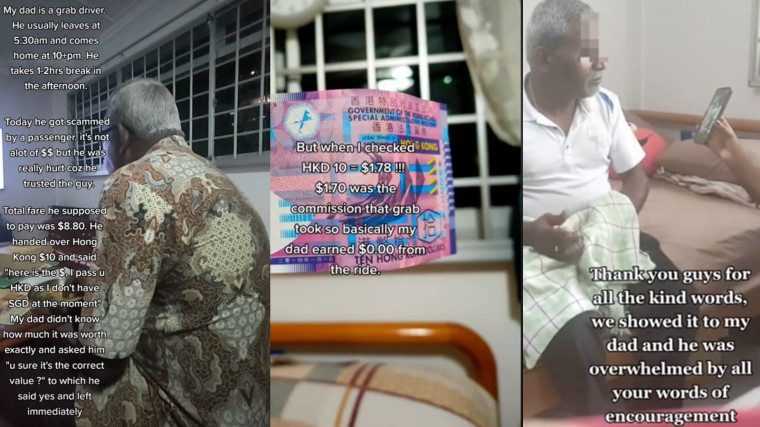
Image credits: https://pride.kindness.sg/wp-content/uploads/2022/07/grab-driver-who-got-scammed-stunned-and-grateful-by-outpouring-of-online-support-760×427.jpg

 Grab driver Mr Bala was given HKD$10 for a trip which costs SGD $8.80. Mr Bala then shared that the passenger had reassured him multiple times that Hong Kong currency was equivalent to SGD and he believed his words. He felt dumbfounded after he found out the truth because HKD $10 is equivalent only to about S$1.78! When Mr Bala’s daughter Sarah posted his story online, many of the users tagged the official Grab TikTok account to ensure that the company was aware of this incident and would reimburse Mr Bala. Some were offering solutions to help him directly.

Soon after the first TikTok video went viral, Sarah posted an update regarding the Grab scam: Grab had contacted them to assist. Mr Bala was overwhelmed with all the support that he received from strangers. Additionally, Sarah said that a family friend even transferred her S$10 for her dad. To top it all off, a representative from Grab contacted the family and credited the full fare into Mr Bala’s Grab wallet. —- Contributed by Sarah, Singapore


Ideas for showing acts of kindness

  1. Doing house chores
  • Help with meal preparations
  • Wash the dishes after meals
  • Pack your own room by putting dirty items to where they belong, emptying the bins, hang and fold your laundry, and sort out your school notes in files
  • Organize the cupboards/storeroom/fridge/bookshelves
  • Make your bed and a family member’s bed


  1. Leave two kind comments on social media


Everyone loves getting happy messages on social media, so this is an easy random act of kindness for kids to try. Older kids with social media accounts can like and leave a positive, supportive comment on a friend or family member’s post. Reach outside of your normal circle (safely) to include others who may be feeling ignored or left out.


3. Help teachers with carrying items or packing the classroom

It does not have to be Teacher’s Day to help your teachers. Students write gratitude notes to the teachers or they can offer to help in small things, like cleaning the whiteboard, packing the classroom storage shelves, carrying heavy items to the staffroom, giving out assignments etc.

  1. Make a snack basket for delivery people


It is convenient to order food or items. People who work in delivery face different challenges daily, on the road or technical issues, or with difficult customers. You can show your appreciation to delivery staff by packing a small basket of tray that contains some basic items like bottled water or juice, granola bars, or prepackaged goodies. Leave a sign letting delivery drivers know they’re welcome to take a snack for the road.

Everyone can be societal role models who make the first move to help others. One kind and compassionate act from the heart can cause a ripple effect that can make someone else’s day a little bit better.

What small acts of kindness will you do today?

Think: How can I help make the person’s day better?

Sources: 

  1. https://www.rd.com/article/kindness-strangers/
  2. https://www.rd.com/article/acts-of-kindness-for-kids/
  3. https://pride.kindness.sg/grab-driver-who-got-scammed-stunned-and-grateful-by-outpouring-of-online-support/
  4. https://pride.kindness.sg/kindness-is-not-a-crutch-knee-surgery-forced-me-to-depend-on-others-and-i-was-surprised-by-their-compassion/

Careers of the future

January 7, 2026 — Leave a comment

The world of work will change dramatically in the next few decades. Even now, jobs are changing at a fast rate as machines and big data change the way we work and interact with each other. An aging population, medical technologies, and disrupted workplaces will also change people’s lifespans and career patterns. In schools, many students are learning skills in robotics, coding, social media marketing, app development and big data analytics to be well-prepared for the future.

Increasingly, jobs will involve humans working with machines, which means that future work will require people with technical/digital skills and those who can work at the interface between machines and people.

However, most of the jobs of the future do not yet exist. That makes it difficult to say exactly what people will need to do to get those jobs. However, the patterns are becoming clear — some skills will continue to be highly rewarded, while others are likely to be taken over by machines.

Deakin and Griffith University conducted research on jobs in the future by interviewing experts from different industries and came up with ‘100 jobs of the future’, aiming to provide a snapshot of potential future job worlds that will allow us to understand what skills and interests will be essential for us to thrive in the changing economy. Here are some examples of new jobs that you may be able to apply for in the future!

Do you have a strong interest in helping others? You can be a ….

Image credits: https://100jobsofthefuture.com/img/jobs/CyborgPsychologist.jpg

Or if you strongly believe that it is important to record precious memories, you may want to consider being a nostalgist!

    Artist’s impression of a nostalgist

    Image credits: https://100jobsofthefuture.com/img/jobs/Nostalgist.jpg

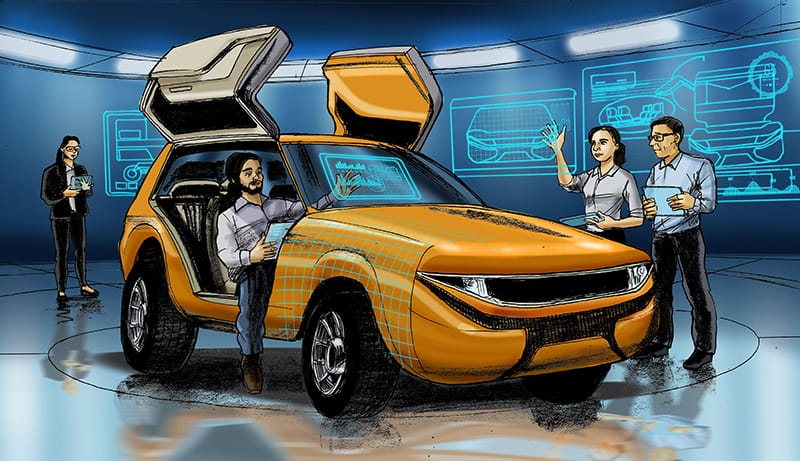
Do you love drawing or designing? Or do you have interest in cars? Then you can consider being an autonomous vehicle profile designer!

Artist’s impression of autonomous vehicle profile designer

Image credits: https://100jobsofthefuture.com/img/jobs/AutoVehicleDesigner.jpg

The jobs mentioned above require skills and knowledge in different disciplines. Therefore, it is important for students to be creative and critical thinkers who know what relevant skills and knowledge to use when they face different circumstances at work.

Other skills that are of value:

  • digital skills
  • entrepreneurial skills, involving adaptability, autonomy and self-direction, in a situation where workers will need to sell their skills across many jobs, and incorporate freelance work in various industries
  • STEM / STEAM skills
  • Interpersonal skills will become more important as many routine jobs, or routine aspects of jobs, are taken over by machines, and there will be a need for people to work creatively at the human-computer interface.
  • The ability to apply knowledge and skills from different disciplines
  • An innovative mind that can carry out problem-solving in real-life

Find out the other jobs that you can do in the future from the website below: https://100jobsofthefuture.com/browse/

Which career sounds the most interesting to you?

If you want to find out how times have changed, visit this link to compare the key characteristics and traits of the generations prior to Gen Alpha! https://mccrindle.com.au/insights/blogarchive/gen-z-and-gen-alpha-infographic-update/

Sources:

  1. https://100jobsofthefuture.com/report/
  2. https://mccrindle.com.au/insights/blogarchive/gen-z-and-gen-alpha-infographic-update/

Risk-taking is a normal part of healthy development. Risks are choices with uncertain potential outcomes that can be desirable or undesirable, like winning or losing money in a gamble.

It is not only normal for adolescents to take risks and try new things but it is an essential part of learning during these years. Being able and willing to take risks is a part of their natural tendency to explore new things in adolescence—in ways that help teens discover who they are, expand their skills, and ultimately leave the safe nest of home.

Do any of these statements sound familiar to you?

Statements

Possible reasons or motivation for risk-taking

“If it’s unknown; it’s interesting and exciting. I want to find out.”

Curiosity

“You can’t know what something is like unless you try it.”

Experimentation

“What you’re warned against sounds thrilling. Let’s try!”

Excitement/Thrill-seeking

“Even if it’s against the rules, I can still do. I don’t care.”

“I can’t stand being told what I must not do!”

Rebellion/ Desire for independence
I did it to act older or feel more mature.

Growth

“It is dangerous but I like taking chances.”

Courage

“I just went along with the crowd.”

Conformity/Fear of being left out or missing out/ Peer pressure
“I just did what I felt like at the time. I don’t care about what will happen”

“I was really out of it. I don’t know what happened. I wasn’t thinking.”

Impulsivity/Foolishness

As adolescents are drawn to normal risk-taking on their coming-of-age passage, they are continually testing themselves because there are a lot of new experiences to try and a lot of growing up to do. Meeting developmental milestones such as establishing one’s identity and independence, requires youth to be willing to try things that they might not like or at which they may fail. This requires a tolerance for risk-taking.

Image credits: https://www.facebook.com/photo?fbid=613362663479555&set=a.288571855958639

Positive vs Negative Risk-Taking

Decisions made by youths can have deep and long-lasting impact on their lives. Therefore, it is important to be aware of what you are getting involved in. People tend to perceive risks as inherently negative. This is untrue. Risk behaviors fall along a spectrum: On one end of the spectrum are negative risks, which are generally antisocial or dangerous. On the other end are positive risks, which are socially acceptable risks with the potential to benefit adolescents’ well-being and with less severe potential consequences. Although the outcome can be uncertain for some circumstances, you can deliberately choose to take risks in safe environment where there is adequate support to help you navigate the risks.

Examples of negative risk-taking:

  • Skipping school can create problems that can eventually cause teenagers to feel stressed out and frustrated when schools and teachers expect them to be accountable to take responsibility for their actions.
  • Having underage and unprotected sex
  • Experimenting with drugs, vaping, alcohol or cigarettes
  • Meeting up with someone whom you have met online
  • Getting into a car with a stranger or someone who might be drunk

Negative risks can have harmful consequences on a teenager’s health, safety and wellbeing. Thus, instead of being involved in negative risks, choose to take positive risks!

Examples of positive risk-taking:

  • Joining a new CCA, taking up a leadership role in class, school and/or CCA.
  • Volunteering for extra-curricular activities (Eg, being a school emcee, performing in a school play or dance)
  • Exploring new interests and developing new skills (Eg. Kayaking, swimming, basketball, archery, painting, drawing, robotics, designing games or composing songs)
  • Setting academic goals and working hard to achieve it. Being involved in competitions organised by the school

These activities help youths to get out of their comfort zone to develop new skills and gain confidence. They also allow youths to form stronger bonds to their parents and communities. Youth are more likely to receive support from people around them for taking positive risks.


Before being involved in something, ask yourself these questions:

  1. Will my parents/teachers be supportive of what I am going to do? If they will not approve, do not go ahead. If you are unsure, please consult parents and teachers.
  2. Will my actions benefit my physical, emotional and mental well-being? If no, do not proceed. Find alternative activities that will help develop yourself.
  3. Am I doing things because I want to impress others or due to peer influence? If you often find yourself succumbing to peer pressure, or following the trend at the moment, you may need to find ways to distance yourself from the current clique that you are hanging out with and find peers who make wise choices and encourage you to make positive risks that lead to growth.

All in all,

healthy risk taking is:

  • Socially acceptable
  • A necessary part of adolescence
  • Something that allows teens to explore and develop their own identities, and
  • gives teens opportunities to make their own decisions.

By practising taking healthy risks, teens have an opportunity to develop their cognitive control system, narrowing the developmental gap between reward seeking and self-regulation. The job of parents, guardians and teachers is to talk with teens about controlling their risks, and ensuring that they’re healthy, safe and wise risks. This is where supporting their autonomy becomes vital.

If you would like to experience more understanding and support from your family members or guardians, do direct them to some of these links below to help them learn more about what you may be going through:

  1. Tips for supporting your teenager

https://parents.au.reachout.com/common-concerns/everyday-issues/things-to-try-risk-taking


  1. Creative ways to say no to peer pressure

      https://www.youtube.com/watch?v=orX7ELeBiBw (2.21 mins)


  1. The Teenage Brain

https://www.happyfamilies.com.au/articles/the-teenage-brain?vgo_ee=5vpZ%2FvpmwZsolVhGRwpNgA%3D%3D&fbclid=IwAR3nsUUFBV6cjKwF9Wy8_Y9HQxQ_Sut3W91rxaJ7jB-4TGl-oqBCCz2joDg

  1. Adolescence

https://www.psychologytoday.com/sg/basics/adolescence

Sources:

  1. https://www.psychologytoday.com/sg/blog/surviving-your-childs-adolescence/202006/risk-taking-in-adolescence
  2. https://bold.expert/the-positive-side-of-risk-taking/
  3. https://developingadolescent.semel.ucla.edu/topics/item/science-of-risk-taking
  4. https://www.happyfamilies.com.au/articles/the-teenage-brain?vgo_ee=5vpZ%2FvpmwZsolVhGRwpNgA%3D%3D&fbclid=IwAR3nsUUFBV6cjKwF9Wy8_Y9HQxQ_Sut3W91rxaJ7jB-4TGl-oqBCCz2joDg
  5. https://parents.au.reachout.com/common-concerns/everyday-issues/risk-taking-and-teenagers

The Dangers of vaping

January 7, 2026 — Leave a comment

Maybe, you’re curious about vaping. You have seen videos of people doing vape tricks on Tiktok or Instagram and think it looks really fun. You have probably heard that vaping isn’t as bad as smoking. You may have been told that people use e-cigarettes to quit smoking, and unlike cigarettes, which everyone knows are bad for you, e-cigarettes are not supposed to be addictive, and it even smells good… so what’s the harm, right?

Stop. It’s about time we got real about vaping.

Here are 8 reasons why vaping is a bad idea.

  1. Vaping is linked to at least 60 deaths

As of 18 Feb 2020, vaping has been linked to   68 deaths and over 2807 cases of lung injury related to vaping in the United States. The Centers for Disease Control and Prevention (CDC) in the US has called this outbreak EVALI, or E-cigarette or Vaping product use-Associated Lung Injury. The CDC has identified vitamin E acetate, an additive in some THC-containing e-cigarettes, is strongly linked to the lung injury outbreak.  Vitamin E is usually not harmful when ingested or applied to the skin; however, the oil could cause respiratory issues when inhaled.

To be safe, the CDC recommends to avoid the use of e-cigarettes, especially by youths, young adults and pregnant women.

  1. Vaping is harmful


The main function of e-cigarettes is primarily to dispense nicotine, – a highly addictive substance that keeps users nicotine-dependent and eventually they become long-term users of vapes. In youths, nicotine exposure negatively affects the developing brain’s ability to control attention and learning, lowers youths’ impulse control permanently and can lead to mood disorders. Impulse control issues refer to the failure to resist urges. Common examples include sudden physical or verbal outbursts, internet addiction, compulsive eating etc. If you feel that being a teenager who is undergoing puberty is already tough, imagine worsening this crucial developmental phase with consumption of nicotine.

Even without nicotine, vapourisers expose the user to a combination of harmful chemical substances like fine particulate matter (PM), cancer causing agents such as carbonyls and volatile organic compounds. Commonly found substances include cancer-causing compounds like formaldehyde and benzene. Formaldehyde is known to cause infertility as well. Toxic metal nanoparticles like tin, lead and nickel are also derived from the e-cigarette, heating element or vapouriser device itself.

Lastly, certain compounds in vapes might be highlighted to be “food safe” compounds, this may mislead individuals to mistakenly believe that the products are safe for use. However, “food safe” simply means these compounds are safe for consumption – not inhalation. The vaping process heats and vapourises these compounds, which can turn them from “safe” into something dangerous.

Read more about what vaping does to your lungs: https://www.hopkinsmedicine.org/health/wellness-and-prevention/what-does-vaping-do-to-your-lungs

  1. Vaping is addictive

As you have read earlier, vapes contain a highly addictive chemical, nicotine. When inhaled, nicotine is quickly absorbed into the bloodstream and within seconds, activates certain chemical reactions in the brain, giving the user a pleasurable “high” and making them crave more. Furthermore, e-cigarettes do not burn out like traditional cigarettes and so users could end up vaping more than they realise.

Vaping become a habit when used as a coping mechanism during times of stress or when it becomes a part of a regular ritual where it is associated with a particular activity. For example, some people might vape after every meal, or, whenever they hang out with a certain group of friends or colleagues. This habit is unhealthy and it can be hard to get rid of the habit. Therefore, it is wise to not even try to get started, no matter how strong you think your willpower may be.

  1. Vaping is not proven to help you quit cigarettes

The World Health Organisation (WHO) has declared that e-cigarettes are undoubtedly harmful to health and that they are not safer alternatives to regular cigarettes. As e-cigarettes are relatively new products, many long-term health effects of vaping are still unknown, studies have shown that vaping is associated with increased risk of developing heart and lung diseases in the short term, such as myocardial infarction, asthma and chronic obstructive pulmonary disease (COPD).

E-cigarettes are currently not recognised by the WHO as a legitimate cessation aid as there are no conclusive scientific evidence proving their safety and efficacy.  Switching from cigarettes to e-cigarettes is not smoking cessation but perpetuation of an addictive behaviour. In fact, e-cigarettes are used as a complement to cigarette smoking and not as a substitute. This means many end up as “dual users” of both products, perpetuating their nicotine addiction and subjecting themselves to health harms associated from both products.

  1. Vaping can lead people to try traditional tobacco or other drugs

The “gateway drug theory” describes the phenomenon in which an introduction to drug-using behavior through the use of tobacco, alcohol, or marijuana may lead to subsequent use of other illicit drugs. The theory suggests that, all other things being equal, an adolescent who uses any one drug is more likely to use another drug. In practice, early introduction to substance use for adolescents is often through tobacco and/or alcohol. These two drugs are considered the first “gate” for most adolescents. Under this hypothesis, tobacco, alcohol, and marijuana are all considered “gateway drugs,” preceding the use of one another and of illicit drugs.

There is a growing number of studies from overseas such as Taiwan, UK, US and Canada that reported that never smoker youths who experiment with e-cigarettes at least double their chance of smoking cigarettes later in life.  A US systematic review of 9 studies involving more than 17,000 youths found that youths who vape were three times more likely to pick up cigarette smoking, compared to non-vapers.   Similar reports from the other countries have also supported this “gateway effect”.

  1. Big Tobacco tactics you should know about

Vaping is popular with young people for a variety of reasons. However, the primary reason is because they’re being targeted by e-cigarette companies. An example of this was when a Juul representative told students at a school that Juul was “99% safer than cigarettes”, and that it was “totally safe”. Juul’s packaging and outreach efforts were also deemed to be targeted at youths. Like their traditional tobacco counterparts, e-cigarette companies prey on young people so they end up as life-long customers. They make vaping seem cool by creating and advertising a certain sort of vaping lifestyle especially at youth-oriented events, and endorsed by social media influencers.

Vape juice comes in all sorts of enticing scents or sweet flavours, many of which taste like candy, desserts or soft drinks to appeal to youths.  As a tobacco company representative once said, “It’s a well-known fact that teenagers like sweet products…”.

  1. Vaping is illegal in Singapore

That’s right. You basically can’t do anything related to vaping without breaking the law.

Image credits: https://www.healthhub.sg/programmes/153/vaping

Whether it’s buying, selling, possessing or even sharing photos or videos of vaping on social media—if you do any of these, you’re breaking the law.

It is an offence under the Tobacco (Control of Advertisements and Sale) Act (TCASA) to sell, use, possess for sale, import or distribute imitation tobacco products. This includes e-cigarettes and anything else that resembles a smoking device.

The TCASA covers everything—from confectionery and food products, to any toy, device or article:

  • That resembles, or is designed to resemble, a tobacco product;
  • That is capable of being smoked;
  • That may be used in such a way as to mimic the act of smoking; or
  • The packaging of which resembles, or is designed to resemble, the packaging commonly associated with tobacco products.

Sellers can be fined up to $10,000 and/or imprisoned for up to 6 months for first offences. For second or subsequent offences, sellers can be fined up to $20,000 and/or imprisoned for up to 12 months.

Promoting your vaping products for sale is also illegal, as it would come under the prohibition against “advertisements or promotions which would encourage or promote the use of tobacco products and imitation tobacco products which includes posting of smoking/vaping photos on social media platforms.”

In September 2019, Chong Weisheng, a 35-year-old Singaporean man was fined $99,000 by the Health Sciences Authority (HSA) for selling electronic vaporisers. This is the harshest vaping-related penalty imposed since 2014, when an offender was fined $64,500.

If you own a vaping device, please throw it away. It is illegal to possess, purchase or use electronic vaporisers. If caught you could be fined up to $2,000.

  1. Singapore is not the only country that has banned vaping

Around 37 countries have banned sales or distribution of e-cigarettes and other Emerging Tobacco Products, with more countries either heavily regulating or considering a ban, as the harms of vaping become increasingly known.

Within the South–East Asia and Western Pacific region, Australia, Bhutan, Brunei, Cambodia, India, Japan, Korea (Democratic People’s Republic), Nepal, Sri Lanka, Thailand, have banned ENDS.

In conclusion, just don’t try vaping.

There are really no benefits to trying e-cigarettes. Vaping is harmful to one’s health, and can lead to an addictive and costly habit. Not to mention the fact that it is also illegal in Singapore.  Because of its illegal status, contents of vapes are not regulated and there is no way of telling what is actually in the vapes and e-juices that are being sold. You could end up inhaling unknown substances that may be even more toxic than you realise.

Members of the public who have information on the illegal import, distribution, sale or offer for sale of prohibited tobacco products can submit an online form at https://www.hsa.gov.sg/consumer-safety/make-a-report . Alternatively, they can contact HSA’s Tobacco Regulation Branch at Tel: 6684 2036 or 6684 2037 during office hours.

Can you think of some effective ways to discourage peers and friends from smoking or vaping?

Sources:

  1. https://www.healthhub.sg/live-healthy/2069/lets-get-real-about-vaping
  2. https://www.encyclopedia.com/education/encyclopedias-almanacs-transcripts-and-maps/gateway-drug-theory
  3. https://www.hopkinsmedicine.org/health/wellness-and-prevention/5-truths-you-need-to-know-about-vaping
  4. https://www.healthhub.sg/programmes/153/vaping

Slavery has evolved and manifested itself in different ways throughout history and sadly, it still exists today. Slavery refers to the condition in which one human being is being owned by another.

According to the  International Labour Organisation (ILO) more than 40 million people worldwide are victims of modern slavery. In addition, more than 150 million children are subject to child labour, accounting for almost one in ten children around the world.

Although modern slavery is not defined in law, it is used as an umbrella term covering practices such as forced labour, debt bondage, forced marriage, and human trafficking. Essentially, it refers to situations of exploitation that a person cannot refuse or leave because of threats, violence, coercion, deception, and/or abuse of power. Victims of slavery are often being taken captive against their will and are trapped in their circumstances.

Alongside traditional forms of forced labour, such as bonded labour and debt bondage there now exist more contemporary forms of forced labour, such as migrant workers, who have been trafficked for economic exploitation of every kind in the world economy: work in domestic servitude, the construction industry, the food and garment industry, the agricultural sector and in forced prostitution.

Main forms of Modern Slavery

  1. Forced labour

To mark ‘World Day against Trafficking in Persons’, an international cartoon competition aimed at raising awareness about modern slavery was organised.

The challenge was “What if your pencil was a tool against forced labour?” The competition was held at a time when the risks of being trapped in forced labour have increased due to the socio-economic impact of the COVID-19 crisis.

Portuguese cartoonist Gargalo Vasco was awarded 1st place for the challenge.  His cartoon was selected for its powerful message and beautiful depiction of the way forced labour affects the entire world, while being hidden from our eyes. No region, no economic sectors is exempted from forced labour, and we all have a role to play to end it.

Vasco said that drawing is his way to express his opinion and make people reflect about social and political issues. Forced labour and child labour are part of his agenda, as we live in such an unfair world and these issues are many times unseen.


Image credits: https://www.ilo.org/global/about-the-ilo/newsroom/news/WCMS_815631/lang–en/index.htm

“More than ever, urgent action is needed to eliminate forced labour. Cartoons can open the public’s eyes, combat indifference and ultimately push people to act,” said Martine Combemale, President and Founder of RHSF. “We hope they will make people realize that forced labour is around us, through the goods and services we consume, because it can happen in our community, in our neighbourhood.”

“Forced labour is a complex subject”, said Philippe Vanhuynegem, Chief of the Fundamental Principles and Rights at Work Branch at the ILO. “Some stereotypical images, such as chains and balls, are often used to represent modern slavery. However, nowadays, the mechanisms through which a person can be coerced into work can be much more subtle; through deception, passport confiscation, withholding of wages or manipulation of debt.

2. Child labour

Children around the world, girls and boys, are exploited sexually, used by adults for sex or used in sexual images (pornography) or performances. They may be bought and sold into marriage, prostitution or slavery – in both developing and industrialized countries. Children are also kidnapped and then trafficked across borders and then sold to be prostitutes in foreign countries.

This form of child labour has serious short- and long-term consequences. Children are at a high risk of physical abuse, malnutrition and sexually transmitted diseases. It is extremely difficult for children to get out of this situation and very hard for them to deal with what they have experienced physically and mentally.

Globally, one in ten children works. The majority of the child labour that occurs today is for economic exploitation. That goes against the Convention on the Rights of the Child, which recognizes “the right of the child to be protected from economic exploitation and from performing any work that is likely to be hazardous or to interfere with the child’s education, or to be harmful to the child’s health or physical, mental, spiritual, moral or social development.”

Work which could harm children’s health or well-being and/or expose them to danger is also a “worst form of child labour”.

This could be work in a dangerous environment, such as in a mine, where children risk death or injury from tunnel collapses, accidental explosions or rock falls. In industry, the children may be exposed to dangerous chemicals and substances, so burns and serious injury are common. They may also be exposed to toxic substances such as mercury and lead, and can develop chronic health conditions such as silicosis (a respiratory disease in the lungs). Agricultural work also presents great dangers, especially where children have to work with dangerous tools and equipment or with chemical substances, like pesticides for crops. Much of the time, the children have either no safety equipment, or it is adult equipment, which does not fit properly and does not provide proper protection.

Many types of work are physically harmful to children, especially when done for long periods of time. For example, children may have to sit bent over in one position, or crawl in small spaces which can cause disfigurement, spinal injuries and difficulty walking straight. This could be work such as sewing footballs or clothes, breaking bricks and rocks for road building, making matchsticks, crawling through a mine, making bricks. Or they might constantly be bent over from carrying loads that are too heavy.

Furthermore, child labourers are involved in hazardous work when they are exposed to all types of weather conditions (e.g. scorching hot sun, hard rain) and may not have shoes or adequate clothing. They can easily develop coughs and catch pneumonia or other illnesses.

Children are also exposed to hazardous work when the workplace is unsanitary, poorly lit and poorly ventilated. This is also true when clean drinking water, health services and schools are unavailable, especially in the more remote areas. In these conditions, children are more at risk of catching illnesses and disease.


Screenshots taken from:

  1. https://www.forbes.com/sites/meghabahree/2014/02/05/your-beautiful-indian-rug-was-probably-made-by-child-labor/?sh=522cbecd74a0 (left)
  2. https://www.theguardian.com/sustainable-business/2014/nov/20/10000-children-estimated-to-work-in-nepals-carpet-industry (right)

This is a sad and depressing situation that has to be addressed. Children ought to experience the joys of childhood and have access to education.

3. Trafficking

Human trafficking steals lives. It is a global problem that transcends borders and is often a crime just out of reach of national law enforcement agencies, especially when it moves to the online space.

There are some human traffickers who pretend to be recruiters from ‘recruitment agencies’ and provide false hopes and dreams to victims who are searching for better job prospects overseas and provide a better living for their families. In the end, victims are exploited and held captive in a foreign country which they are unable to escape from.

Screenshot taken from: https://www.9news.com.au/national/melbourne-couple-found-guilty-of-keeping-woman-as-a-slave-for-eight-years/47cdfafd-6d77-4b1d-be62-8ea76ca94037

Around the world, an estimated 40 million people — one-fourth of them children — are caught up in the multi-billion-dollar industry. Three out of four of the trafficking victims are recruited for sexual exploitation.

The only way to stop trafficking in women and girls is prevention, which requires changing cultural norms and practices that objectify, debase and control women’s and girls’ bodies.

Reducing the demand for sexual exploitation requires challenging harmful masculinities and ideas of male entitlement to women’s bodies, and here we can draw lessons from broader strategies to prevent violence against women. For instance, UN Women in Ecuador has developed a programme on non-violent masculinities targeting young men as part of its efforts to prevent trafficking in women and girls. 

Does modern slavery happen in Singapore?

In search of better economic opportunities, migrant workers willingly emigrate from other parts of Asia, typically Bangladesh, Myanmar, India, Vietnam and Philippines to work in hospitality, construction, domestic service, performing arts, manufacturing and service industries in Singapore. They have hopes of a building a better future as they work overseas.

Unfortunately, there are oppressors who believe that making money matters more than a person’s life. Driven by greed and overlooked by their local legal system, some employers dictate the actions of migrant workers because they can apply or cancel work visas. As a result, migrant workers might suffer harsh and inhumane working conditions or be forced to engage in unlawful services, just to remain in Singapore to provide a living for their families back home. It is not uncommon for these vulnerabilities to be exacerbated by personal circumstances, such as debt that they may have taken on in order to work in Singapore. Their lack of literacy and language further isolates them as they are often unable to access help easily when exploited.

In Singapore, many people engage the help of domestic workers to assist in cleaning and caretaking of young children and elderly. Migrant domestic workers are a vulnerable group of people especially when they are isolated while being ill-treated by their employees.

Screenshot credits:

  1. https://www.bbc.com/news/world-asia-39402698 (left)
  2. https://www.bbc.com/news/world-asia-57563235 (right)

What can we do to help those who might be enslaved?

  1. Spot the Signs

✔︎ Unable to leave their employment
✔︎ Do not know where they stay or work
✔︎ Transport to and from the work place is supervised
✔︎ Do not have access to their phone
✔︎ Long working hours with insufficient rest and little food
✔︎ Debt is compounded if they decide to leave
✔︎ Face threats of harm to themselves or their families back home
✔︎ Do not have their passport or work permit
✔︎ Do not know how to contact the authorities if they need help
✔︎ Unable to speak English
✔︎ Lacks confidence and has low self-esteem, unable to keep eye contact    

      in conversation
✔︎ Fearful of employer
✔︎ Has bruises or cuts on body
✔︎ Anxious whenever police and authority are mentioned

  1. If you have seen something that you suspect as abuse, do not be a bystander. Your intervention can save a life. Report cases of abuse or provide any crime-related information to the police: https://www.police.gov.sg/I-Witness or talk to a trusted adult who will take the necessary actions to stop acts of injustice. Abusers need to be held accountable for their actions.
  2. Last but not last, do not be involved in any kinds of abuse.

As you read the stories below and think of the following questions:

  1. What do you think are the causes of modern slavery?
  2. Is it possible to ever eradicate slavery?
  3. Can you think of some ways to raise awareness on modern slavery?

Forced labour:

  • Modern slavery: ‘I had to eat the dog’s food to survive’

https://www.bbc.com/news/world-latin-america-41857444


  • Female workers at H&M supplier in India allege widespread sexual violence

https://www.theguardian.com/global-development/2021/mar/09/female-workers-at-hm-supplier-in-india-allege-widespread-sexual-violence

Child Labour: 

  • Your Beautiful Indian Rug Was Probably Made By Child Labor

https://www.forbes.com/sites/meghabahree/2014/02/05/your-beautiful-indian-rug-was-probably-made-by-child-labor/?sh=522cbecd74a0


  • 10,000 children estimated to work in Nepal’s carpet industry

https://www.theguardian.com/sustainable-business/2014/nov/20/10000-children-estimated-to-work-in-nepals-carpet-industry


Human trafficking:

  • Essex lorry deaths: Men jailed for killing 39 migrants in trailer

https://www.bbc.com/news/uk-england-essex-55765213


  • Trafficked: Three survivors of human trafficking share their stories

https://www.unwomen.org/en/news/stories/2019/7/compilation-trafficking-survivors-share-stories


Maid abuse in Singapore:

  • Singaporean who tortured and killed Myanmar maid gets 30 years in jail

https://www.bbc.com/news/world-asia-57563235


  • Singapore couple jailed for starving Philippine maid

https://www.bbc.com/news/world-asia-39402698


  • Commentary: Myanmar domestic worker’s death and the problem with the bystander effect

https://www.channelnewsasia.com/commentary/myanmar-maid-death-bishan-domestic-worker-abuse-singapore-252286


Organisations that promote human rights and social justice

  • International Labour Organisation

https://www.ilo.org/ipec/Campaignandadvocacy/MusicInitiative/lang–en/index.htm


  • 10 NGOs in Singapore Advocating for Human Rights

https://www.humanrightscareers.com/issues/ngos-in-singapore-advocating-for-human-rights/


Sources:

  1. https://www.un.org/en/observances/slavery-abolition-day
  2. https://www.unwomen.org/en/news/stories/2019/7/compilation-trafficking-survivors-share-stories
  3. https://www.ilo.org/global/about-the-ilo/newsroom/news/WCMS_815631/lang–en/index.htm
  4. https://www.ilo.org/ipec/Campaignandadvocacy/Youthinaction/C182-Youth-orientated/worstforms/lang–en/index.htm
  5. https://www.bbc.com/news/world-asia-57563235
  6. https://hagar.org.sg/human-trafficking-in-singapore/
  7. https://www.channelnewsasia.com/singapore/maid-abuse-challenges-uncovering-cases-domestic-workers-in-focus-1883801
  8. https://www.ijm.org/stories/online-sexual-exploitation-of-children-hidden-in-plain-sight