Other inspiring stories and inspiring people:







 many teens possessing a smartphone these days, the creation and sharing of personal photos and videos have become prevalent and teens usually do so without their parents’ knowledge. This may not sound like a big deal since everyone does that nowadays. However, teens and even parents, do not realize that such sharing once posted or sent out, is out of their control. It can be viewed by millions of people globally, and is likely to be floating around on the internet even if one thinks it has been erased. Imagine if you share a photo or video with nudity, sex or sexually suggestive content (ie. Sexting, or otherwise known as sext) at a spur of a moment or due to peer pressure, don’t you think it can potentially haunt you for the rest of your life?
Unfortunately, many teenage girls sext as a joke or to gain attention or as an attempt to please the guys. On the other hand, boys usually succumb to peer pressure to sext. It is worse when teenagers witness that greater fame follows as a result of the release of lewd celebrity photos and videos that go viral online. They may misconstrue it as an acceptable behaviour. Not only are they devaluing their modesty, girls who sext are also devaluing their identity as an equal gender, putting themselves up as just sex objects. People may raise eyebrows but for the wrong reasons. They may enjoy viewing them but they surely will not respect the subject.
“[Sexting]…Don’t you think it can potentially haunt you for the rest of your life?”
Additionally, teens tend to think that there are no legal consequences to sexting. A teen who posts or sends explicitly sexual photos could face child pornography charges and be labeled as sex offenders for life.
Being teens, they may get off with a light punishment, but why should they want to risk losing their clean reputation, modesty, self-worth and freedom?










(Source: Download PDF Infographic)
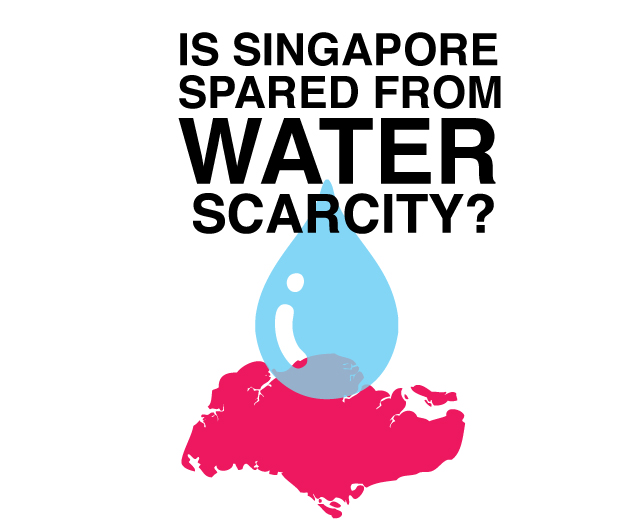
 one of the most affluent city-states in the world, Singapore is also touted as being one of the world’s cleanest and safest cities. However, the prosperity and economic boom are unable
to mask one of Singapore’s most pressing problems: it simply does not have enough water to meet its needs. The city-state has to import several millions of liters of fresh water from neighboring Malaysia via pipelines. In fact, the Food and Agricultural Organization (FAO) has officially classified the island state as “water poor.” Alternatives are urgently needed.
In 2003, the NEWater Project was launched. It involves recycling wastewater to highly purified water that even exceeds FAO’s safety standards, providing a more cost-efficient and eco-friendly solution. The majority of what’s produced is consumed by industry or by big cooling facilities. The rest is combined with nutrient-rich reservoir water, purified again and filled into bottles. Around five percent of tap water in Sinapore comes from NEWater. During the dry months, the reserves in Singapore’s rainwater reservoirs fall rapidly and officials have to supplement the supply with greywater. With NEWater, the city-state is less dependent on the weather.
To date, the initiative already supplies around one third of the country’s water demand, and that number is expected to grow to more than half by the year 2060.
In 2061, the Singapore’s 100-year water contract with Malaysia will cease. Before that deadline, the government intends to be totally water independent with the help of NEWater.
(Adapted from http://www.dw.de)
Other stories about the importance of water:
Other stories about Singapore:




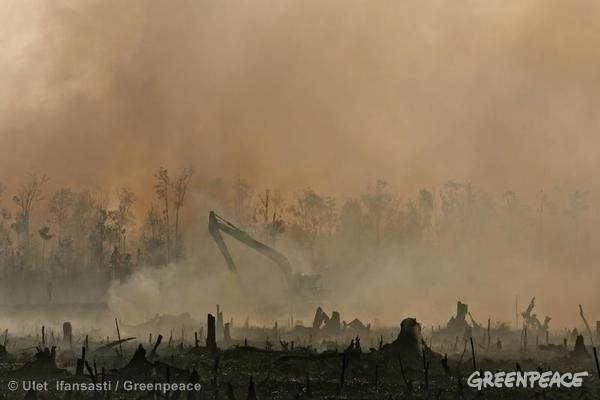
 June 2013, rampant fires across parts of Sumatra, Indonesia, shrouded its skies and those of neighboring Singapore and Malaysia in a thick, choking haze. The fires had devastating impact on people and the environment and made international headlines.