
What is true love? Is it more than the passionate romantic relationship between two people? Can it include the sacrificial love of parents towards their children? Or the work of a man who took it upon himself to save a child from a lifetime of suffering?
Originally the song – What the World Needs Now Is Love, written by lyricist Hal David and composer Burt Bacharach – was slow to take off. But after The Supremes recorded it in 1968, it became a major hit. Its message was pure and simple:
“What the world needs now is love, sweet love
It’s the only thing that there’s just too little of.
What the world needs now is love, sweet love
No, not just for some, but for everyone.”
American arts critic George Heymont wrote in a recent article that current events around the world make the message behind Hal David’s lyrics more significant. Looking at the violence and trauma of the news headlines we long for a kinder, gentler world. Although these may be overly simple feelings, he says, peace on earth is dependent on how people treat each other on a one-to-one basis. “Sometimes, the intimacy of a simple act of love and kindness can send ripples of warmth and comfort through a person’s soul,” wrote George Heymont. “It’s not always about karma. On many occasions, extending a helping hand is the simplest and most logical thing to do”.
The following story shows how an act of love affected the life of a young girl, Zubaida Hasan, who lived with her family in a small, remote village in Afghanistan. In 2001, when Zubaida was 9-years-old, she was pouring kerosene into an indoor home cooking stove while it was hot. The fuel ignited and she caught on fire. Her face, neck, chest and arms were burnt. The burns were very serious. The lower half of her face had melted into her chest. Her parents took her to all of the local hospitals, but the doctors said they couldn’t do anything for her. Her father even took her to Iran for treatment. She was admitted to a hospital there for 20 days and then discharged. The doctors said that there wasn’t anything they could do for her.
In 2002, a year after the accident, her father took her to American Army base in Kabul. After meeting Zubaida the military doctors decided to contact the U.S. State Department to see what could be done. They were compassionate toward Zubaida and her family. She was suffering from a lot of pain and was unable to eat or sleep since her eyes and mouth couldn’t close. The military base contacted a well-known plastic surgeon from Los Angeles, Peter Grossman, who specializes in treating burns victims. Even he acknowledged that Zubaida was a serious case.
With the aid of a charitable organization that lends financial and social assistance to burn-injured children Zubaida was brought to America for treatment at The Grossman Burn Center. Peter Grossman estimated her treatments would take some three years to complete as she needed to undergo many operations. When Zubaida’s father had to return to Afghanistan Peter Grossman and his wife brought her into their home.
Zubaida, completed twelve major surgeries over a course of one year. The changes within such a short time were amazing. She began school for the first time and learned to speak English in 12 weeks. She attended psychotherapy and physical therapy, and developed friendships with her classmates at school. She had her first slumber party on her 11th birthday, in 2003, at the same time as her 10th operation.
In an interview with ABC News, Peter Grossman remembers going to a father-daughter dance at Zubaida’s elementary school with her. “I could see how proud she was to go the dance and have me be there with her. That just did it for me. I mean I said to myself, she is my child. While she is in this country, she is my child,” he said.
After Zubaida had her last operation, just 11 months after they had begun, it was time for her to return home. Though Zubaida enjoyed life in the United States, she also missed her family in Afghanistan. Peter Grossman said it would be a difficult thing to do, but realized it was necessary. He felt strongly for Zubaida’s parents who had loved her so much that they had sent her away to be healed. He travelled with Zubaida to Afghanistan. The Hasans couldn’t believe their eyes when they saw their daughter again. They were speechless. The moment was moving for Peter Grossman.
“Initially I felt pushed out,” he said. “But then I saw how she reconnected with her parents … and I felt a catharsis of all these feelings that I had had that perhaps I was leaving her in a place that she shouldn’t be. All of those went away… They may not have everything in the world,” he said. “They may not be able to provide her with all the luxuries in the world, but the one thing they can provide her with is love, and that is what they have for her and she has for them.”
Zubaidah and the Grossmans speak every week using a specially programmed satellite phone, and she has continued to visit them over the summers.
Sources: http://www.huffingtonpost.com/george-heymont/love-me-tender-love-me-tr_b_10096618.html and http://themindawakened.com/zubaida-hasan/ and http://www.theatlantic.com/international/archive/2015/06/refugees-global-peace-index/396122/ and http://abcnews.go.com/Primetime/story?id=132417&page=1 and https://grossmanburnfoundation.org/success-stories/zubaida-hasan/

 Scientists, and innovators have been trying to develop a computer that can copy intelligent human behaviour, known as Artificial Intelligence or AI, for a long time. The types of behavior that they are trying to copy are learning, reasoning, and self-correction. The 2008 film Wall-E, by Pixar, featured a mobile trash collecting robot who developed human feelings, falling in love with another robot. While this is a very simple example, of an AI in a movie, AI is now a very real and useable tool. In fact, many new companies are being started with the goal of bringing AI technology to the world.
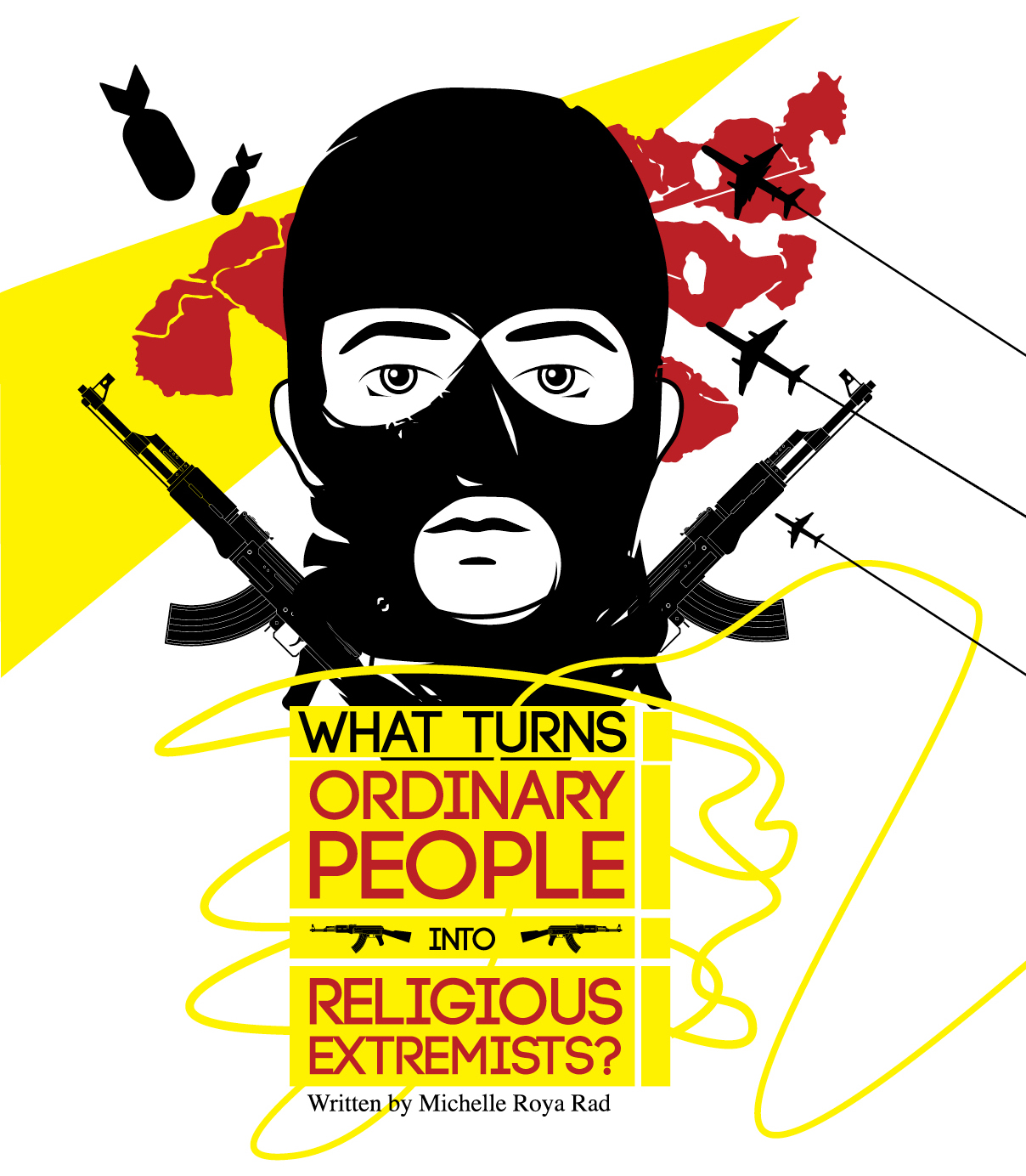 Goodness is more of a destination than a process and is not based on any specific belief. This is because anyone who has a large range of the human virtues like justice, truth, fairness and integrity, and manifests these in his actions and thoughts has a goodness. The level of goodness is based on how unconditional it is. This means that we can’t choose when to be fair and to whom. Overall, the more virtue a person uses to bring unconditional good to this world, the greater humanity they have. But an extremist does not think this way.


 You can’t change the fact that highly stressful events happen, but you can change how you interpret and respond to these events. Try looking beyond the present to how future circumstances may be a little better. Note any subtle ways in which you might already feel somewhat better as you deal with difficult situations.


 People often learn something about themselves and may find that they have grown in some respect as a result of their struggle with loss. Many people who have experienced tragedies and hardship have reported better relationships, greater sense of strength even while feeling vulnerable, increased sense of self-worth, a more developed spirituality, and heightened appreciation for life.
 Developing confidence in your ability to solve problems and trusting your instincts helps build resilience.
 Even when facing very painful events, try to consider the stressful situation in a broader context and keep a long-term perspective. Avoid blowing the event out of proportion.
  An optimistic outlook enables you to expect that good things will happen in your life. Try visualizing what you want, rather than worrying about what you fear.
 Pay attention to your own needs and feelings. Engage in activities that you enjoy and find relaxing. Exercise regularly. Taking care of yourself helps to keep your mind and body primed to deal with situations that require resilience.