
During times of emergency, situations can be chaotic and people may be in great shock and panic. Therefore, it is important for people to have the essential skills and knowledge to respond swiftly and appropriately during life-threatening and dangerous circumstances.
Emergencies in schools
According to the Ministry of Education, all schools have a School Emergency Structure to deal with emergencies to respond, recover and restore the situation back to normalcy. School staff are trained to assume specific roles and responsibilities during emergencies, from first-aid, search, trauma management, evacuation, and handling of casualties. Therefore, when there is an emergency, listen to your teachers’ instructions and try to keep calm.
Here are some emergencies that might happen unexpectedly and how you can respond to these emergencies.
A. Fire
In the event of a fire, here is what you should do:
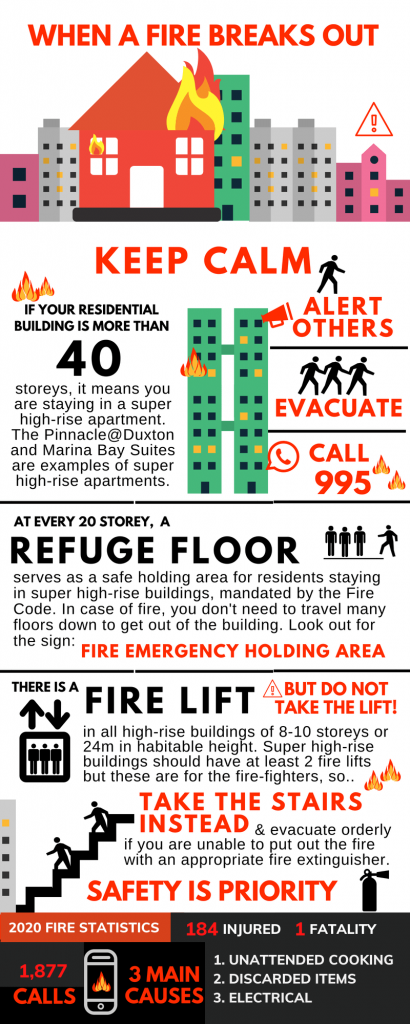
Image credits: tiq.com.sg/blog/fire-safety-infographic-what-to-do/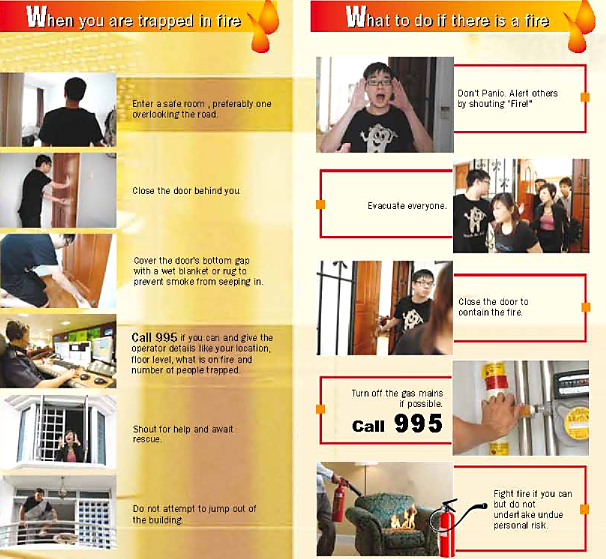
Image credits: https://www.scdf.gov.sg/images/default-source/publications/fire-safety-at-home-(eng).jpg
Fire is best prevented by eliminating fire hazards. Read here to find out how to do so:
B. Drowning
With the year-round tropical heat, swimming pools are irresistible weekend draws for families with children, especially young energetic ones with extra energy to spare from being indoors all week. Although there are lifeguards in public swimming pools, there are no lifeguards in private swimming pools. Hence, it is crucial for everyone to be alert at the beaches and pools. Keep an eye out for any signs of drownings and seek for help.
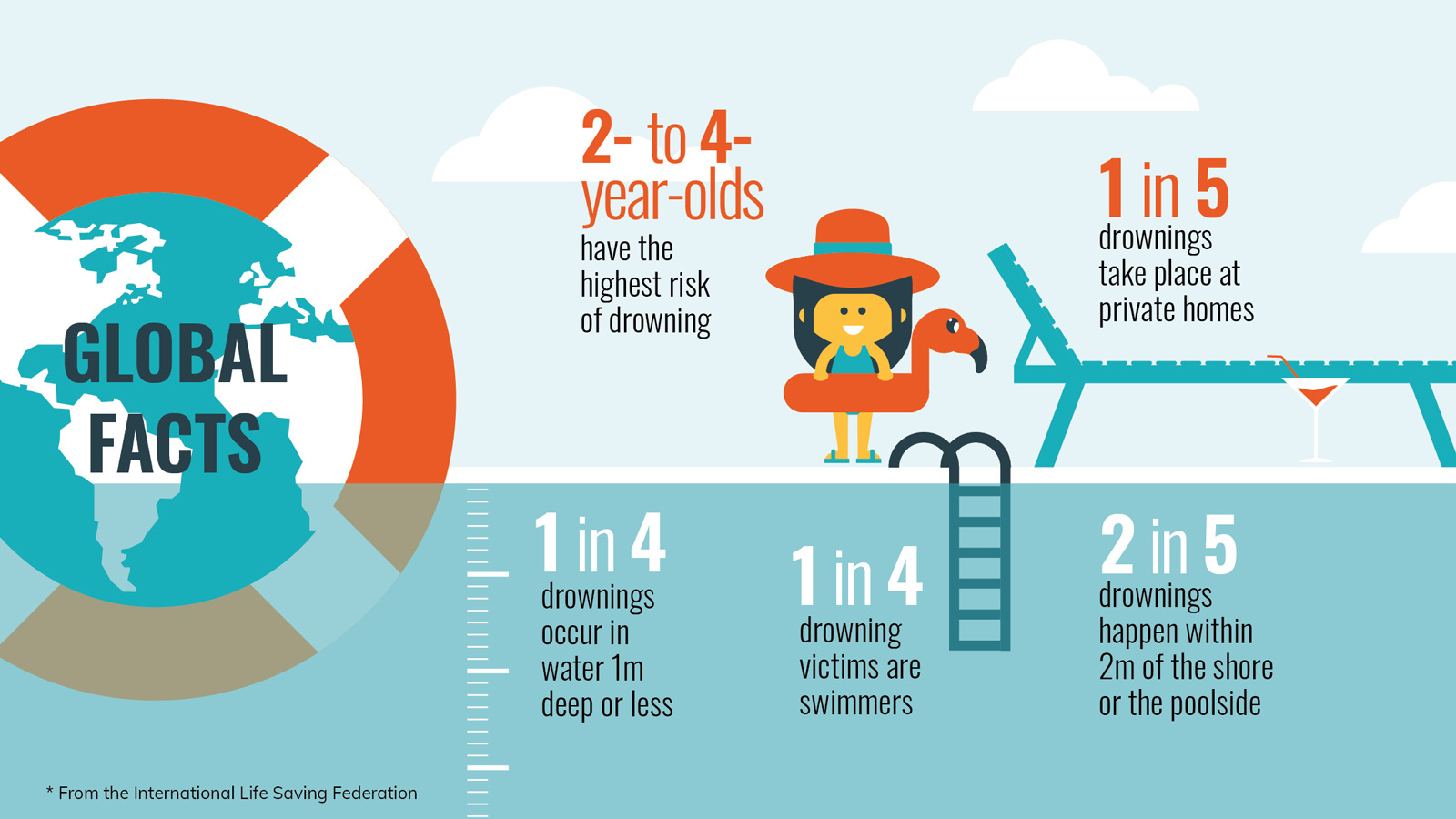
Image credits: https://www.todayonline.com/brandstudio/emergency/drowning
“Drowning risks for Singaporeans include not supervising children, not knowing the pool depth before swimming, swimmers pushing themselves to the limit when swimming, and swimming despite having a known medical condition,” said Ms Delphine Fong, Safety Management Director at Sport Singapore.
Drowning can happen outdoors as well as indoors. Young children can drown in 2.5cm of water, in where you least expect it.
How does a person look like when he or she is drowning?
“Drowning is not the violent, splashing call for help that most people expect,” noted Coast Guard retiree and trained rescue swimmer, Mario Vittone. Dramatic, loud drowning is part of our cultural expectation. It’s what we’ve seen on television and in movies. In contrast, real life drowning involves what psychologist Dr. Francesco A. Pia dubbed the Instinctive Drowning Response.
Myth 1: Drowning people will yell for you. “Except in rare circumstances, drowning people are physiologically unable to call out for help,” Dr. Pia noted. “The respiratory system was designed for breathing. Breathing must be fulfilled before speech occurs. The mouths of drowning people are not above the surface of the water long enough for them to exhale, inhale and call out for help.”
Myth 2: Drowning people will wave wildly. They can’t, Vittone said. “Nature instinctively forces them to extend their arms laterally and press down on the water’s surface. Pressing down on the surface of the water permits drowning people to leverage their bodies so they can lift their mouths out of the water to breathe.”
Myth 3: Someone drowning might be able to assist in the rescue. “Physiologically, drowning people who are struggling on the surface of the water cannot stop drowning and perform voluntary movements such as waving for help, moving toward a rescuer or reaching out for a piece of rescue equipment,” Vittone warned. He added an important distinction: “This doesn’t mean that a person that is yelling for help and thrashing isn’t in real trouble, [only that] they are experiencing aquatic distress,” he said. “Aquatic distress doesn’t last long, but unlike true drowning these victims can still assist in their own rescue. They can grab lifelines, throw rings, etc.”
Myth 4: Drowning takes a while. Unless someone who’s drowning in the water is rescued by a trained lifeguard, they’ll only be able to struggle on the surface of the water for 20 to 60 seconds before submersion occurs.
Myth 5: Kids who are drowning will make noise. Bystanders and parents should actually be more alert to the kids who seem to be playing quietly, Vittone advised. “Children playing in the water make noise,” he reminded. “When they get quiet, you get to them and find out why.”
According to Sport Singapore, look out for any of the following signs of the Instinctive Drowning Response:
- Head is low in the water, mouth is at water level
- Head is tilted back with mouth open
- Eyes look glassy and empty, unable to focus or eyes are closed
- Hair over forehead or eyes
- Legs are vertical
- Hyperventilating or gasping
- Attempts to swim in a particular direction but no headway
- Trying to roll over on the back
- Appears to be climbing an invisible ladder
If you identify it as a drowning emergency, Dr Chong advises the following to be done immediately:
- Seek help to get the victim out of the water without delay. However, do not put your own life at risk if you have not been trained on water rescue.
- Call for help. If someone else is present, have the person call for emergency medical help at 995.
- Check to see if victim is breathing on his own. If not, promptly begin Cardiopulmonary resuscitation (CPR).
- Concentrate on rescue breathing and CPR until victim is breathing without assistance.
- Expect water in the lungs to be expelled during CPR
C. Terrorist attack
SG Secure is Singapore’s community response to the threat of terrorism. It is a movement to build the resilience of our community and a call to action to everyone in our multi-racial, multi-religious society to come together to safeguard Singapore and our way of life.
Terrorist attacks can have a crippling effect on societies that extends beyond the physical devastation. Even the threat of terrorism can foment distrust among communities. In today’s heightened security climate, it is even more urgent that we continue to strengthen the bonds among our various communities and prevent racial and religious conflict in the aftermath of a terrorist attack.
SGSecure focuses on three core actions that every one of us can do in the fight against terrorism:
- Staying Alert to prevent a terrorist attack and to keep yourself safe in the event of an attack
- Staying United to help one another, especially after an attack
- Staying Strong to safeguard our social fabric and bounce back as one people
Alternatively, you can also report the incident with clear description via:
a call to Police at 999; SMS 71999 if you can’t talk; or submit the information via the SGSecure app
Those with information on a person who may be radicalised can also contact the ISD Counter-Terrorism Centre hotline on 1800-2626-473.
If you or anyone you know, are willing to help out during an emergency, proceed to https://www.sgsecure.gov.sg/what-can-i-do/be-an-sgsecure-responders to find out how to be a SGSecure Responder.
It is crucial that in times of crisis and disaster, Singaporeans remain calm, united and resilient to overcome any challenges.
How can you play a part in creating a safe environment in your school, community and nation?
Sources:
- https://www.scdf.gov.sg/home/community-volunteers/publications/emergency-handbook
- https://www.todayonline.com/brandstudio/emergency/drowning
- https://www.moe.gov.sg/about-us/emergency-preparedness
- https://www.sgsecure.gov.sg/
- https://www.ajc.com/lifestyles/health/drowning-doesn-look-like-what-you-think-how-recognize-the-signs/d1xQYZMVmgfHI1nBWOVK0J/
















.jpg)