Gareth Chua – Silent Hero Story | 2021 Inspiring Youth | Singapore Silent Heroes
https://www.youtube.com/watch?v=nvpVijbkWI8&feature=emb_imp_woyt (3.12mins)
Inclusion of people with disabilities
https://www.youtube.com/watch?v=rjluLV1F-UI (2.31 mins)
Disability Etiquette – Respectful Ways To Interact with People With Disabilities
https://www.youtube.com/watch?v=iG3pQp6HoQM (1.58 mins)
Society in Singapore is made up of people of different nationalities, genders, religions, races and working different jobs. As we walk around the streets of Singapore, do we look beyond the superficial? Do we judge too quickly?
Recently, a woman expressed her worry for her child when she saw a dog on the train. She feared that the dog might suddenly attack them. However, this dog turned out to be a specially trained guide dog.
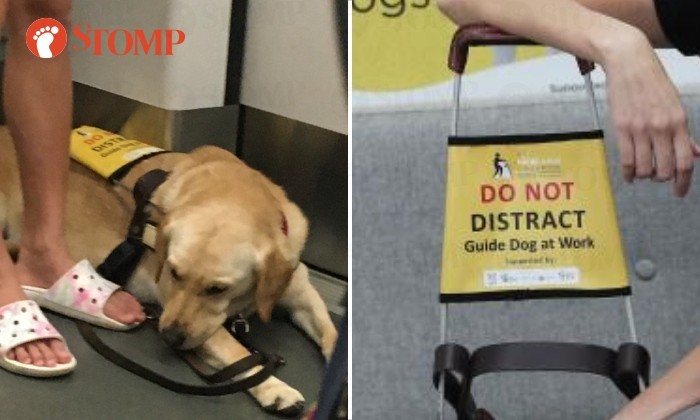
Image credits: https://www.asiaone.com/singapore/passenger-worries-guide-dog-train-may-attack-her-and-baby-says-mrt-staff-just-ignored-it
The guide dog belongs to visually impaired Singapore paralympic swimmer and she has since took the opportunity to clarify and educate others about guide dogs being in public places in a short TikTok video: https://www.tiktok.com/@sophsoon/video/7170625617640115458?is_from_webapp=v1&item_id=7170625617640115458
Ableism is the discrimination of and social prejudice against people with disabilities based on the belief that typical abilities are superior. At its heart, ableism is rooted in the assumption that disabled people require ‘fixing’ and defines people by their disability. Like racism and sexism, ableism classifies entire groups of people as ‘less than,’ and includes harmful stereotypes, misconceptions, and generalizations of people with disabilities.
Here are some examples of ableism:
- Making a movie that doesn’t have audio description or closed captioning
- Using the accessible bathroom stall when you are able to use the non-accessible stall without pain or risk of injury
- Using someone else’s mobility device as a hand or foot rest
- Talking to a person with a disability like they are a child, talking about them instead of directly to them, or speaking for them
- Questioning if someone is ‘actually’ disabled, or ‘how much’ they are disabled
- Asking, “How did you become disabled?”
To be more inclusive, it is time we start recognising the potential of people with disabilities. They have high potential and can most certainly enjoy a high quality of life! They can choose to get married, have ambitions, pick up new skills etc., just like any of us.
Read more to find out how people with disabilities can be people without limits!
In fashion
How often have you seen models who have special needs? In recent years, however, things have started to change. Social media became a tool through which people with disabilities could finally control the way they were being seen. Meanwhile, across the board, calls for greater diversity and the burgeoning body-positivity movement opened up the space to celebrate beauty in all its different forms. As a result, we’re seeing people with disabilities making appearances on the runway, on the cover of magazines, in fashion advertisements and in beauty campaigns. This long-awaited representation is slowly but surely eroding the historical stigmas surrounding people with disabilities. But it hasn’t been easy, nor has it been swift.
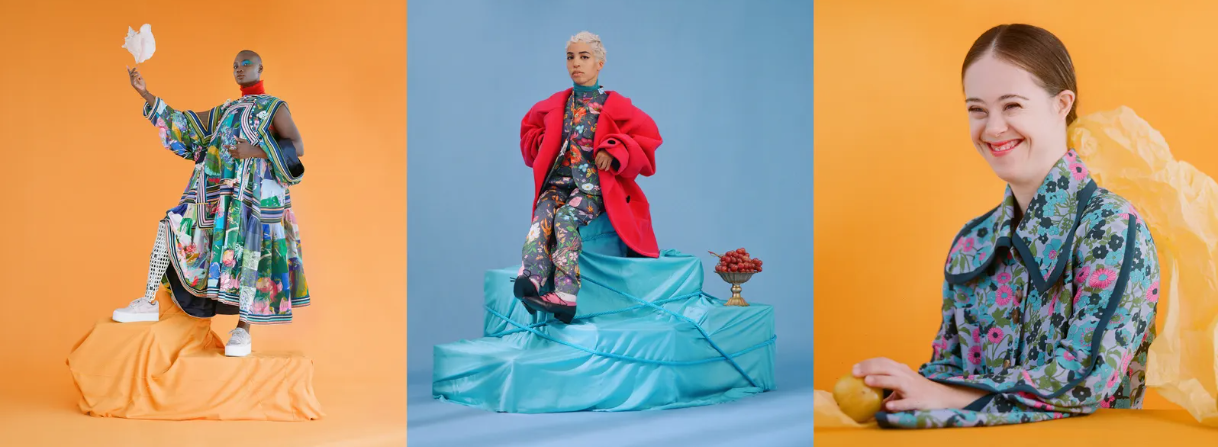
Image credits: Camila Falquez, https://www.teenvogue.com/story/cover-story-representation-fashion-industry-jillian-mercado-mama-cax-chelsea-warner
Read stories about models here: https://www.teenvogue.com/story/cover-story-representation-fashion-industry-jillian-mercado-mama-cax-chelsea-warner
In sports
The Paralympic Games represent the pinnacle of sporting events for athletes with physical and intellectual disabilities, and they usually happen immediately after the Olympics.
Image credits: https://www.wonderwall.sg/workplay/tokyo-2020-games-get-to-know-our-para-athletes-and-their-coaches/
In the Tokyo 2020 Games, 10 Team SG athletes represented Singapore to compete in the Paralympics. They trained hard with their coaches and gave their best and made Singapore proud!
Read more about the athletes here: https://www.wonderwall.sg/workplay/tokyo-2020-games-get-to-know-our-para-athletes-and-their-coaches/
Watch their competitions here: https://www.teamsingapore.sg/major-games/paralympic/tokyo-2020?date_and_time=show-all&sport=show-all&athlete=show-all&round=show-all
In social media
Motivational speaker and author Nick Vujicic is known as the man born without limbs. However, he did not let the absence of his four limbs define or limit what he can do.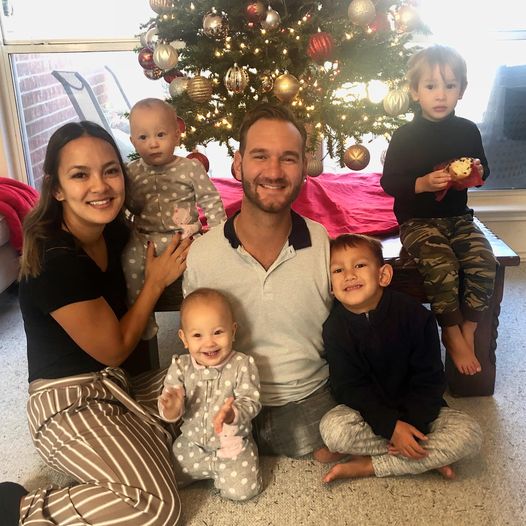
Image from: Nick Vujicic’s Facebook
Nick faced tremendous obstacles in life from, living life without limbs, to being bullied at school and fearful for his future with no purpose in sight. Without hope, his feelings of helplessness and isolation led him to attempt suicide. Nick persevered through life’s challenges and discovered key principles which enabled him to find his purpose and turn obstacles into opportunities; making him one of the most sought-after keynote speakers in the world! Millions of people have found hope, purpose and the strength to overcome their challenges through Nick’s inspirational speeches and powerful coaching.
Read more about Nick’s story and watch his interviews here: https://nickvujicic.com/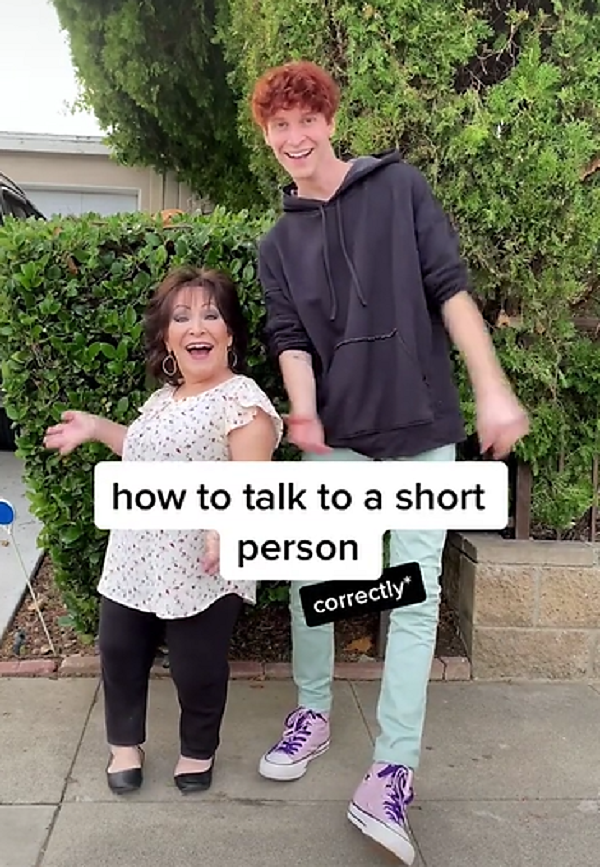
Image credits: https://www.tiktok.com/@peetmontzingo?lang=en&is_copy_url=1&is_from_webapp=v1
Peet Montzingo, who stands over 6 feet tall (183cm) has created funny TikTok videos with his mother, Vicki. The Seattle native is the only tall member of his family since his siblings and parents all have dwarfism. He shares hilarious videos of him with his mom and siblings on TikTok with the aim of destigmatizing dwarfism. Peet had a 75% chance of being like his parents and siblings, but he turned out to be tall, and he realized that he was different at the age of eight. He said that his height made him feel like the head of his family when he was only eight!
Promoting inclusivity and understanding on the public transport
Have you ever observed that some commuters on the public transport wearing “May I Have A Seat Please?” lanyards?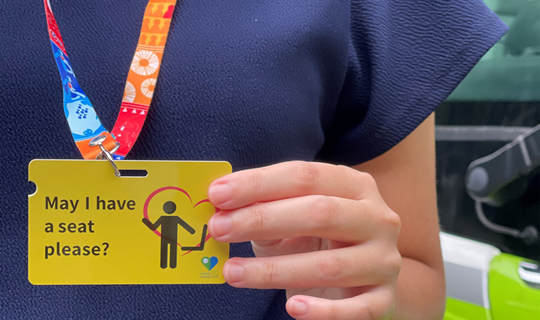
Image credits: https://www.caringcommuters.gov.sg/in-the-spotlight/meet-the-designers-of-the-may-i-have-a-seat-please-lanyard
Some passengers may have invisible medical health conditions and they may hesitate to sit on the reserved seat for the fear of being questioned or judged. Therefore, to help commuters with invisible medical conditions alert fellow commuters that they would like a seat on public transport, the Caring SG Commuters Committee launched the “May I Have a Seat Please” initiative.
For instance, Joy has Down syndrome and flat foot. Joy’s mother shared that Joy will feel tired after standing long on the public transport but will feel shy to ask for a seat as she looks young on the outside. Even though she may look like a normal youth, some do not know she has an illness, and may need a little help at times when she stands among the crowds.
There are some commuters who may be afraid of rejection or misunderstanding and thus hesitate to offer or give up their seats. Hopefully the initiative will encourage people to not be afraid to step up and to offer their seats on public transport to those who need it.
If you know anyone who needs a “May I have a seat please” sticker, or lanyard & card, to alert fellow commuters that they require a seat, they can be obtained from the Passenger Service Centres at MRT stations, bus interchanges or TransitLink Ticket Offices.
In conclusion, we have to remind ourselves that disabilities and medical conditions do not determine someone and that having a disability or condition is not all to an individual. Being inclusive is important, as inclusion is all about looking at how a certain space or service can cater to people from different abilities and different backgrounds.
Reflection: What are your perceptions of people with disabilities?
Read the statements below and record if you agree or disagree with the statement.
|
No. |
Statement |
Agree |
Disagree |
|
1 |
I feel uncomfortable around people with disabilities, or anyone who seems “different” in ways.
|
|
|
|
2 |
I try to avoid talking to people with disabilities as I am afraid of offending them through what I say.
|
|
|
|
3 |
I feel awkward around people in wheelchairs or people with special needs. I do not know whether I should let them be or help them.
|
|
|
|
4 |
I pity people with disabilities because I feel that they are unable to enjoy life to the fullest.
|
|
|
|
5 |
I tend to associate specific character traits with people with disabilities.
|
|
|
|
6 |
I have said or/and heard statements like, “Are you deaf/blind/dumb/lame/retarded?”
|
|
|
If you disagree to most of the statements above, continue to raise awareness on disability and support non-profit organisations that provide services and resources to people with disability. Would you also consider volunteering in those charities and play your part in making your society more inclusive? Check out the organisations that need support here: https://www.giving.sg/search?type=volunteer It will be good to get your whole family involved too!
If you agree to most of the statements above, do take the time to learn more about disabilities, before making assumptions, and open your mind to understanding more about the issues and challenges they face. One way to do so is to interact with them, and thereby learn how we can interact with people with disabilities respectfully.
Sources:
- https://www.accessliving.org/newsroom/blog/ableism-101/
- https://www.lta.gov.sg/content/ltagov/en/getting_around/public_transport/a_better_public_transport_experience/an_inclusive_public_transport_system.html
- https://www.caringcommuters.gov.sg/in-the-spotlight/meet-the-designers-of-the-may-i-have-a-seat-please-lanyard
- https://www.vogue.in/fashion/content/why-disability-representation-is-crucial-to-building-a-better-more-inclusive-fashion-industry
- https://www.moms.com/son-dwarf-mom-tiktok-videos/
- https://nickvujicic.com/
- https://cityofgood.sg/articles/disabilities-in-singapore/