In the movie King Kong (1933, 2005), the great ape is always portrayed as enormous beings with fiery strength and immense power. The imagery of a King Kong beating chest and releasing a fierce and intimidating growl is not unfamiliar to us. One of the key messages of the King Kong is to serve as a warning against mankind’s desire to exploit Nature for personal gain. The great ape is personified as the unbridled force of nature, which when belittled by men, unleashes a fury that has severe repercussions. Ironically though in every Kong movie till date — there have been 8 so far — the ‘beast’ exudes more empathy than other ‘human’ beings.
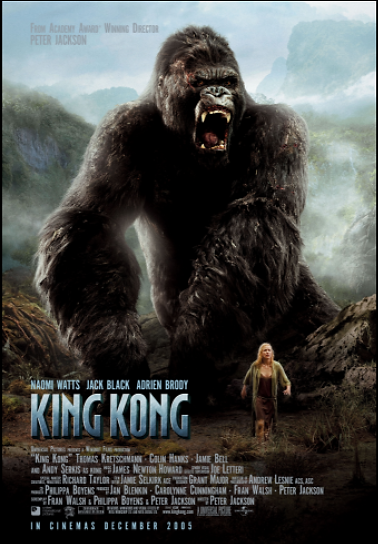
Image credits: https://www.imdb.com/title/tt0360717/mediaviewer/rm2524386304/
Are the great apes misunderstood creatures?
In Kong: Skull Island, the humongous ape was wrongfully depicted to be a murderous creature when he was in fact the king and guardian of the island, trying to protect his habitat.
It is time to truly know gorillas for who they are.
Gorillas are incredibly smart individuals, who are able to learn sign language and use tools. The eastern gorilla, the largest living primate, sounds like a hurricane wind shredding through the jungle when “displaying,” or showing off to prevent competing males from taking over their harem of females. They sit with a unique awareness, eyes ever vigilant on the forest and their group. In 2012, a staff member of the Dian Fossey Gorilla Fund‘s Karisoke Research Center saw something unlike anything ever witnessed: several juvenile gorillas worked together to destroy snares after a poacher’s snare had killed one of their own days before. Now, instead of just finding the best mates, foraging for food or raising their young, adaptation for gorillas means surviving being the constant target of those with weapons aiming to harm them or capture them, relentlessly.
In 2018, the International Union for Conservation of Nature (IUCN) listed the eastern gorilla as critically endangered in their Red List of threatened species. In 1995, there were close to 17,000 in the wild. Now, there are about 2,600 mature eastern gorillas in the whole world.
What are the causes of the decreasing population of gorillas?
- Slow reproduction rate
- Like humans, gorillas reproduce slowly, giving birth to only one baby at a time and then raising that infant for several years before giving birth again. This slow reproduction rate makes gorillas especially vulnerable to any population declines. Gorillas’ low reproductive rates means that even low levels of hunting can cause a population decline, which could take many generations to be reversed.
- Habitat loss
- Habitat destruction is a problem across their central African range. Only 17% of the gorilla population currently lives in protected regions, and vast areas of gorilla forest has already been lost. That destruction continues as logging companies open up fast tracks of forest, forests are cleared to make space for subsistence farming or ape habitat becomes fragmented by road building.
- There is also a strong link between habitat loss and the bushmeat trade. As previously inaccessible forests are opened up by timber companies, commercial hunters gain access to areas where gorillas roam and often use logging vehicles to transport bushmeat to far away markets, as well as sell meat to employees of the logging companies.
- Hunting and trade
- Gorillas are killed for the bushmeat trade, or accidently killed or maimed by iron snares that are set in the forests in search for other bushmeat species such as pigs (red river hog). That trade has helped spread the Ebola virus, which is deadly to both gorillas and humans. Efforts to protect gorillas are often hampered by weak law enforcement, lack of rule of law, and civil unrest in many places where gorillas live.
- The commercial trade in bushmeat, which occurs throughout west and central Africa, is the biggest threat to gorillas today. Apes are being killed primarily to supply high-end demand for meat in urban centers, where the consumption of ape meat is considered to be prestigious amongst the wealthy elite. Although gorillas may constitute only a small proportion of all animals killed for the bushmeat trade, they present easy targets for hunters, and in many areas gorillas are favored by hunters because of the weight of meat they can sell.
- Disease
- Ebola hemorrhagic fever is a severe, infectious, often fatal disease that has devastated many African great ape populations. Scientists in 2003 estimated that a third of the wild gorilla population had been killed by the Ebola virus, and the species remain at risk. Additionally, because gorillas share so many traits with humans, they are susceptible to other human diseases. Populations of gorillas that are in frequent contact with humans are particularly vulnerable to deadly respiratory infections. In mountain gorilla range, where gorillas frequently raid farms or come in contact with humans through tourism, they are susceptible to scabies, tuberculosis (TB), and a host of other diseases from human transmission.
- Weak law enforcement
- Both the killing of gorillas and trade in gorilla products are illegal across the animals’ range, but due to weaknesses in law enforcement capacity and broader governance issues in some of the regions where the gorillas live, poachers, traders, and consumers are rarely apprehended.
From the reasons explained above, we are cause of the deaths of gorillas. The International Union for Conservation of Nature (IUCN) considers all six species of great apes endangered, with four of the six—the eastern gorilla, western gorilla, Bornean orangutan, and Sumatran orangutan—critically endangered.
Regretfully, gorillas are not the only great ape species listed who suffer for the beastly nature of humanity. The Bornean and the Sumatran orangutan, and the western gorilla are all on a path toward extinction as well, and are listed as critically endangered. Bonobos are also endangered, as are the beloved chimpanzees. Great apes, the animals we share a most recent familial past with (and potentially a thrilling and fascinating future with), are fading from our world. Some estimates conclude that we have 10-15 years before these animals are gone entirely. The gorilla, and other great apes, will disappear if we do nothing.
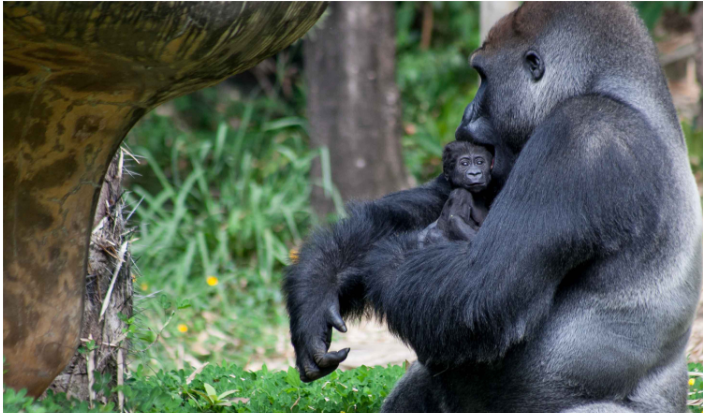
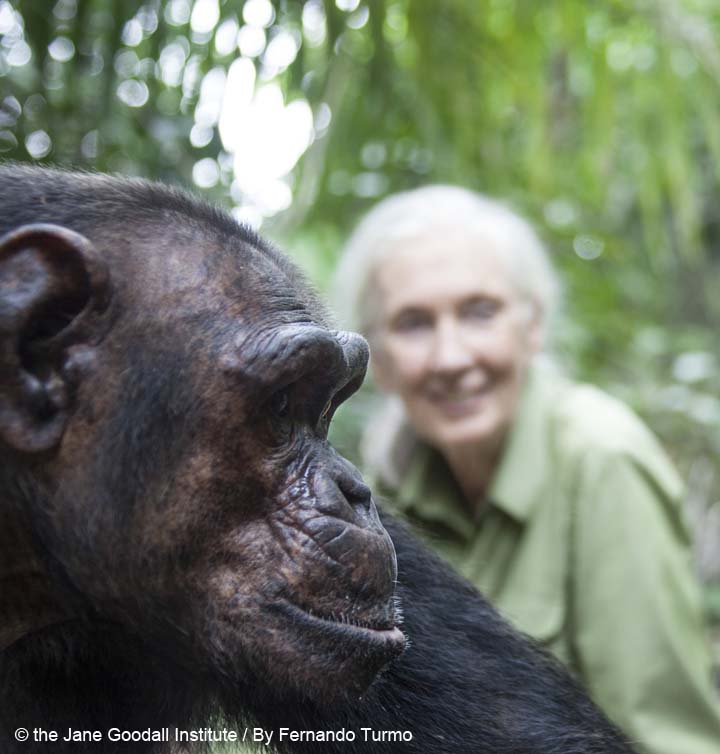
Image credits: https://news.janegoodall.org/wp- content/uploads/2016/09/15699353109_477294e313_o-e1473794315615.jpg
Jane Goodall, at the IUCN World Congress in 2016, discussed corruption in governments and corporations, who either drive this devastation or do nothing to stop species loss.
“Unfortunately, the progress we are making is on greater awareness – overall the numbers [of apes] are still falling. It’s worst in Indonesia with palm oil and the orangutans, but we are now seeing palm oil move into Africa. We’re also seeing a resurgence of chimpanzees in the pet trade we thought that had more or less stopped. Some of the protected places are working well, some aren’t. We will lose more apes, but we are not going to lose,” said Dr Goodall.
Ulengue after his release at Tchindzoulou Island.
It didn’t take an official listing by the IUCN for an awareness of the consequences of doing nothing to be known for those who understand conservation and the primates (along with other species) we need to protect.
The Jane Goodall Institute coordinates CAP (Conservation Action Plan) in the Democratic Republic of the Congo, working with the Dian Fossey Gorilla Fund, the Disney Conservation Fund, GRACE (Gorilla Rehabilitation and Conservation Education), Gorilla Doctors, and conservation planners with support from the Arcus Foundation. This project targets 66 million acres, roughly the size of Colorado, where 35,000 chimpanzees and 2,500 to 3,000 gorillas live. CAP works to engage these groups to collaborate in protecting critical ape habitats using community centered conservation, GIS (geographical information systems), land use planning, monitoring, rehabilitation and research in a holistic way. We can do something to save these animals.
Humanity’s relationship with great apes has been consistent over time; fear, intrigue and exploitation, culminating in tragedy. However, this need not be the end of the story. It will take all of us – billions of people who share this earth – to revive these species in time. We can write our own story; each page bound by hope, each word inked by action. We will not let great apes fall.
Do you think that gorillas should be kept in zoos?
Here are other links to find out more about gorillas:
- WWF: Facts about Gorilla https://www.worldwildlife.org/species/gorilla#:~:text=The%20largest%20of%20the%20great,a%20lowland%20and%20upland%20subspecies
- Do Gorillas Even Belong in Zoos? Harambe’s Death Spurs Debate
https://www.nytimes.com/2016/06/07/science/gorilla-shot-harambe-zoo.html
- Where the gorillas live https://www.cincinnati.com/story/news/2018/05/18/cincinnati-zoo-travels-congo-where-gorillas-live/570218002/
- Gorillas Beat Their Chests to Communicate With Each Other
Sources:
- https://news.janegoodall.org/2016/09/13/lost-in-the-mist-the-fall-of-the-great-apes
- https://toistudent.timesofindia.indiatimes.com/news/top-news/the-symbolism-of-king-kong/19282.html
- https://www.commonsensemedia.org/movie-reviews/kong-skull-island