Watching movies and shows allows us to temporarily take a respite from the reality of lives. The special effects of films can be so real that sometimes we feel that we have been transported into another world. There are also some genres of movies and shows that provoke us to reflect and think critically about prevailing social attitudes and behaviours.
There is somehow a special lure of horror, gore and thrillers.
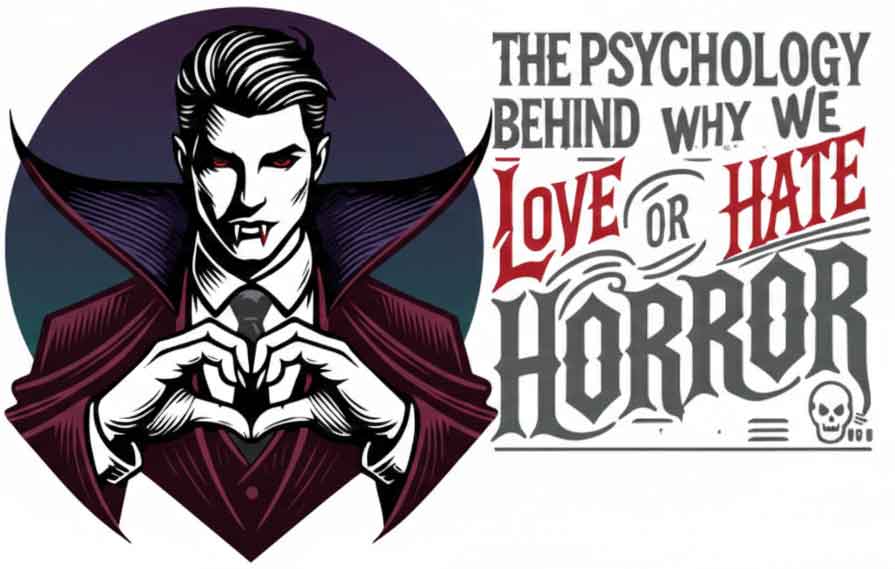
Fear isn’t everyone’s cup of tea (or coffee). In fact, fear is not exactly a positive emotion. Lying in bed and bingeing on It and It Chapter Two, trembling as the darkness pushes in around us — this is not a feeling we would describe as pleasant. However, some people still love to consume horror and gore. From popular shows like American Horror Story, The Walking Dead, Train to Busan to haunted theme parks and scary Stephen King novels, we crave for all kinds of frightening experiences.
What is it about horror, thriller or gore, that humans are so drawn to? Why are some of us willing to spend our hard-earned money on a scare while others go great lengths to avoid it?
- Experience stimulation
- One reason people consume horror is to experience stimulation. Exposure to terrifying acts, or even the anticipation of those acts, can stimulate us — both mentally and physically — in opposing ways: negatively (in the form of fear or anxiety) or positively (in the form of excitement or joy). For instance, watching a horror video simultaneously activates both types of stimulation, with the most pleasure experienced at the most fearful moment. The biochemical inside our bodies also changes when we consume horror. Fright can trigger the release of adrenaline, resulting in heightened sensations and surging energy.
- Gain novel experiences
- Another reason we seek horror is to gain novel experiences. Apocalypse horror films, for example, allow us to live out alternative realities — from zombie outbreaks to alien infestations. Some novel experiences can even contribute to our sense of accomplishment, like visiting a notorious haunted house. Being adventurous in this way makes us feel more worldly or daring (not to mention grants us bragging rights).
- Satisfy curiosity about human nature in a safe manner
- Lastly, horror entrainment may help us safely satisfy our curiosity about the dark side of human psyche. Observing storylines in which actors must confront the worst parts of themselves serves as a pseudo character study of the darkest parts of the human condition. After all, in real life, we might not have the opportunity to get to know a Hannibal Lecter or wander the streets during The Purge. As an inherently curious species, many of us are fascinated by what our own kind is capable of. Observing storylines in which actors must confront the worst parts of themselves serves as a pseudo character study of the darkest parts of the human condition.
Who loves horror?
There are notable individual differences in how much we are attracted to consuming horror.
- Personal traits
Some research indicates that people with a higher sensation-seeking trait (i.e., a stronger need for experiencing thrill and excitement) tend to seek out and enjoy horror-related experiences more. Those with a lower sensation-seeking trait may find those experiences unpleasant and avoid them. Relatedly, the trait of openness to experience (or the need to engage in imaginative activities) is also a predictor of horror consumption — a stronger openness to experience is associated with increased affinity towards horror.
In addition, individual differences in empathy are associated with enjoyment of horror. Those who are not so empathic can enjoy horror more. This is because those with a higher level of empathy tend to feel more strongly and negatively about distressing situations (eg, people being tormented by a devious murderer in a film) the characters are in.
- Gender and age
Gender and age also appear to matter in an individual’s interest in horror. One survey found that, on average, younger individuals tend to be more attracted to this scary genre and that men are more likely to be fans of horror than women. Women and men also like different aspects of a horror experience. For example, women may enjoy a horror movie more when it offers a happy ending (e.g., the evil entity ends up destroyed), whereas men may enjoy a horror movie more when it is loaded with intensely terrifying acts.
- Economic development
Lastly, the preference for consuming horror may differ across the stages of economic development. Individuals from countries with a higher GDP per capita consumed horror movies to a greater extent, but the same pattern was not observed for other movie genres such as romance. This pattern occurred because lacking financial resources can degrade the psychological protective frame needed for horror enjoyment.
Are there any benefits to consuming horror?
Beyond the pleasure we get from the scary entertainment, consuming horror may yield a few hidden benefits:
Catalyst for falling in love: Research suggests that consuming horror (e.g., watching a horror movie, visiting a horror theme park) together with a date may facilitate feelings of romance. Why? Co-experiencing horror (like a non-stop pounding heart evoked by scary scenes) can add to the excitement we feel toward each other.
Conduit for social bonding: Consuming horror in a group is a great way to bond and connect with our friends and family. Research suggests that such bonding is linked to oxytocin, which is often released when we are in frightening situations. This hormone facilitates feelings of closeness and affinity among the group members. (Maybe, it’s time to test this out with a horror night with your teammates!)
Post-horror relaxation: While we feel highly stimulated during a horror experience, a sense of relief arrives after a positive conclusion of the experience (e.g., the evil entity gets obliterated), triggering the release of endorphins in our brain which helps us in relieving stress and improving our moods.
“What if I want to watch horror movies but I am… scared?”
If you are fearful of watching horror movies, you have the choice of not watching. It does not make you less courageous or brave in any sense. However, if you still choose to watch horror movies, you can protect yourselves with psychological “protective frames”.
Protective Frame 1:
You need to believe that you are physically safe — a safety frame. For example, although the evil entity in a movie might be committing terrifying acts in front of your eyes, you can manage your fears and even enjoy the movie as long as you believe that the evil entity is physically distant from you and hence cannot cause harm to you. If, however, you start to believe that the evil entity is coming out of the screen to hurt us, then the experience will no longer be fun. Some movies might also be inspired by true stories and hence causing your mind to wonder if fiction can become reality. This train of thought must be stopped as it has gone beyond the ‘safety frame’.
Protective Frame 2:
The second category of protective frame involves detachment — whether you can psychologically detach from a horror experience. When you see a psychotic murderer chasing down a bloodied victim in a film, you can activate psychological detachment by reminding ourselves that they are just actors, and great acting is what is happening on the screen.
Protective Frame 3:
The third category of protective frame involves your confidence in controlling and managing the dangers you encounter. If you visit a haunted house, for instance, and a realistic-looking, blood-thirsty zombie charges at you, you can still feel thrilled or excited from the encounter if you feel confident about overcoming the danger. (“We can easily outrun that slow zombie!”)
Research suggests that the absence of any of these psychological protective frames in the moment reduces the preference for horror consumption, which may explain why some people stay away from spooky movies, books, or events. If you are unable to form a safety frame, it might be wise to just avoid watching horror movies entirely.
Understanding the psychology of horror consumption allows us to enjoy the genre more. At the very least, we should get our psychological “protective frame” ready before soaking in all the horror.
If you are interested in the horror, mystery and suspense genre and would like to improve your English language at the same time, do check out these books from the libraries! Finding a genre that you like can ignite your love for reading. Imagine the surprise in your parents’ face when you choose to read instead of scrolling on social media!
Fiction
- Series written by Karin Slaughter: https://mysterysequels.com/karin-slaughter-books-in-order
- Books by Thomas Harris:https://www.howtoread.me/hannibal-lecter-books-in-order-thomas-harris/
Take a look at this compiled list by Reader’s Digest here: https://www.rd.com/list/scariest-books/
What is your favourite genre of movie? Why?
Adapted from article written by Haiyang Yang and Kuangjie Zhang: