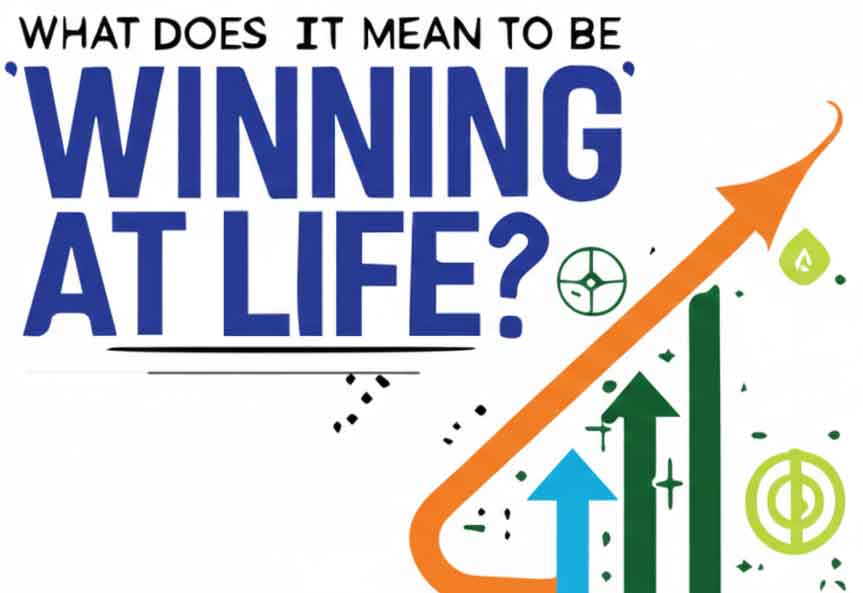
How do we define ‘winning’? Does the term ‘winner’ then suggest that there must be ‘losers’?
In sporting competitions, the winners are the ones who complete the race in the shortest time or the team that scores the most goals. They are then awarded with trophies, medals and cash prizes as ways to acknowledge their victorious achievements.
In schools, those who perform well academically or those who display outstanding performance in their CCAs are publicly commended and rewarded with merit certificates or scholarships.
As people enter the work force, the ones who are in the highest position, the ones who deem the most authority are regarded as the ‘winners’ because they have secured the highest position one can get and they receive a comfortable amount of pay every month.
In the above scenarios, these are how most people define ‘winners’. Their efforts are always rewarded and acknowledged.
Admittedly, the process of ‘winning’ is not easy because there is definitely a lot of effort and sacrifices to be made. Professional athletes have to be disciplined during their rigorous trainings and be selective in what they eat. Students who perform well academically have to put in consistent effort and even have to sacrifice leisure time to focus on their revision. People who have reached the pinnacle of their careers have proven their abilities and would have sacrificed personal and family time to be the position they are in.
However, unlike in sports, there is no real scoreboard for life. We can’t look up at any one moment and know, objectively, how well we are doing. Many times you may wonder how your life stacks up by comparing yourself to others. However, studies have shown that making these social comparisons may lead to negative emotions. The platform of social media has especially been linked to depressive symptoms because the context is primed for people to compare their accomplishments to that of their friends.
In fact, the only real metric by which most people compare is financial success. Think about it for a second, what’s the sign of a successful book, movie, or sports contract? Books are defined by the number of copies sold, a movie by its box office revenue, and a sports contract by the salary. This is also true in day-to-day life. We often evaluate an opportunity based on its financial reward and we evaluate ourselves on our ability to earn money and spend that money on material things. To quote the film Jerry Maguire, we define success simply by asking the universe to “show me the money.” Ironicalluy, he later realised that love and friendship were more important than money alone.
Does money or financial success help us to feel like we are winning? No.
Consider this study conducted by Daniel Kahneman and Angus Deaton where they looked for indicators of psychological well-being in nearly half a million randomly selected American citizens. Their findings were profound as the research indicated once our basic needs are met, our happiness tends to plateau.
We tend to define success by money, yet money does not equate to happiness. It seems we have driven our lives into a crossroads: is success defined by money or by happiness? I say, it’s time to walk the off-road and make your own path.
You are likely to be winning at life if you incorporate three important practices into your daily routine. Without further delay, here they are:
Gratitude as a life orientation goes beyond the appreciation that arises after help from others. Research has found that gratitude is strongly associated with psychological well-being when it is practiced as a habitual focusing on and appreciating the positive in the world. When you make the decision to emphasize gratitude, there is little room left for feelings of jealousy or envy. As quoted by the Zen Shin practice of meditation, “A flower does not think of comparing itself to the flower next to it. It just blooms.” Start a gratitude journal to give thanks to simple things in life. Remember to also be kind to yourself.
- Relationships
The quality of our relationships does not just impact our daily lives but also our long-term well-being. Dr. Robert Waldinger, Director of the Harvard Study of Adult Development, supported this notion with findings from research that began in 1938 with 268 Harvard sophomores but has now expanded to include their offspring and has amassed data from over 1,300 participants. One critical finding was how the role of relationships played in our overall health. The people who were happiest in their relationships at age 50 were the healthiest at age 80. Furthermore, Dr. Waldinger went as far as to emphasise that, “Loneliness kills. It’s as powerful as smoking or alcoholism.”
- Pursuit of Meaning
The Journal of Positive Psychology recently published two studies that tracked 400 Americans who fell into two groups: high happiness/low meaning levels and low happiness/high meaning levels. Characteristics of the “happy” group included avoidance of being constantly in conflicts with self or/and others. On the other hand, the “meaning” group spent more time helping others and focused on family or relationships. The study explains that the pursuit of meaning lends to a belief that one’s life matters. That purpose can foster life satisfaction. These studies reinforce the important roles that gratitude and quality relationships play in a “winning” life.
So when you’re looking for a scorecard on your life, don’t look at your salary, the size of your house, or the brand of your car. Instead, look inward towards your ability to enjoy your relationships and activities. That way, you’ll always win.
Discussion:
Below are some similes and metaphors about life.
(A)
“My mama always said life is like a box of chocolates. You never know what you’re gonna get!” – by the main character Forrest Gump in the movie Forrest Gump (1994)
- In the quote above, what is life compared to?
- What is the comparison trying to say about life?
- Do you agree or disagree with the simile? Why?
- In such a case, is there a purpose of ‘winning’ at life?
(B)
“The truth is you don’t know what is going to happen tomorrow. Life is a crazy ride, and nothing is guaranteed.”- by American rapper Eminem
- What is the metaphor in this quote?
- In your own words, rephrase the two sentences.
- Referring to your explanation in (2), what attitude should you take when being on this ‘crazy ride’ called life?
- How can you ‘win’ in this life? What preparations should you make?
(C)
“Your life is a blank page. You write on it.” – by Donald Miller, American author
- Is the above quote a simile or metaphor?
- Do you agree or disagree with this comparison?
- Does the comparison make you feel hopeful or discouraged about life? Why do you say so?
- How can you ‘win’ in this case?
(D)
“Imagine life is a game in which you are juggling five balls. The balls are called work, family, health, friends, and integrity. And you’re keeping all of them in the air. But one day you finally come to understand that work is a rubber ball. If you drop it, it will bounce back. The other four balls…are made of glass. If you drop one of these, it will be irrevocably scuffed, nicked, perhaps even shattered.” – By James Patterson from the book Suzanne’s Diary for Nicholas
- What is the metaphor in these sentences?
- What do you agree or disagree with in this quote?
- How does it change your perspective on what is important in life?
- What should you do in order to win ‘this game’?
Which of the above quotes inspires you? Why?
Sources:
- https://www.psychologytoday.com/au/blog/the-new-you/201711/three-signs-you-are-winning-life
- https://symbolismandmetaphor.com/metaphors-for-life/
- https://blog.hubspot.com/sales/famous-quotes
- https://www.brainyquote.com/quotes/eminem_387440?img=2
- https://www.azquotes.com/quote/869514