What is Psychological First Aid?
We have heard about administering physical first aid but what does Psychological First Aid (PFA) mean?
We experience crisis in many forms. Obvious ones are hurricanes, earthquakes, and other natural disasters. Then there is traumatic life crisis such as abuse, vehicle accidents, untimely deaths, violence, and suicide. Aside from that, there is personal crisis like a relationship breakdown, job loss, financial issues or health-related problems. Learning PFA enables you to help others and care for yourself not only in times of disasters but also in dealing with the everyday crisis.
PFA is an ingenious, effective and practical set of interventions designed to help kids, adults, parents, and the entire community by providing emotional and psychological support in order to maximize their psychological functioning.
In the aftermath of a disaster, the usual focus of the first responders is to maintain a safe and stable physical health for the casualties – leaving no time to immediately attend to mental health implications like trauma. But an increasing number of rescue and recovery experts discover that a mental component should be added to emergency response to prevent the long-term mental impact of disaster.
Shona Whitton of Red Cross said, “This (PFA) is something we should be ensuring people know what to do. Mental health implications of disasters can last a really long time. If we can get people to provide good support like psychological first aid, it will make people’s recovery after disasters a lot quicker.”
How does Psychological First Aid work?
Psychological First Aid is not a substitute for professional counselling and treatment. However, it works like a traditional first aid does – an immediate help. PFA is not something that only professionals can do. in fact, anyone including government officials, community workers, and perhaps even you can learn and provide PFA.
PFA training is based on the World Health Organisation (WHO) endorsed “Look.Listen.Link” model.
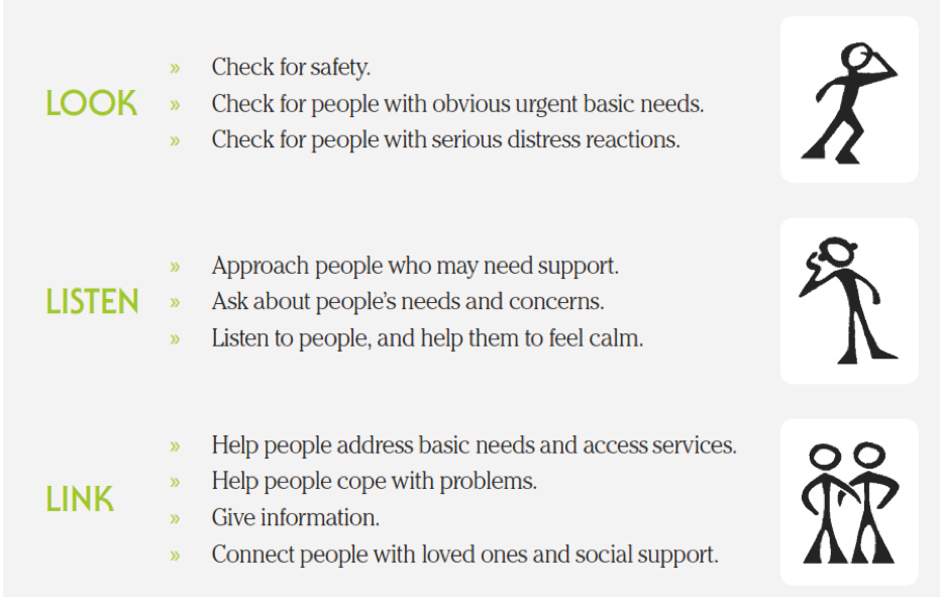
Image credits: https://www.eachmindmatters.org/featured-pledges/today-world-mental-health-day-learn/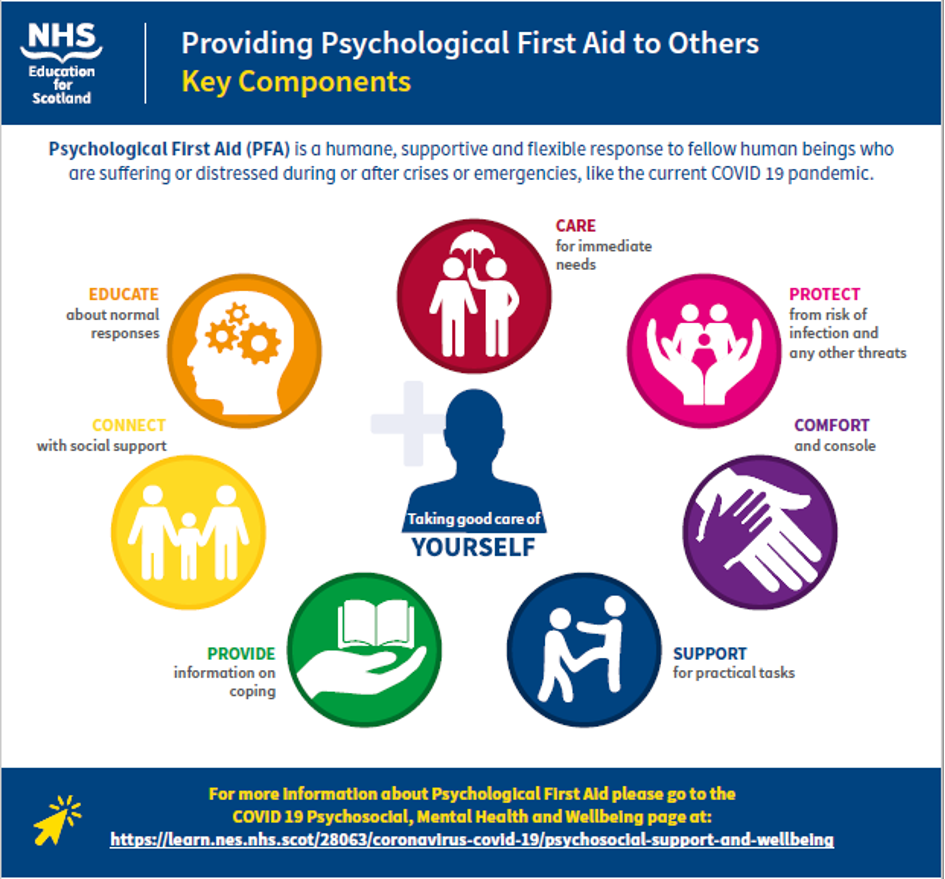
Image credits: https://pbs.twimg.com/media/EU_w7_eXsAEvAb1?format=png&name=small
Learn more about how you can be more prepared for an emergency by playing some games: https://www.ready.gov/kids/games
What other forms of assistance can you provide during an emergency?
Sources:
- https://www.eachmindmatters.org/featured-pledges/today-world-mental-health-day-learn/
- https://thriveglobal.com/stories/the-role-of-psychological-first-aid-in-times-of-crisis/