How one teenager is making millions by hacking legally
https://www.bbc.com/news/av/technology-47407609/how-one-teenager-is-making-millions-by-hacking-legally (2.59mins)
Meet HackerOne: The new way of doing security
https://www.hackerone.com/resources/meet-hackerone-new-way-doing-security (3.14mins)
Everyone has something of value to a cyber criminal
https://www.youtube.com/watch?v=FAOjaxdMaNQ (1.15mins)
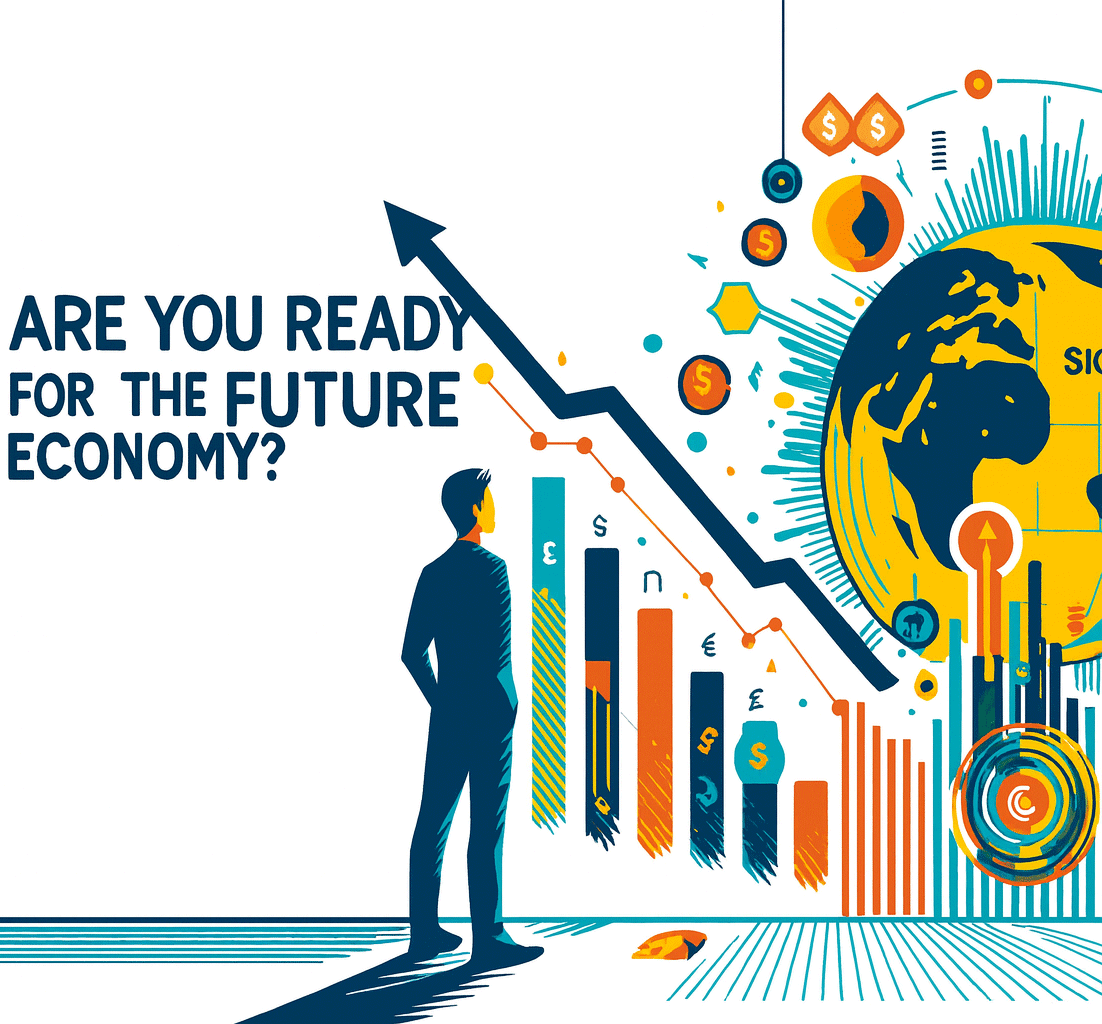
Are you ready for the Future Economy?
The new digital economy means that there are more types of employment which warrant specific skill-sets. Find out how you can arm yourselves for your future careers (and jobs that have yet to exist!) Read on to find out more!
Can you imagine a time without your Apple or Android smartphone? These days, more people are accessing the Internet on their smartphones than on their personal computers, and using their phones to work rather than to make calls. In an increasingly volatile and machine-operated world shaped by artificial intelligence, or AI, where will humans fit in and how can you future-proof yourselves?
How can you be ready for IoT (Internet of Things)?
The arrival of 5G services will fire up the full potential of the Internet of Things (IoT), where devices will work together to make your life easier. Imagine a future where your car “reads” your calendar and works out the best route to take so you will never miss an important appointment.
Build your digital toolkit
With faster and more reliable connectivity, there will be a need for technology makers who can build networked devices that simplify everyday life. “For example, a highly accurate wearable device can monitor a homebound patient’s vitals with data sent intermittently to a hospital or clinic. Paramedics get immediate notice of an emergency, and medical staff are prepped with the patient’s medical history. This technology will help doctors and on-the-ground caregivers make the best-informed decisions for patients.
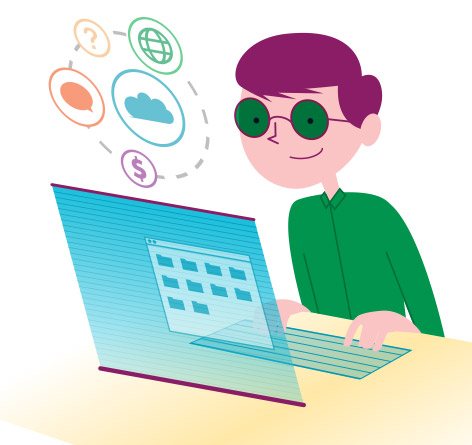
Computing skills will be more sought after than ever in this age. “The essential toolkit for all students includes basic statistics, data analysis, cloud computing, data mining and statistical and security analysis skills,” says policy expert Asst Prof Sabrina Luk.
“Students also need soft skills like problem-solving and communication expertise to make sense of all the information from digital tools and turn them into something useful, like a product or service.”
Be curious and creative
As AI takes over more of our everyday tasks, people may find more time for leisure and non-wage-related activities such as volunteering. Also, new unexpected jobs will emerge, says Prof Vanessa Evers from the University of Twente, who spoke recently at NTU. Think professions like outer space tour guide, e-sports referee or even humanoid yoga programmer.
The future workforce will need to anticipate and be able to manage frequent interaction between humans and machines. Assoc Prof Tan Joo Seng, who studies leadership in the era of Industry 4.0, adds that they will need the 3Cs – curiosity, critical thinking and creativity – to engage in “relentless reimagining”.
“No one really knows how the future will be when we talk about the future of work,” he says. “What we do know is that it will be quite different from today. Some jobs will be displaced by automation and digitisation, some will be redesigned to require greater interface between humans, machines and algorithms, and some new jobs will be created.”
Here are some of jobs of the future:
Cyber security
In the future, computers will move from processing binary data to quantum bits. This will allow computers to move at blazing speeds and enhance their capabilities. The flip side is that cyber criminals may attack companies and individuals from every access point at high speeds, warns Assoc Prof Zhang Baile, whose work on an invisibility cloak was voted one of the top 10 breakthroughs by Physics World. To be an effective cyber security operative, you’ll need an intimate knowledge of quantum mechanics on top of computing skills.
Blockchain design
As a distributed ledger, blockchain offers possibilities even in non-finance industries, says NTU’s expert on blockchain and fintech Dr Li Yan. Blockchain technology will be widely used in global trade because it addresses trust issues, which means businesses do not need a third party, like a bank, to guarantee a transaction. It is also used as a failsafe identifier. For example, the United Nations is using blockchain to create unique identities for refugees that cannot be altered, and the luxury goods industry is using the tech to verify and tag haute couture bags and luxury watches. It can even be used in the art trade in copyright and IP protection. Blockchain programmers and designers are high in demand. Developers of blockchain need to have programming skills, business acumen and knowledge of smart contract coding.
 Data recycling
By 2020, each person on earth will generate 1.7MB of data every second, according to cloud-based mobile operating software provider Domo. It will be the job of data recycling architects to make sense of unused data and turn them into insightful gems. For this role, you’ll need strong technical skills in statistics, machine learning and computer science, says mathematician Prof Nicolas Privault. Management and marketing skills would be an added advantage. A good data science degree offers the right foundation for this career path.
Personal drone transport
Flying cars in science fiction movies like Blade Runner 2049 are already on the horizon. Technology for the flying vehicle may be here but issues of safety and insurance must first be resolved, says NTU’s drone expert, Prof Low Kin Huat. For it to be accepted, insurers must want to cover the risk of transport and riders must feel it is safe. Personal drone transport designers and manufacturers will need an engineering background and knowledge of unmanned systems such as sense avoidance and risk management.
Satellite operations
CubeSats, or miniature satellites, have led a revolution in the satellite industry, says Asst Prof Amal Chandran, a rocket scientist at NTU. A fleet manager of such satellite constellations, big and small, will control and coordinate mission operations and ensure the satellites don’t collide. For example, it has been reported that Elon Musk’s SpaceX plans to develop more than 4,000 satellites to provide high-speed internet connection to all corners of the globe. Bring on your knowledge of engineering and flight operations for this one.
Man and machine systems
Big retailers like Taobao today are already employing AI in the warehouse to fulfil online orders automatically. As technology advances, there will be a clear demand for a bridge between man and machines, says Assoc Prof Bo An. Apart from computer science and engineering knowhow, skills that stand you in good stead for this job include people skills such as human psychology, neuroscience and possibly human resources.

Coastal city defence
Global warming is real. Sea levels continue to rise and, by 2025, more than four billion people who live within 100km of the coastline will be at risk from storm surges and coastal flooding, says Asian School of the Environment’s Dr Natasha Bhatia, a marine ecologist and architect for coastal defence strategies. Businesses stand to lose billions in damages. On top of mitigating threats, coastal defenders need to have risk management and urban planning backgrounds and the communication skills to explain what all this means to the layman.
3D-printed tissue engineering
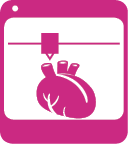
A tissue engineer, with degrees in either chemistry, biology, materials science and engineering, biomedical engineering, or other relevant engineering disciplines, typically constructs human tissues and organs with synthetic and biological matter, says Assoc Prof Leong Kah Fai, who develops 3D-printed medical “bone” implants. The 3D-printed tissue engineer, in addition, needs further training in 3D printing with mechanical or manufacturing engineering to generate these artificial substitutes.

Genomics and genetics
Doctors will still be doctors, says Assoc Prof Wong Teck Yee from the Lee Kong Chian School of Medicine. But they have to be fluent in genomics, algorithms and be able to make sense of big data. Doctors will need to interpret patient-generated data from wearables together with traditional health data from blood tests and radiology reports. They must also be expert communicators as they deliver treatment options to patients who are better informed about their genetic profiles.
Data brand storytelling
As a brand custodian, you get to decide how big data translates into marketing needs. Turn collected data into compelling storytelling for your company’s branding. A data brand storyteller is both a brand manager and a data-driven specialist, says marketing expert Assoc Prof Sharon Ng. A person who can do this will be very valuable. Besides data analytics skills, you’ll need to understand consumer psychology and be a creative storyteller to shine in this role.
Workforce intelligence
The technology and resources for this line of work already exist, reveals Assoc Prof Trevor Yu, once voted among Singapore’s 12 most influential business professors under 40. But most organisations are ill-equipped to use new technology, data analytics and psychological tools in human resources to create a motivated and productive workforce. That could change in the next five to 10 years if sensors and biometric technology are adopted in the workplace. Arm yourself for this role by learning research design and data collection, data analytics, and psychological, organisational behaviour and management principles.
Environmental and natural resources protection
Growing global population and rising incomes have put the world’s environmental and natural resources under significant pressure. A protector of environmental assets would need scientific, political and economic knowledge and, perhaps, the ability to communicate complex issues to wider audiences, to raise awareness on the use and wastage of natural resources and conservation of the environment, says Dr Bhatia.
Skyscraper agriculture
Farming will be going up in sustainable ways. To save precious land space, aeroponics and hydroponics offer sustainable, space-saving ways to grow food, says Prof William Chen, who recently turned discarded durian seeds into food stabilisers. New-age agriculturists would need horticulture skills, especially in soil-less techniques, and a good understanding of mechanical engineering for robotic-driven harvesting. In the future, they could outfit skyscraper agricultural farms with transparent perovskite solar panels to power lamps for artificial light.
Online identity auditing
Identity fraud is big business. As people put more of themselves online, they become more vulnerable to theft and fraud, cautions IT expert Assoc Prof Damien Joseph. Organisations may lose billions to scammers. To protect both customers and businesses, the online identity auditor monitors and notifies all parties if there is a change in buying habits. Beyond deep network monitoring and investigative skills, the incumbent would also need to be vigilant and meticulous.
Gig economy and micro entrepreneurialism
In the gig economy, there’s a need for microentrepreneurs to build gig portfolios that will showcase the utility and versatility of their skill sets and experiences, says Assoc Prof Tan Joo Seng. Soft skills such as problem-solving, critical thinking, collaboration, networking and personal branding would be as critical as hard skills in emerging technologies such as data analytics, machine learning or robotics. With traditional boundaries blurring across industries, microentrepreneurs will find diverse opportunities.
Article is edited from: http://www.hey.ntu.edu.sg/issue41/hot-jobs-of-the-future.html
Which job do you find to be the most interesting?
How can you develop your skills to meet the needs of the future economy?