Archives For Books & People

botanical_RGB


Download Little Women by Louisa May Alcott

ebook_button


Louisa May Alcott’s Little Women, a two-volume novel following the four March sisters through their adolescence and young adulthood, was first published in the late 1860s. Almost 150 years later, the book remains remarkably popular; in fact, the unassuming tale is one of the ten most beloved books in America, according to a poll released recently by Harris International.

The story’s popularity persists in defiance of our modern age of snark. The book, a semi-autobiographical but highly idealized narrative drawn from Alcott’s own youth, is saccharine, frequently preachy, and fairly old-fashioned. The beloved matriarch of the March family, known by her daughters as “Marmee,” frequently admonishes her girls against sins such as “chasing men” (hussies!!) and urges them to embrace “womanly” virtues such as modesty in dress, quiet voices, domestic skills, and nurturing qualities. “Womanly” is used almost interchangeably with “good” in describing the female characters’ actions, and if the emphasis on modesty in the March family seemed slightly odd and old-fashioned at the time, it seems downright retrograde today.

Modern readers would not be alone in finding Little Women a bit fusty. The author herself notoriously described her children’s stories as “moral pap for the young.” She wrote the books not for artistic reasons, but to pay the bills. Yet it can’t be denied that her stories have spoken to generations of readers. Maybe because there are some genuinely good lessons for living in there — as well as some sneaky progressivism, endearing characters, and funny stories of everyday life. All in all, Little Women may not be perfect, but most of us could learn a great deal about how to live today from this old-fashioned novel.

1. No matter how hard it may be, try to forgive. Some offences may seem unforgivable, but refusing to accept a sincere apology usually leads to nothing but more suffering. When impetuous Jo refuses to invite obnoxious youngest sister Amy to a show, Amy vents her rage by burning the only manuscript of the book Jo has been labouring to write. At first, Jo withholds her forgiveness, but when Amy almost dies in a skating accident, Jo realizes that her sister is far more important to her than even her cherished book. So close to losing Amy, she sees that holding grudges is more likely to lead to bitter regret than to a sense of righteousness.

2. Don’t give in to jealousy; there will always someone with more than you of whom to feel envious. The March family does not live in abject poverty, but their means are clearly not lavish. With four young girls in the house and little money coming in, there are bound to be occasions when the sisters yearn for the stylish dresses, European tours, and opulent parties of their wealthier acquaintances. But the Marches are constantly reminded that many live in deeper poverty than they do and that they should be grateful for what comforts they do have.

3. Giving is a greater joy than receiving. Not only do the sisters get frequent reminders of their relatively good fortune, but they also find it’s better to focus on helping destitute neighbours than to gaze longingly at their rich neighbours’ lives. In the very first scene, the girls sit around the fire complaining about their newly straitened circumstances: “‘Christmas won’t be Christmas without any presents,’ grumbled Jo, lying on the rug. ‘It’s so dreadful to be poor!’ sighed Meg, looking down at her old dress.” But only a few pages later, the girls have rallied and resolved to spend their small amounts of pocket money not on treats for themselves, but on presents for their self-sacrificing mother. To top it all off, they reluctantly take their own Christmas breakfast to a starving family nearby. Though the sacrifices are difficult at first, they are all more content than if they had been selfish.

4. Fine feathers often hide not-so-fine birds, so focus on what’s underneath rather than external elegance. At any rate, having such fancy clothes and baubles might seem worthy of envy, but as eldest sister Meg finds when she’s gussied up for a party, it’s not all that she dreamed of. She notices that “there is a charm about fine clothes which attracts a certain class of people, and secures their respect,” but it’s a superficial sort of regard. The expensively dressed women she admired had gossiped about her and paid her no attention when she was in dowdy dresses, but their newfound affection can’t conceal the hypocrisy and shallowness hidden below their silk gowns. It’s easy to judge people by their clothes, but it’s a poor metric for discerning their true character.

5. Figure out what you’re good at and stick to it. The March sisters might seem like little prodigies at times, but the reality is that none of them is particularly distinguished in terms of talent. They just don’t let their limitations get them down. Beth, the musical sister, practices her piano whenever she can. Amy, the artistic sister, is willing to put aside her vain obsession with her appearance to spend hours improving her sketching. Jo, the literary sister, scribbles constantly. And while Meg isn’t much of a creative she focuses on learning to cook and keep house — domestic arts that are challenging in their own right. The girls aren’t quitters, and they aren’t dabblers — they know their strengths and passions and they’re willing to dedicate time and effort into cultivating them. Accordingly, Jo eventually makes a tidy living writing, and Amy becomes an accomplished artist, though she never achieves fame with her skill, and Meg runs a tidy household. That investment in their talents paid off!

6. Don’t obsess about dating. Little Women adheres to 19th-century norms when it comes to marriage, though Alcott herself never married. Though all three girls who survive until adulthood do marry (even Jo, who declares once, “I don’t believe I shall ever marry”), they don’t spend much time flirting with, gossiping about, or dreaming of men. As Marmee remarks to Jo, “We … had better not get ‘romantic rubbish,’ as you call it, into our heads.” Instead, the girls all focus on their family life and personal development, develop real friendships with good men, then make wise marital choices.

7. Family should come first. We live in the age, and the country, of the individual. Little Women should remind us that, if we’re lucky enough to have loving families, we should appreciate and care for them. Family love is the heart of the book, whether it’s sisterly love, parental love, or marital love. The Marches don’t cavalierly end friendships, disown family members, or play fast and loose with the hearts of romantic partners. Even unpleasant Aunt March isn’t neglected. But when she offers to adopt a child to alleviate the family’s financial struggles, she is gently refused: “We can’t give up our girls for a dozen fortunes. Rich or poor, we will keep together and be happy in one another.” What a beautiful thought.

Adapted from https://www.huffpost.com/entry/little-women-lessons_n_5248895

‪Louisa May Alcott Biography in short and rare Photos‬

listen-01

When others come to us with their troubles, it is common that we start providing advice and responding with our own stories from our own experiences. Perhaps when your friend shared that he or she was struggling in relationships, you responded with your personal struggles with relating to your best friend. Or when your family shared with you about their busy day at work, you responded with an ever-ready phrase ‘me too’. Continue Reading…

atwood-01

Margaret Atwood is Canada’s most eminent novelist and poet, and also writes short stories, critical studies, screenplays, radio scripts and books for children; her works have been translated into over 30 languages. She is perhaps best known, however, for her novels, in which she creates strong, often enigmatic, women characters and excels in telling open-ended stories, while dissecting contemporary urban life and sexual politics. Her first novel was The Edible Woman (1969), about a woman who cannot eat and feels that she is being eaten. This was followed by: Surfacing (1973), which deals with a woman’s investigation into her father’s disappearance; Lady Oracle (1977); Life Before Man (1980); Bodily Harm (1982), the story of Rennie Wilford, a young journalist recuperating on a Caribbean island; and The Handmaid’s Tale (1986), a futuristic novel describing a woman’s struggle to break free from her role. She subsequently published Cat’s Eye(1989), dealing with the subject of bullying among young girls; The Robber Bride (1993); Alias Grace (1996), the tale of a woman who is convicted for her involvement in two murders about which she claims to have no memory; The Blind Assassin (2000), a multi-layered family memoir; and Oryx and Crake (2003), a vision of a scientific dystopia, which was shortlisted for the 2003 Man Booker Prize for Fiction and for the 2004 Orange Prize for Fiction. Alias GraceThe Handmaid’s Tale and Cat’s Eye were all shortlisted for the Booker Prize for Fiction; The Blind Assassin won this prize in 2000.

Some of Margaret Atwood’s books have been adapted for stage and screen. A television series based on Alias Grace was broadcast in 2017, and a television film for The Robber Bride appeared in 2007. The Edible Woman has been staged, while The Handmaid’s Tale has been adapted for screen by Harold Pinter in a film directed by Volker Schloendorf, released in 1990, staged as an opera by Poul Ruders – the British Premiere was performed by English National Opera at the Coliseum, London, in April 2003 – and became a television series in 2017.

Recent books are: Stone Mattress (2014), a collection of short stories; MaddAddam (2013), concluding the dystopian trilogy started with Oryx and Crake (2003) and The Year of the Flood (2009); The Heart Goes Last (2015) and Hag-Seed (2016). In 2011, she published a book of essays about science-fiction, entitled In Other Worlds: Science Fiction and The Human Imagination.

books_by_atwood_button

Iconic Author Margaret Atwood on Abortion, Twitter, and Predicting Everything We’re Doing Wrong

Why should you read “The Handmaid’s Tale”? – Naomi R. Mercer


Source: https://www.poetryfoundation.org/poets/margaret-atwoodhttps://literature.britishcouncil.org/writer/margaret-atwood

Picture: The very talented Jacqui Oakley https://jacquioakley.com/

Kahoot

fake-01


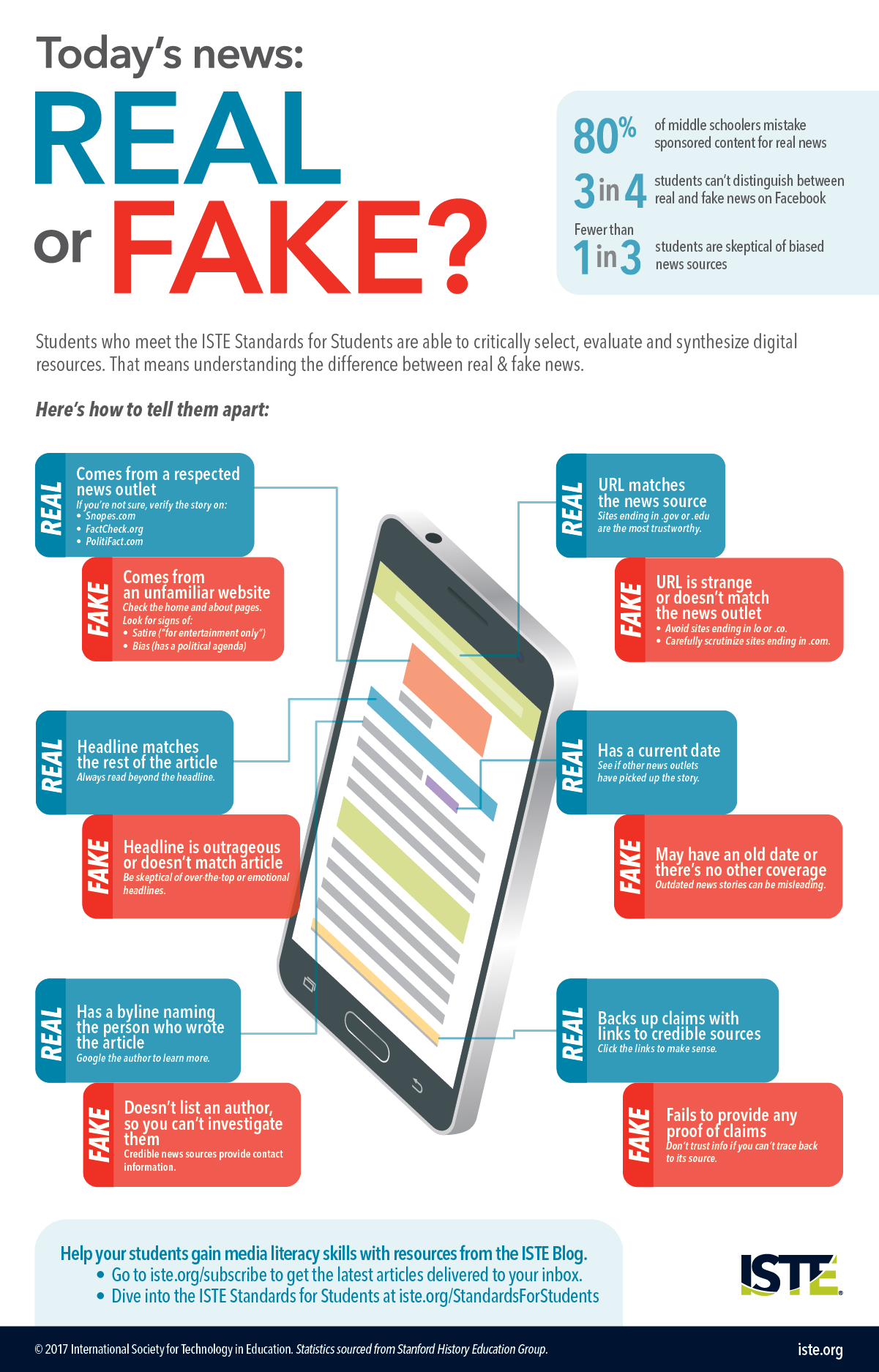
Article source: https://mothership.sg/2019/05/fake-news-bill-passed/?fbclid=IwAR2N-BK-fiq5F-8P6SquRRBocdgBkS1lFfKuDq2YWsIEREDoaKwxmvtm4jM
by Sulaiman Daud


The Protection from Online Falsehoods and Manipulation Bill passed in Parliament.

Following a marathon two-day debate, Members of Parliament (MPs) voted on the Bill at around 10 pm on Wednesday, May 8.

Ministers’ case for the Bill

According to the media reports, 72 parliamentarians voted yes, 9 opposition parliamentarians voted no, and three nominated MPs abstained.

The debate opened with a two-hour long speech from Minister for Home Affairs and Law K Shanmugam, who addressed public concerns raised by the Bill.

He also gave international examples of how fake news undermined societies and damaged trust in their institutions, which the Bill is intended to combat.

Senior Minister of State for Law Edwin Tong expounded on the technicalities of the Bill, and confirm that it could be applied to “closed” messaging services like WhatsApp and Telegram.

Opposition votes

However, all nine members of the Workers’ Party (WP) voted against it, including their six MPs and three Non-Constituency MPs.

Yesterday, WP chief Pritam Singh announced in his speech that his party would oppose the Bill.

Pritam suggested that courts should be the decision-makers, instead of ministers.

Low Thia Khiang, the elder statesman of the WP, opined that the Bill could help the ruling PAP achieve “political monopoly” by deterring criticism.

Abstentions

Three Nominated MPs abstained from voting. They were NMPs Walter Theseira, Anthea Ong and Irene Quay.

The three NMPs happened to be the same ones who formally proposed several amendments to the Bill before the debate.

According to Today, the three NMPs called for a vote on their amendment despite a point-by-point clarification by Shanmugam in his speech.

They asked Parliament to lift the whip so that MPs could vote on their amendment, which proposed limitations on the scope of powers granted to ministers under the Bill.


According to a street survey conducted by a group of social workers and volunteers in March 2017, they found that there were 180 persons sleeping on the streets on one night across 25 sites. While this is the minority of the population, it is unthinkable that Singapore is one of the most affluent countries in the world with a high rate of homeownership and accessibility to public housing for most Singaporeans, still has homeless people. So, who are the homeless and destitute? Where do they live? What could have caused them to be in such a circumstance?


  • Most of the homeless surveyed were single, widowed or divorced men.
  • Some have limited social support.
  • No more than 20% of them seek out social services for help.
  • They are out in the streets because of family conflict, economic disadvantage and lack of housing options.
  • 60% of those surveyed were working mostly full-time with the rest in part-time or casual employment. However, these jobs were mostly low-paying and irregular jobs, making them financially insecure.
  • They slept at public benches, pieces of cardboard on the ground, public walkways and 24-hour fast food restaurants near their workplace.

Here are a few hurdles the homeless have to jump over to get off the street:

  • Temporary shelters give priority to families with children or elderly parents, and they are often operating at full capacity.
  • While public rental housing from the Housing and Development Board is made accessible by needing just two unrelated individuals to share a one-room flat, there is always friction between two strangers co-residing in a small space, discomfort due to poor ventilation, hygiene or noise from neighbours.
  • When the homeless person checks himself into a welfare home voluntarily, they may not legally leave without permission. This risk of losing their freedom causes them much anxiety.

What then we do to help them?

Check out Homeless Hearts of Singapore

They are a group of young people who organizes fortnightly outreach to reach out to the homeless in Singapore.

Do you have a heart for the homeless in Singapore?

Be_A_Volunteer


Homeless, But I’m not a Bum